 © Jose Fragozo / Wildlife Photography of the Year
The world-renowned exhibition, on loan from the Natural History Museum in London, will open at Nature in Art, featuring exceptional images which capture fascinating animal behaviour, spectacular species and the breathtaking diversity of the natural world. Using photography’s unique emotive power to engage and inspire audiences, the images shine a light on stories and species around the world and encourage a future of advocating for the planet.
Wildlife Photographer of the Year is the most prestigious photography event of its kind, providing a global platform that showcases some of the best photography talent from around the world for over 55 years. Launching in 1965, today the competition receives entries from over 90 countries all over the world, highlighting its enduring appeal. This year’s award-winning images will embark on an international tour that will allow them to be seen by well over a million people.
The images were selected from 38,575 entries from 93 countries. From the rainforests of Central Africa to the oceans of the New Zealand coast, the exhibition showcases the best in nature photography, capturing rarely seen animals, incredible behaviours and striking landscapes.
Link to Wildlife Photographer of the year images: https://www.nhm.ac.uk/wpy/gallery
Wildlife Photographer of the Year is developed and produced by the Natural History Museum, London
 © Tiina Törmänen / Wildlife Photographer of the Year

Course Suitability: Beginners – Advanced
Maximum Capacity: 12
Course Description:
The aims for the day: To have a lot of fun creating a few pieces of charcoal animal art in different ways.
We will create a finished animal charcoal artwork from either your reference or one provided. During the day we will explore methods from adding tonal value, playing with blending techniques, creating details and fixing our work. Charcoal drawing has three elements, applying the charcoal, the art of removing the charcoal, and the paper. We will also explore the art of adding highlights. Most of all we will broaden our experience of creating charcoal imagery together and have fun in the process.
Materials List:
Please pay Ian directly in cash on the day.
(These 3 items provided at £4)
- Charcoal sticks (provided)
- Blending sticks (provided)
- White Chalk (provided)
A2 Paper £2-£3 per sheet (3-4 sheets) (can be provided at a cost, approx. total of £10-£12)
Hair spray or Charcoal Fixative (required to bring)
Kitchen Towel & cotton rag (required to bring)
White Charcoal pencil (required to bring)
Putty rubber (required to bring) (Faber Castell or Winsor & Newton)
Artist’s Profile:
Ian has been a traditional professional artist for the last 40 years using all manner of mediums and media. Pencil drawing and Charcoal drawing are the cornerstones of putting down line and tone ideas. Charcoal drawing is wonderfully messy and primal, like a cave artist smudging the charcoal on the rock surface. It’s usually a hands-on slightly imprecise (it can be tight and detailed) style, so we will embrace that dynamic!
Course Costs:
Members: £48
Non-members: £59
(cost does not include lunch (available to order and purchase on the day from the Coffee Shop))
Booking a place:
Places will be offered on a first come first basis.
To secure your place on this course a £20 non-refundable deposit is required. If you would like to book a place, please email Alice
Here at Nature in Art we are extremely passionate about supporting local artists and craftspeople, helping to highlight the array of crafts available and the creativity of the people in the local area. Each month we host a two-day Mini Craft Market in the Education Centre, where five to ten crafters sell their unique handmade crafts.
Including but not limited to – nature crafts – paper crafts – woodwork – paintings – crochet/knitting – weaving – decoupage – cards – glass – silk painting – textile bags
- 10am – 4pm
- Education Centre
- Free to enter

This exhibition is one of a series held in our Education Centre, living out our commitment to collaborate with local community groups.
Art For All is a group of artists who use the natural benefits of art and being creative as a way of improving their mental health and combating isolation and loneliness. The groups meet weekly, to draw, paint and print-make.
The artwork in this exhibition is created from their experiences of how being in and observing nature makes them forget their worries and connect to something bigger.
Their aim through exhibiting is to have conversations about the benefits of art and nature as a healing tool, and to de- stigmatise poor mental health by opening up conversations.
Meet members of the group every day.
https://www.artforallgroup.co.uk/home/

FULLY BOOKED
If you would like to be put on a reserve list for this course then please email us. If we get enough interest we may put on another course later in the year.
Course Suitability: Beginners – Advanced
Maximum Capacity: 12
Course Description:
During the course we will explore how to achieve realistic detail and texture, using a controlled, multi-layered approach to working with pastel pencils.
Materials List:
Reference photos or sketches of particular subject/s that inspire you.
Cartridge paper, pencils and tracing paper to create and transfer your initial drawing.
Pastel paper. (Andrew’s personal favourites are Hahnemuhle Velour, or Clairefontaine Pastelmat which can be purchased from www.saa.co.uk
A good selection of pastel pencils.
Artist’s Profile:
Andrew has been associated with Nature in Art now for over twenty years. During that time he has run numerous courses and in 2023 will complete his 22nd annual week as Artist in Residence.
As a professional artist he works in a variety of media, including graphite pencil, pastel and Chromacolour (acrylic).
He currently has three art technique books in print.
www.andrewforkner.co.uk
Course Costs:
Members: £96
Non – members: £118
(cost does not include lunch (available to order and purchase on the day from the Coffee Shop))
Due to a cancellation, there is now once space available on this course. Please contact Alice to book.
Course Suitability: Beginners- Advanced
Maximum Capacity: 8
Course Description:
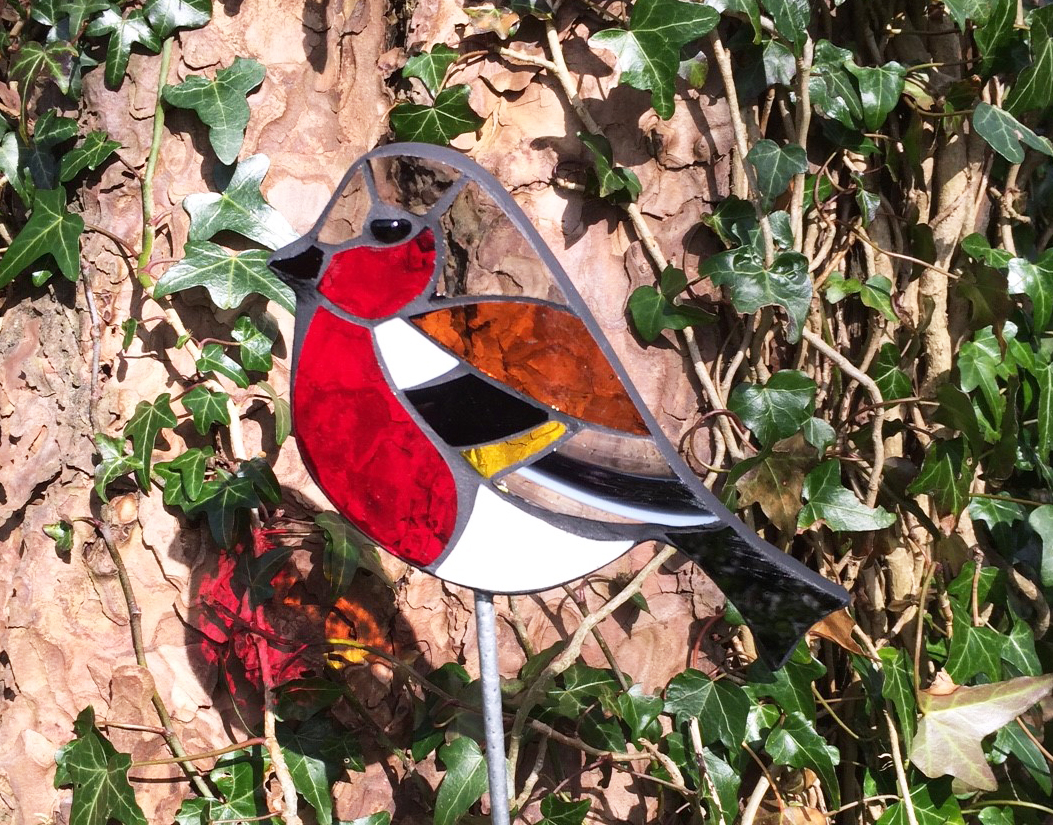
Learn how to make a fabulous stained glass mosaic bird mounted on a stake for your garden. These little garden bird mosaics are designed to interact with their environment, reflecting and refracting light so that they change throughout the day.
On this one day workshop you will produce a completed little bird to take home. You will be able to make a bird of your choice from a limited selection of shapes.
Skills covered on the course will include mapping out of your original design, basic glass cutting, stained glass mosaic techniques like gluing and positioning your glass pieces, as well as grouting techniques. You will be able to work at your own speed, and if you prefer to concentrate on your design and glass cutting throughout the day, you will be sent home with all you need to complete grouting at home.
Materials List:
All materials are included, at a cost of £8 per person, to be paid (in cash) directly to Yvette on the day of the course.
Please bring an apron.
Artist’s Profile:
Yvette Green is a stained glass mosaic artist based in Cirencester, Gloucestershire. Originally from South Africa, Yvette trained in Botany and Education before working in mosaics for the last 14 years. She produces vibrant and lively mosaics for the home and garden. Her work is inspired by the intense colours of nature and her love of the outdoors.
Yvette has exhibited widely around the South West, and mosaicked one of the large hares for the Cirencester March Hare Festival, 2014 and also for the Cotswold Hare Trail in 2017. She is a member of the Cotswold Craftsmen and the British Association of Modern Mosaics.
Course Costs:
Members: £48
Non-members: £59
(cost does not include lunch (available to order and purchase on the day from the Coffee Shop))

THIS EXHIBITION HAS BEEN EXTENDED TO JUNE 4th BY POPULAR DEMAND (previously advertised as ending on May 21st)
The very first item to be accessioned into the Nature in Art collection was by Elizabeth Gray, a watercolour entitled ‘Trouble Overhead’, depicting grouse cowering on the moors as an eagle flies above. At that time it was typical of the work she was producing, although as one tracks her artistic career from then on, it quickly becomes clear that she was a unique creative soul who, over her lifetime produced what many observers consider to be an unrivalled output, certainly in terms of its diversity.
On March 19th last year Elizabeth died, just a couple of weeks before her 94th birthday. Since then we have been given access to her studio and have discovered some remarkable and fascinating works, some of which even the family were unaware existed. It confirmed in us her reputation as a prolific, adventurous artist constantly experimenting and pushing the boundaries. Such an artistic legacy is all the more remarkable when one considers that she had no formal art training.
Inevitably, we cannot be certain where some of the pieces precisely fit into her artistic journey. Many are unsigned, untitled and very probably because of that, unfinished. Yet they are a fascinating insight into the creative process and how aspects of nature from the large to the small were a precious inspiration to her.
Secrets of the Studio then, is almost exclusively works that have never been previously shown anywhere. This is a genuinely unique collection that includes many aspects of her output in an inspiring and varied display.

Firstly, there are watercolours of wildlife, particularly birds in a landscape, for which she became especially well known in the 1970’s and 80’s, exhibiting in the UK with the likes of Peter Scott and David Shepherd and in the USA with the likes of Robert Bateman. She also regularly featured in the world renowned ‘Birds in Art’ at the Leigh Yawkey Woodson Museum in the USA, who also commissioned a work for their permanent collection.
Proceeds from the sale of most of these works were accumulated to fund the purchase of an aeroplane for relief work in Africa. Indeed, throughout her artistic life the proceeds from her work were given away to charity, including Nature in Art.
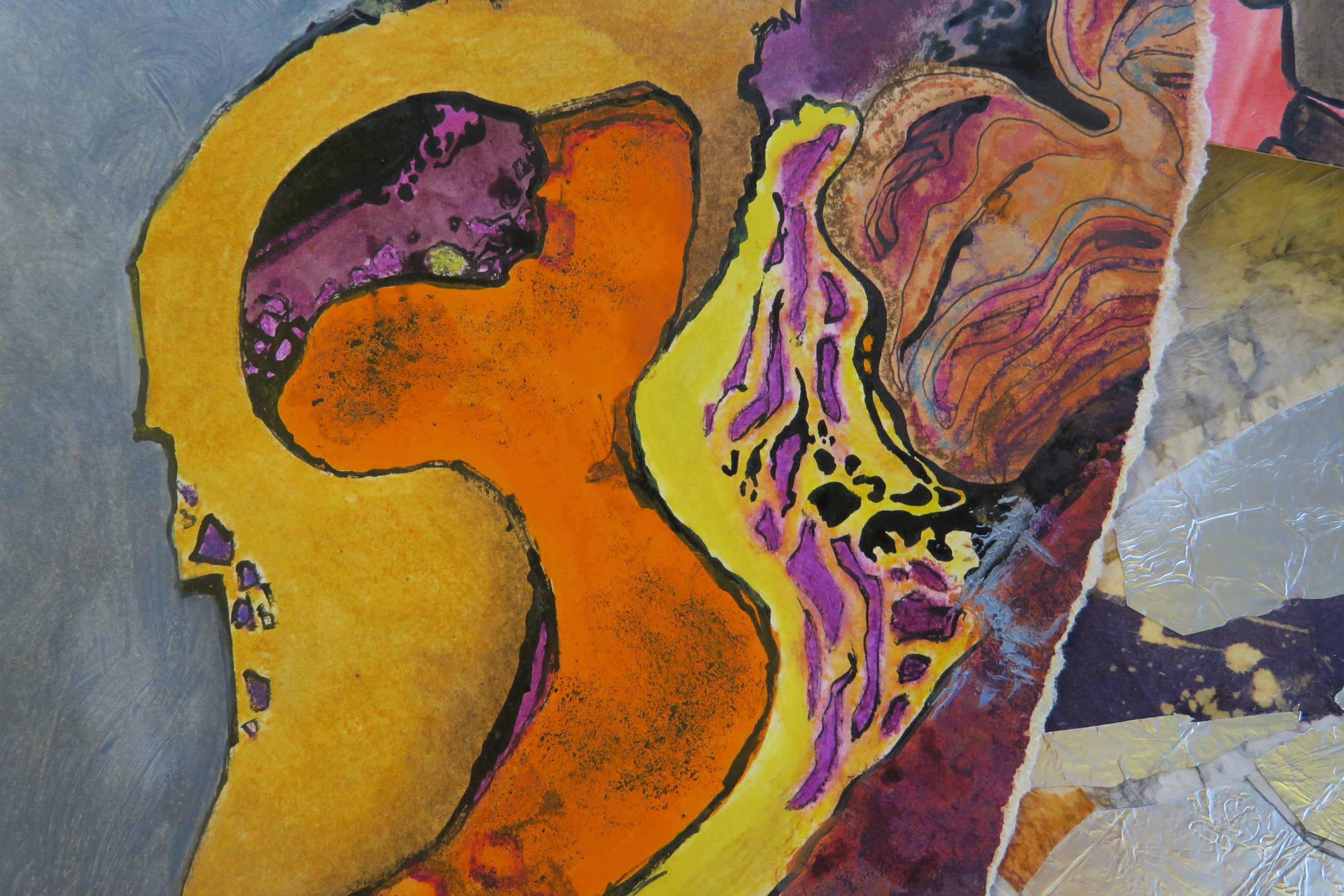
Secondly, there are botanical illustrations. These were painted as botanically correct images, requiring real discipline and accurate observation. Looking closely at the pictures it is clear that none of them have been drawn first. She has simply painted directly onto the paper – an unusual feat. The only pencil is her name and, in some cases, the name of the plant. Complementing these are a number of floral still life compositions and works combining pencil and paint (above). These appear to have been a part of a phase in her artistic output before she began experimenting in other styles and media, and ultimately adopting another name for some of her work.
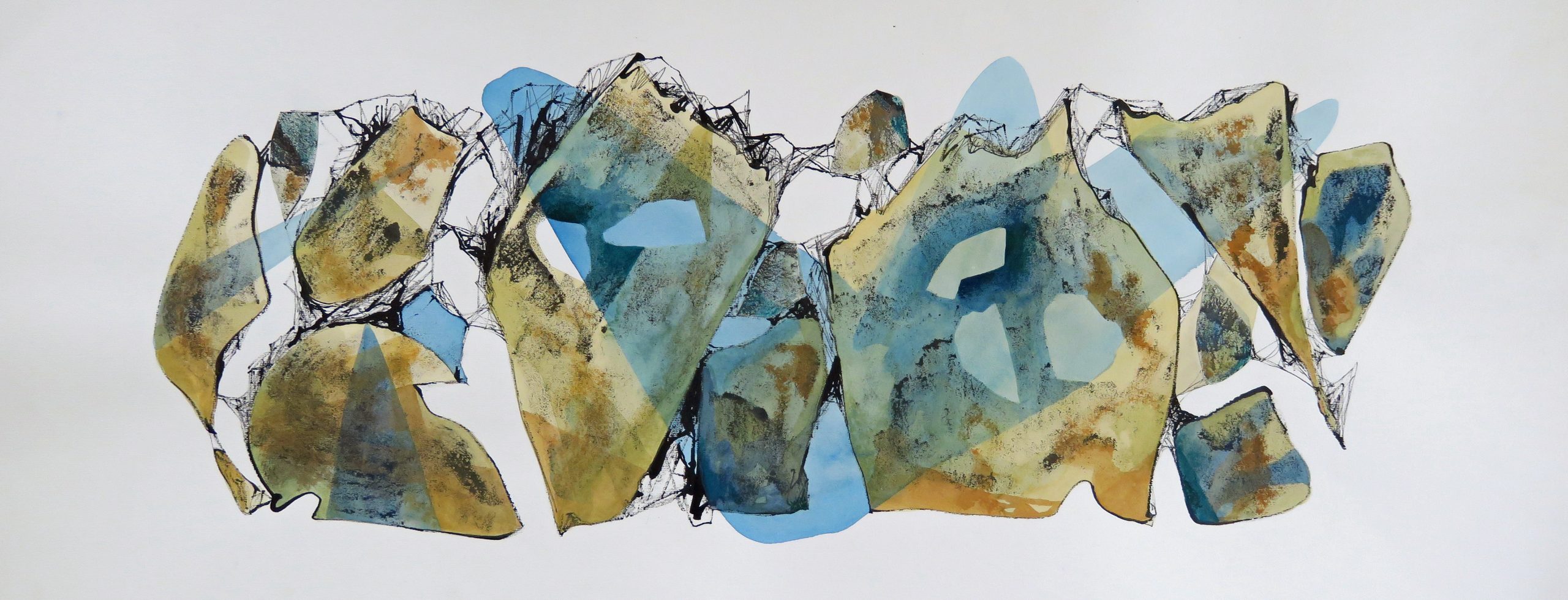
Thirdly, we have focussed on a particular area of fascination for her – rocks. Amongst the items we found were detailed paintings of pebbles to larger abstract pieces inspired by geological formations, produced in a wide variety of media (very often mixed). This gives an insight into how, once inspired by a particular theme, Elizabeth followed it with, it would seem, no clear idea of where she would end up. The idea was to enjoy the process and seek out fresh ways to express the insights she saw. It was a journey of discovery, not just of the theme, but the media too.
Fourthly there is printmaking, to which she dedicated much time later in her career. She was particularly interested in reduction printing, sometimes referred to by artists as ‘suicide printing’ because, rather than having a separate block for each colour, just one block was used. In her case some of the blocks were almost 1m in height and, having no printing press, all had to printed by rubbing with a wooden spoon on the back of the paper. No mean feat! Fascinatingly, we discovered examples of where she had poured plaster or pressed wet tissue paper into a carved block to create a relief. Some were used for the covers of some of her one-off hand-made books.
It is clear that Elizabeth displayed real discipline in all the phases of her work, particularly when learning a new media. For example, she was given a computer for her 80th birthday because the physicality of some of her work was becoming increasingly challenging and the thought of creating work digitally had quite an appeal. So the fifth area is digital work and hand made books which were partly a spin-off from that process. Digital media required a different way of thinking, but once grasped she produced, self-taught as ever, some varied work, exploiting the potential of this new way of working. She was not one for standing still.
Accompanying the main exhibits will be examples of experimentation, tests, stencils and other elements that give an idea of the processes used and her desire to always try something new. In a book of her work published in 2015, a quote from Pablo Picasso (1881 – 1973) was used, which seemed very apt for her approach to art – ‘I am always trying that which I can not do, in order that I may learn how to do it’.


Where: Nature in Art (Garden and Education Centre)
When: Saturday 22nd April 2023 (10am – 5pm)
Cost: £5 per person (includes admission to the museum). Under 8’s free
Come and join us at Nature in Art as we celebrate Earth Day. Throughout the day, there will be many activities to get involved with, from making insect hotels to feathery bird masks (+ much more). Family activities are linked to The Wild Escape, which is an initiative led by The Art Fund to engage young people with the UK’s natural environment through art. Activities will also relate to birds and to the theme of Earth Day 2023: Invest in our Planet.
JRCS Falconry will be joining us to show a magnificent selection of Birds of Prey. There will be short talks throughout the day and the opportunity to get close to these impressive birds. (Please note that this will be a static display). 11am – 4pm.
Also happening during the day: Take part in a scavenger hunt in the garden and enter the raffle. Artist, Trevor Smith, will be sketching the Birds of Prey and there will be a chance to learn how to draw a bird yourself. Don’t forget to bring your sketchbook!
Your entry to the family day also includes admission to the rest of the museum. Whilst you’re here, take the chance to visit ‘Secrets of the Studio’, an exhibition of the work of Elizabeth Gray who had a long association with Nature in Art. Also on show are select works (relating to predominantly British wildlife) from the Nature in Art Collection. There is also the opportunity to see a second artist at work: this week’s Artist in Residence, Philip Nelson, who specialises in decorative decoys. He will be working in the Artist’s Studio.
The coffee shop and gift shop will be open as usual.
No need to book, tickets can be bought on the day.
Free Parking
FULLY BOOKED
Please email us to go on the waiting list. If there is enough interest, we may repeat the talk on another date.
19:00 Doors
19:30pm Finger Buffet
Talk starts around 20:10
Artist Elizabeth Gray, who had a long association with Nature in Art, and who also used the name Ben Venuto, died in 2022. We have been given access to her studio and will be assembling an exhibition highlighting the unique diversity of her output from April 18th – May 21st. Come and hear some extra insights into her work and inspirations that led to her enthusiasm for so many different styles and media, from painting, printmaking and decoupage to books, ceramics, drawings and more.
A really fascinating and uplifting evening.
FULLY BOOKED
If you would like to be put on a reserve list for this course then please email us. If we get enough interest we may put on another course later in the year.
Course Suitability: Beginners – Advanced
Maximum Capacity: 12
Course Description:
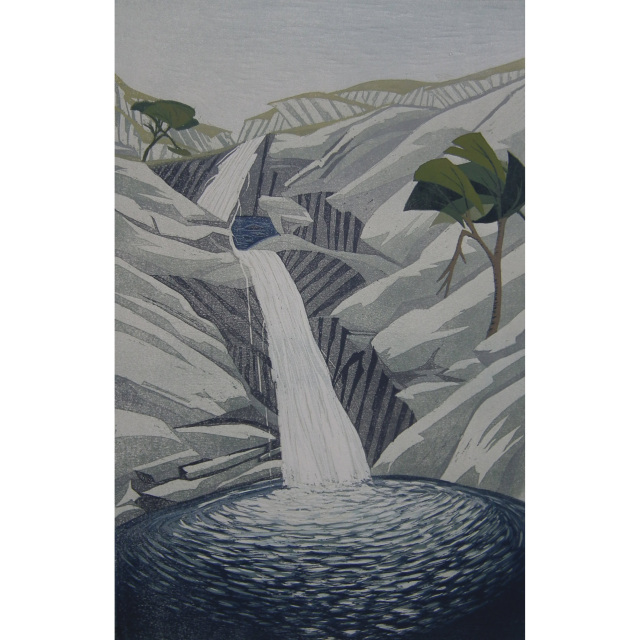
Make original and individual prints of your favourite landscape, in black and white or colour. You will learn how to edit your design to make it suitable for a lino print and will learn the basics on how to show trees, water and sky in a dynamic way. This workshop is suitable for absolute beginners through to those who have experience. You will learn registration, successful handprinting, the best materials to use and more. You will be guided throughout the whole process and will work at your own pace. At the end of the weekend, you should have a number of prints to take home and at least one block to carry on printing from at home.
Materials List:
The tutor will provide the required materials for course participants. The cost per person will be £12, to be paid (in cash) directly to Beth on the day of the course. Please bring something to take your prints home in.
Artist’s Profile:
Beth is an artist and printmaker, based in Stroud, Gloucestershire. She specialises in relief printing in lino and wood as well as working with monotype and drypoint. She is most interested in lonely and wild places, atmospheric effects and pattern.
http://www.bethjenkins.co.uk/
Course Costs:
Members: £96
Non- members: £118
(cost does not include lunch (available to order and purchase on the day from the Coffee Shop))