
Mother of Pearl Butterfly by Phillip Grieve (south Africa. b.1922)
Animal A-Z
Biodiversity is the variety of life on Earth, in all its forms, from genes and bacteria to entire ecosystems such as forests or coral reefs. Biodiversity forms the web of life that we depend on for so many things, including food, water, medicine, a stable climate and economic growth.
Over half of global GDP is dependent on nature. More than 1 billion people rely on forests for their livelihoods. And land and the ocean absorb more than half of all carbon emissions.
But nature is in crisis. Up to one million species are threatened with extinction, many within decades. Irreplaceable ecosystems like parts of the Amazon rainforest are turning from carbon sinks into carbon sources due to deforestation. And 85 per cent of wetlands, such as salt marshes and mangrove swamps which absorb large amounts of carbon, have disappeared.
The main driver of biodiversity loss remains humans’ use of land – primarily for food production. Human activity has already altered over 70 per cent of all ice-free land. When land is converted for agriculture, some animal and plant species may lose their habitat and face extinction. But climate change is playing an increasingly important role in the decline of biodiversity too. It has altered marine, terrestrial, and freshwater ecosystems around the world and has caused the loss of local species, increased diseases, and driven mass mortality of plants and animals, resulting in the first climate-driven extinctions.
climate-driven extinctions.
In response to this, the UN Environment programme has many initiatives, including the Kunming-Montreal Global Biodiversity Framework (GBF), adopted by 196 parties at COP15 in December 2022 under the UN Convention on Biological Diversity. It is a landmark plan to halt and reverse biodiversity loss by 2030 and achieve ‘living in harmony with nature’ by 2050. It includes 4 goals and 23 targets, such as protecting 30% of land/seas by 2030 and mobilizing billions of dollars annually for nature. The framework was unexpectedly encompassing, and provides hopes for building a new relationship between people, the economy and nature.
Just before the framework was agreed in 2022, the WWF Living Planet Report was released. It estimated a 69 percent average decline in wildlife populations since 1970. A frightening statistic.
So, this display has brought together a special selection of works for each year of the 21st century highlighting 26 animals, one for each letter of the alphabet. Together, they remind us of the diversity and wonder of nature and encourage us to not only celebrate the skill of the artist, but be reminded again, through their work, of the fragility of much of nature in the world today.
Rather than place the diverse exhibits together in one room, the 26 items, both 2D and 3D, will be scattered throughout the museum, to be searched out on an ‘art safari’. Younger visitors can follow a trail to help them discover the exhibits.

CRUCIFIXION
BE STILL | BE QUIET
“The greatest thing a human soul ever does in this world is to see something, and tell what it saw in a plain way. Hundreds of people can talk for one who can think, but thousands can think for one who can see. To see clearly is poetry, prophecy and religion, all in one.” John Ruskin
In seeing Darrell Warner interprets and creates natural history paintings in watercolour that may be uncomfortable at first. That is of course the intention, to arrest the viewer into a reality that they may not care to think about. And there’s the rub. In doing so, Warner eludes to a life lost yet his paintings, predominantly of our own indigenous birds are testimony to those birds’ souls continuing to sing, even in death.
At the beginning of the covid pandemic when our world was last at rest it seems, Warner would come across deceased everyday common or garden birds struck by a passing vehicle. Being Spring of 2020 and the likelihood that those unfortunate birds would be in or entering breeding season weighed heavily on the painters mind, so much so that he was unable to cast them aside, instead seeking to record their deaths in watercolour. And so begun an odyssey to record those lost souls that entered his orbit via friends and family, be it from the humble Blackbird to the elusive Water Rail.
What became apparent is how many deaths are caused by or related to human actions or environments, from vehicle to conservatory window strikes. Considering the small community in which he lives, Warner began to wonder of the overall number of avian life lost on a daily basis across both county and country. That thought became the catalyst to this exhibition. The call to raise awareness of the loss through these paintings. It is apparent that our natural world is under very serious threat from both increased green belt development and a general apathy towards what nature is and does. Small incidental deaths don’t factor into this equation but certainly add to nature’s fine balance. As we enter further into the 21st century one can only hope that Warner’s observations and recordings of these beautiful creatures remind us of what is at stake and what were once very common could become rather rare. A crucifying thought. Darrell Warner is an Internationally acclaimed artist & illustrator known predominantly for his work on large Hollywood Blockbusters. Yet his personal work has also gained international recognition whilst being a quiet testament to his true skill as a draughtsman and artist, seeking to ask questions of how we look and relate to both art and nature.
Meet Darrell amongst the exhibits all day Saturday May 23rd
Join us for an illustrated evening talk by Darrell on Saturday June 12th.
Course details:
Do you want to develop your skills with your sewing machine and learn how to ‘draw’ with the simple straight stitch? Then this is your course! You will start by stitching a design which Richard, your tutor, has prepared for you. He will demonstrate every stage step-by-step.This will give you the confidence and the understanding necessary to empower you to start and develop your own design on the second day. However, there is no rush and no pressure !!! Some experience with using the ‘darning foot’, which allows you to stitch freely in any direction is important. Try practising, even a little, beforehand, so that you are confident with it and excited about its amazing possibilities
Materials and additional costs:
- A sewing machine, with which you are very familiar and well practised with using the Free-Motion Foot / Darning Foot, which facilitates free machine stitching.
- Sewing machine needles – sizes ranging from 75 to 90 or even 100.
- A variety of machine sewing and /or machine embroidery threads ( cotton, polyester, rayon, viscose etc, ) in the following colours for the first project : several greens, one white, one pale blue, one pale pink, one pale yellow, one metallic silver and one metallic gold. After that, bring everything ! *
- Some coloured pencils.
- An embroidery hoop at least 9 inches in diameter or slightly larger.
- A quarter of a metre of thin white cotton / polyester sheeting
- Some printed images for the subject you choose to do after Richard has taken you through his prepared design
Suitability:
Beginners – advanced but must have confidence in using sewing machine and darning foot
Spaces:
12
Price: £124 / £158
Please call 01452 733942


Lesley Connolly and Lucy D’Auvergne
Wildlife Art Society International Annual Show
One of a series focusing on our desire to highlight and encourage active creative groups celebrating the natural world.
Over 300 works in a huge variety of media celebrating artistic endeavour and the diversity of nature. Artists at work every day.
May Half Term Activities
We have loads of outdoor nature-themed activities keeping us busy through half term.
Morning session: 10am – 11:30am
Afternoon Session 1pm – 2:30pm
Here is what we have going on each day:
Tuesday 26th May – Yoga and Rock Painting.
Wednesday 27th May – Salt Dough and Seed Decorations.
Thursday 28th May – Sun Prints.
Friday 29th May – Nature Journals
Tickets cost £8 per child. This includes one child entry to activity and one child and one adult entry to gallery. Tickets are all available for booking here: https://natureinart.org.uk/activitydays/
Come and join in for some yoga fun and games with our Education Officer! Either in the Education Centre or in our lovely garden, we will be doing some exercises, games, balancing, mindfulness and so much more.
Age: 3 – 12
Yoga mats are provided! Adults encouraged to join in with their little ones.
Make sure you are wearing comfortable, breathable clothing to move around in freely.
Either book online, call in or just ask at the shop if there are spaces available.
Course details:
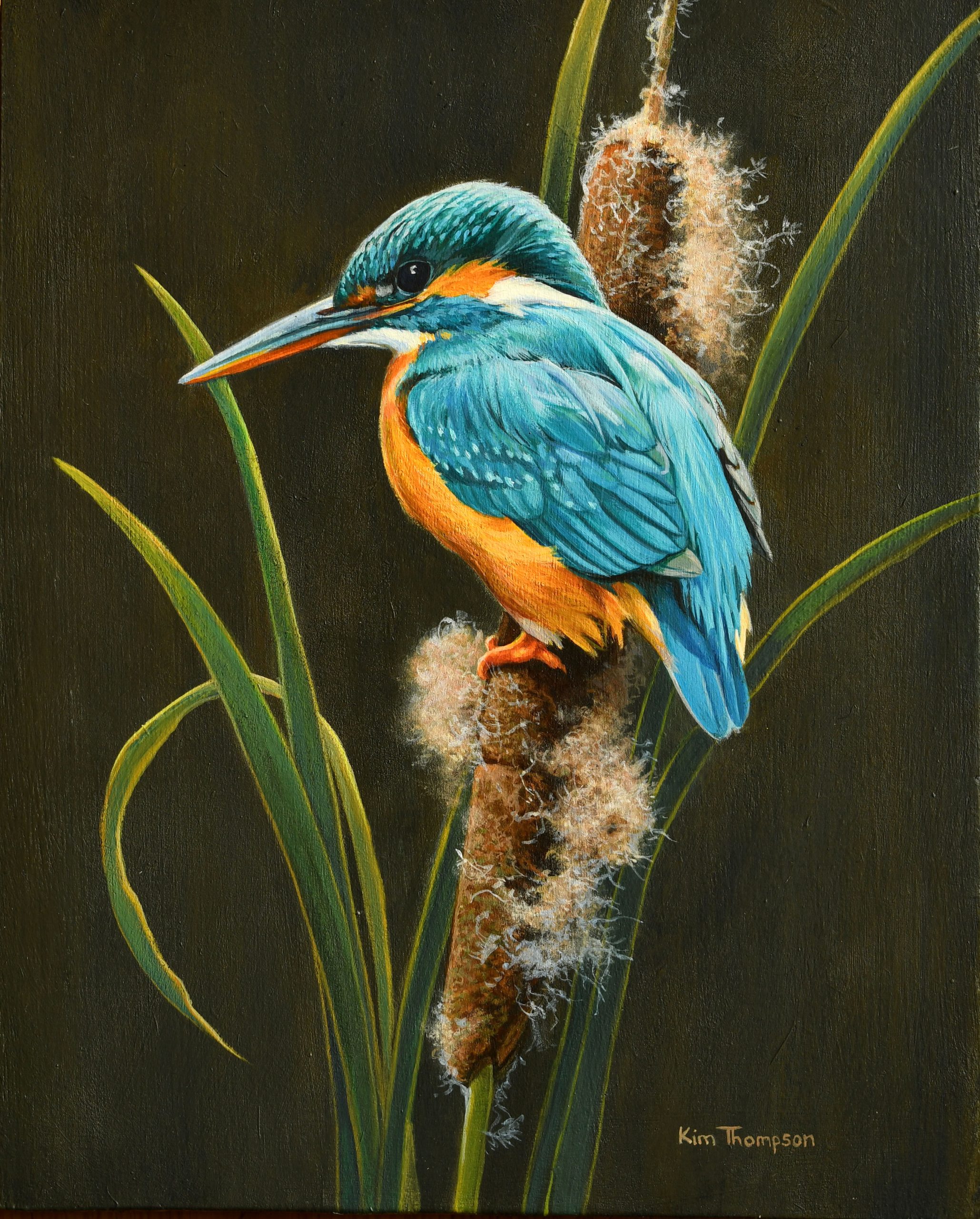
Having used acrylics for over 35 years as a wildlife artist and illustrator, Kim Thompson has learnt many useful techniques to achieve the detailed results seen in her work which she will share on this two day course.
Working from start to finish, using acrylics on board, participants will paint a Kingfisher perched on Bull rushes. The process is broken down into easy to follow steps, learning about composing a scene from photo reference and sketches, the fast drying time of the paint, building layers and adding the details and textures found in nature.
This workshop will appeal to those who are looking to establish a good understanding of using acrylics or who might have already tried them and want to learn more about this versatile paint. Kim is a considerate and encouraging tutor and will bring a relaxed approach to the two days.
Materials and additional costs:
- £20 cash to be paid to tutor for a range of acrylic paints, pencils, painting surfaces and brushes and all other items which will be used in the workshop.
Suitability:
Improvers
Spaces:
12
Price: £124 / £158

Balancing commercial illustration vs personal painting. Come and hear Darrell Warner talk about the differing mindset of an artist practising in two very different fields. As an international award-winning illustrator in the film industry, the pressure to deliver within a time frame calls for some extraordinary commitments for both self and family whilst donning the creative painting hat presents other more profound questions of personal quest and fulfilment. Both approaches in turn feed an artistic want whilst informing one another. An evening for everyone!
Doors open 7pm to view Darrell’s exhibition. Finger buffet 7:30pm, followed by talk. Finish 9.15pm
£13 + booking fee – click here to book
If you are a student, call us on 01452 731422 and we’ll book you in at 50% off.
Course details:
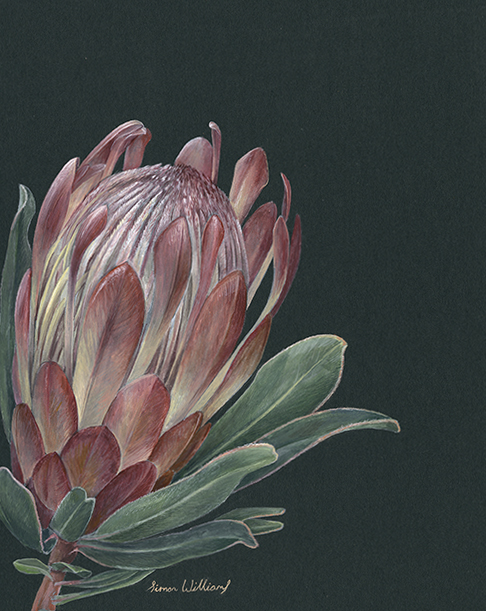
This course will focus on botanical drawing and painting techniques in the option of working in watercolour or gouache. Both days will begin with a practical demonstrations covering drawing and painting techniques. Observational skills are a very important part of botanical art so students will be encouraged to work from life. Producing detailed studies of either plants, leaves, fruit or vegetable specimens. Course tutor Simon Williams will advise on a practical one-to-one basis. Guidance will be given on observations, colours suggestions and how to paint from the initial base coats to more controlled techniques. This will include rendering textures, contour definitions and colour transitions. Gouache is an opaque form of watercolour and is not an inferior medium to watercolour. For much of the time it is used for illustration, book design and publishing for its fantastic reproduction and vibrant colour. This course is open to all intermediate to advanced level and it is preferential to have some drawing/painting experience as botanical work requires a precise rather than loose style of painting. Please visit the tutor’s website to see samples of his work and CV.
Materials Required:
Materials list can be supplied on request, and will be emailed to all participants 4 weeks before the course.
Suitability:
Intermediate
Price: £124 / £158
Spaces: 12
Course details:
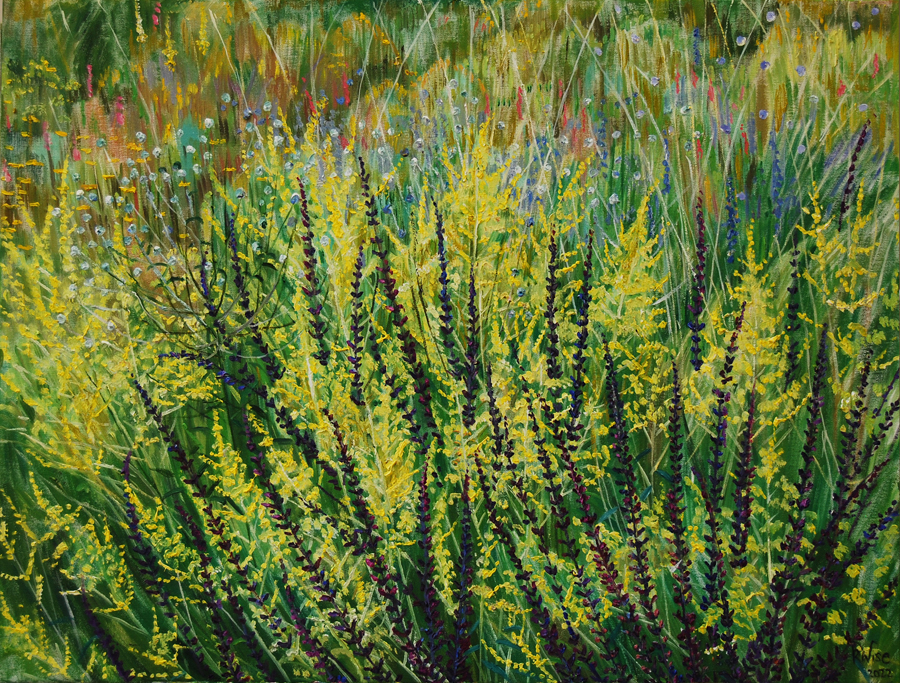
“I would like each student to produce a painting that suggests a garden escape, a place to escape the pressures of modern life. It can be a painting of a single flower, an herbaceous border, a path, trees, views, in a garden or out into the wider landscape.”
Materials and additional costs:
- Canvas or board
- Brushes in small, medium and large
- Paints – oil, acrylic, pencils, inks NOT watercolours
- A photo to work from
Suitability:
Beginners – advanced
Spaces:
12
Price: £124 / £158