

In today’s world of digital photographic manipulation, the idea of altering images is the norm. This exhibition features work by members of the Bromoil Circle using a process that involves changing images yet using a technique that originated from the Oil Process, which was patented in 1855. Later in 1907, C. Wellbourne Piper worked out a formula for the Bromoil process, which is still practiced today.
The method briefly, is that the silver contained in gelatine in a bromide print is bleached away and at the same time, the gelatine is hardened according to the amount of silver it contained. It is then fixed, washed and dried, after which it is re soaked to condition the gelatine and then all surplus water is removed.
A greasy ink, such as lithographic ink, is then applied by brush and is accepted where the gelatine has hardened (the shadow areas) but is rejected where the gelatine has swollen (the highlights). Thus the original image in the bromide print is built up so that the silver image is now an ink image and far more permanent.
By judicious application of ink, the bromoil worker has fine control over the final image. The bromoil process was much favoured by pictorial workers of yesteryears and is now once more gaining in popularity.
The Bromoil Circle Postal Club was formed by the late A.C Weller in 1931, who became a Fellow of the Royal Photographic Society in 1934. Later the club was renamed The Bromoil Circle of Great Britain. It was established during a period known as the ‘Pictorial Photography Period’ when the pigment printing process had become very popular amongst photographers. The club was formed with 18 members, the same number as it has today. Initially the club existed as a postal club, as many groups did in those days. Today the Circle still adopts the same method of circulating prints etc, but meetings for members and interested parties are also held in an effort to keep this fascinating technique alive and appreciated.
During the early 20th century the Bromoil Process was a very popular process with an array of materials to use, a far cry from todays situation, as very few papers are now manufactured, suitable for the process.
In fact up to the late sixties the Bromoil Process remained very popular, but then with changes within photographic practices and the demise of suitable materials, the number of practitioners fell. During the 1990s, due to serious efforts from Circle members, bromoiling began to arise from the brink of extinction and is still flourishing today amongst this small group.
Workshops and exhibitions are held throughout Great Britain and publications on the process have been produced.
The Circle has an important archive collection running into several hundred outstanding images from some of the best bromoilists from Great Britain. An archive of the images of Sam Weller is held in The Victoria and Albert Museum in London, as part of the Royal Photographic Societies Collection.
SEE DEMONSTRATIONS OF BROMOILING Aug 9th, 11th, 15th, 17th, 18th, 22nd, 24th and 25th. (One in the morning and one in the afternoon).

Images: © Josef Jindřich Šechtl
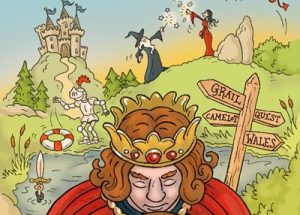
“Whosoever pulls this sword from the stone is the rightful King of England”
Wizards, Magic Swords, Knights in Shining Armour, and the Throne of England. There are fights to be fought, Knights to be knighted, and quests to be… quested. See for yourself exactly how Arthur became the most renowned King of England in this madcap, hilarious retelling of the legendary English story of The Sword in the Stone.
Following their phenomenal response from last year’s The Three Musketeers, IKP are back with another unique, tongue-in-cheek adaptation of a classic story. Excellent fun for all ages – with slapstick, physical humour, fast-paced multi-rolling, and a smattering of playful innuendo for the grown-ups, IKP’s The Sword in the Stone is an unmissable Outdoor Theatre treat this Summer.
Picnics welcome. There is no seating provided, so please bring something to sit on. This production is designed to be performed in the open-air and will continue in all safe weathers.
Grounds open 7pm. Play starts 8pm
The Course will focus on botanical painting, giving the learner the opportunity to work in either watercolour or gouache. The course will be taught by Simon Williams SBA.
Gouache and watercolour are both water soluble mediums and can produce stunning paintings. Gouache is an opaque form of watercolour and is not an inferior medium to watercolour. For much of the time it is used for illustration, book design and publishing for its fantastic reproduction and vibrant colour. Throughout the course you will be guided in colour mixing, botanical accuracy, brush techniques to render fine detail and the most important skills to gaining 3 dimensional forms to botanical studies.
This course is open to people that have some drawing/painting experience, improvers and advanced levels to a precise rather than loose style of painting. Please visit the tutor’s website to see samples for the style of painting.

Focusing on joyful expression through art, this art workshop is all about discovering and reconnecting with your creative side. Offering you the chance to loosen up creatively, without expectations, in a nurturing, fun and relaxing environment. You will have the opportunity to experiment with many different art mediums, with expert tuition from Frances.
We will be experimenting with lots of different materials, and producing a great many artworks if you choose to.
Join me and discover the joy of creating something new and unexpected.


Rarely seen, yet glittering to behold, this is a display of gold, silver and metal thread embroidery to dazzle and delight, embracing nature in all its forms. All the pieces are made by members of the Goldwork Guild, at least one of whom will be demonstrating this ancient craft daily within the exhibition. The Goldwork Guild was formed in 2004 by Janice Williams to keep the art alive in the 21st century.
Modern goldwork will be displayed together with a few antique pieces reflecting the fact that this work dates back over 2000 years when only royals, nobility and those of great wealth could afford such magnificence in garments, robes, domestic furnishings and religious embellishments. Whilst the history of metal thread embroidery goes back so far in history that its origins are lost, it’s widely believed that goldwork embroidery originated in China. From there the art form spread to Asia, Persia, India, Japan, the Middle East, and the ancient civilisations of Assyria and Babylonia. Over time and up to the present day it further spread to North Africa, Spain, Italy, Western Europe, Great Britain, Scandinavia, North America, Australia, Canada and New Zealand. Goldwork is also mentioned in the Bible within the book of Exodus, where it states ‘He made the ephod of gold, blue, purple, scarlet and fine twined linen. They did beat the gold into thin plates, and cut it into wires, to work it in the blue, and in the purple and scarlet, and in the fine linen with cunning work.’ The very earliest examples employed pure gold and silver. The metals were flattened and wound around strands of animal and human hair. However, the gold and silver were both very brittle. Later the metals were wound around silk, paper, animal gut and parchment, and originally this process was done by hand which required great patience and skill, and the cost of such threads was extremely high.
Present day goldwork and metal thread embroidery is more affordable now as there are now substitutes, even though real gold and silver is of course still used (and comes from Japan.)
Throughout history, goldwork has been worked into fabric decoration and can be used not only in other embroidery, but applique with variegated shimmering patterns made luxurious using gold, silver, metallic threads and precious stones.
Ceremonial, military and religious attire is still adorned with the richness of gold embroidery. However, the design for military pieces is necessarily constrained by tradition as one would expect, but the goldwork that embellishes domestic, religious and ceremonial attire is still being worked today by many embroiderers. Other techniques and materials can be worked to create contemporary pieces reflecting the 21st century.
This particular art form is prized for the way the light plays upon it, which is influenced not just by the richness of the metal thread used, but also by the variety of metal threads available and the techniques used.

A great chance to have a go at some exciting experiments and discover some amazing scientific facts. Meet members of the Cheltenham Science Group who have some great ways of bringing science to life.
You’ll also have a chance to join in with some fun craft activities and create something to take home.
Tickets: £2 per person (excluding museum galleries but including artist in residence and craft activities)
No need to book, just turn up to have some fun!
Drawing is a fantastic way of exploring the world around us.
This one day workshop is designed to be fun it will invigorate, excite and challenge. The morning session will be a series of short exercises exploring drawing. Participants will develop ways of seeing, interpreting and making. The afternoon session will be made up of longer exercises where participants will be able to develop their drawing skills further with the aid of one to one tuition.
This workshop is open to all who want to draw!

On this 2-day course you will learn all about working with graphite pencil from experienced artist Jamie Boots.
Graphite pencil can be used to produce so much more than just a sketch.
Jamie will show participants that. whether or not you are using a pencil that is blunt or sharp, pressing lightly or hard, or using a variety of tones, the realistic texture of skin, fur and the glassy look of an eye can be achieved.

Example of work by Jamie Boots
With a natural history theme this is an introduction to various ink drawing tools and surfaces, with a focus on penning and brushing techniques. A look at creating high contrasts, shading, tones and line styles with small examples in sketchbooks and various papers. Get ready for Inktober 2019 on Instagram, a world wide motivational challenge to encourage you to get inky, to be inspired and improve your drawing skills and share your results.

Glass fusing is joining two or more layers of glass through heating in a kiln.
There are several techniques that can be adapted to this basic principle some of which give surprising results. This 1-day course will teach some of those techniques alongside glass cutting (if you are new or in need of a refresher) and consist of glass layering, use of glass frits, powders and encapsulation between layers of glass.
The course will guide you in designing and making either 4 glass coasters or a larger, flat piece of art glass. These will then be fired in a kiln and ready for collection after the course.
