
Since January we have been delighted to have had Bella Lucchesi join us for a day a week as Nature in Art’s Curatorial Trainee. Bella is from the USA and is undertaking an MA in Curating at UWE, Bristol. As part of her course she has been working closely with Collections Officer Emily Cooper to assemble this display. It is based on the Fibonacci Sequence and the Golden Ratio; how it appears in nature, and in works of art (whether that be by chance or design) and exploring its suggested relationship to beauty. It follows on well from David Trapnell’s talk earlier in the year ‘Is Beauty in the eye of the beholder?’. Here Bella introduces the selection of works …
The Fibonacci sequence is a series of numbers, starting from 0 where every number is the sum of the two numbers preceding it. The Golden Ratio is a number that’s equal to approximately 1.618. This number, often known as “phi” from the Greek alphabet, is in fact not equal to precisely 1.618 because it is an irrational number – meaning that its decimal digits carry on forever without repeating a pattern.
Although these are separate terms, coincidentally they closely relate to each other in many ways. If one takes any two successive Fibonacci numbers, their ratio is very close to the Golden ratio. As the numbers get higher, the ratio becomes even closer to 1.618. For example, the ratio of 3 to 5 is 1.666. But the ratio of 13 to 21 is 1.625. Getting even higher, the ratio of 144 to 233 is 1.618. These numbers are all successive numbers in the Fibonacci sequence. These numbers can also be applied to the proportions of a rectangle, called the Golden rectangle. This is thought as one of the most visually satisfying geometric forms and has been applied in numerous creative disciplines for centuries.
These concepts appear frequently in art compositions as well as in nature, whether that is in the florets of a sunflower, pine cone seeds or sea shells. This exhibition will investigate these terms in relation to nature and art and hopefully act as a starting point for visitors own explorations into art and nature. Most of the paintings, prints and 3D items have been selected from our collection but there are also a number of items on loan from artists and Gallery Pangolin, to whom we express our thanks.
Even if the Fibonacci numbers and Golden Ratio seem daunting to you, there’s much to inspire and set the mind thinking in this selection. Come and see!
This is a two day course that will show you how to sketch buildings and architectural detail with waterproof black ink pen and watercolour wash. Using photos supplied by the tutor you will be shown how to use the pen with watercolour paint both before and after painting. Techniques taught will include colour mixing, brush technique, light and dark, drawing with a pen and how to loosen up to achieve expressive sketches. By the end of the course you will have produced a few sketches to take home with you. Suitable for beginners and students with some knowledge of the medium.


This is a special exhibition of ceramic sculpture by internationally renowned sculptor Linda Heaton-Harris. This is an opportunity to see a wide selection of her work, much of it fresh from the kiln. Plus visitors can see her in the studio November 12th – 17th.
The title of the exhibition, chosen by Linda, is taken from one of her favourite quotes. It is thought to have originally been found on an old gravestone many years ago. The wildlife author and artist D.J. Watkins-Pitchford (known as BB) used it as a quote on the frontice piece of many of his books. It reads …
The wonder of the world, the beauty and
The power, the shapes of things, their colours,
Lights, and shades; these I saw.
Look ye also while life lasts
Linda recently moved to Cornwall to a smallholding/farm on the edge of Bodmin Moor overlooking Rough Tor. It is ‘a fantastic area full of ancient history including, stone huts and standing stone circles and of course wonderful wildlife’. The location is also near the North Cornish coast, Port Isaac, Rock and Padstow, yet again offering wonderful scenery, walks and wildlife. Her purpose built studio has magnificent views of the craggy granite rocks of Rough Tor and the Moor with it’s fascinating ever changing scenery. It is here that she created the works in this unique selection.
Linda originally trained as a teacher studying English Literature and History, becoming interested in ceramics while still at college. At first her work centred on abstract flower and plant forms, often vibrantly coloured, but she soon started to follow her real passion, and began sculpting animals and birds.
Linda’s work falls into two main categories: hand built, individual pieces demonstrating a more simplified approach, and extremely detailed individual bird and animal sculptures, both life size and miniatures. With both styles she endeavours to capture the essence of the animal or bird.
A variety of techniques and clays are used to produce a range of textures with various oxides, slips and stains applied to retain the fine detail. The pieces are fired at least twice. The detailed intricate bird studies involve many hours work, being built up ‘feather by feather’. Thus a single sculpture can involve several hundred feathers alone and can take several weeks to complete. Some of the pieces have flowers or foliage, these are also built up one petal, leaf or stamen at a time. Amongst the items created especially for this exhibition are a miniature piece of a pod of hippos and a Juvenile Cuckoo being fed. Others are in the kiln as we write, always a nerve-wracking time as accidents can occur. Linda’s pieces need several firings which adds to the trepidation!
This is a course for all abilities who have an interest in learning to paint the colour, energy and vitality found in a Garden Border.
Working from photos that inspire, from views of your own garden or a garden you have visited you can work in a personal way with close up views of plants in detail or a looser more abstract, atmospheric view. You can paint in a way that appeals to you.
You can paint in Gouache,Acrylic or Oil paints on paper,board or canvas.

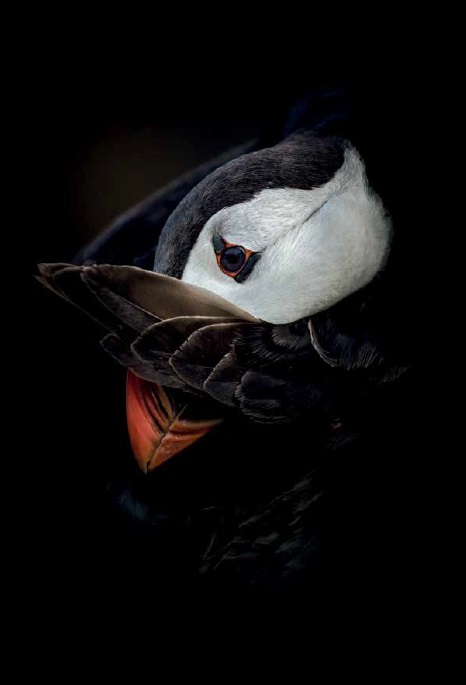
Fresh from its launch in London, see the very latest exhibition of images from the British Wildlife Photography Awards celebrating the beauty and diversity of British nature and the talent, artistry and determination of the photographers who took them.
No images available yet from the 2019 exhibition. This image by Csaba Tokoly is from the 2018 competition.
A 2-day course on painting almost certainly one of our most popular, colourful and easily recognisable birds, the Kingfisher.
Using acrylics on board we will be looking at sketching the bird in flight and trying to capture a sense of movement and ideas on where to place the subject in the overall painting to enhance that effect.
We will also be working on how to go about incorporating the surroundings i.e. the rocks, water and foliage associated with it’s usual habitat.

This is a two day course that will show you how to paint impressionist style autumn and winter landscapes with acrylic paint. Using photos supplied by the tutor you will be shown how to paint landscapes and buildings in the landscape using a loose and painterly technique similar to that of the French Impressionists. Techniques taught will include colour mixing, scumbling, impasto brush marks and using the paint both thick and thin. By the end of the course you will have produce a couple of paintings. Suitable for beginners and students with some knowledge of the medium.

A rewarding 1-day where participants will use willow and other materials to make stars, garlands, angels, reindeer and mini Christmas trees ready for the festive celebrations.
By the end of the day you should have been able to make a number of items to take home.

Come and try your hand at some Christmas crafts, open to everyone, young and old!
Just pop a donation in the pot and have a go. Funds go towards updating the children’s play area and development of the garden.
No need to book, just turn up and take home what you make.

Maria Merian (1647-1717) was a true pioneer. As a young girl, she was passionate about two things – insects and art. Maria lived in a time when religious superstition and long-held traditions and rules about the source of all of life, reigned supreme. Maria’s fascination in insects and her skill in art meant that she was perfectly equipped to dispute the “norm” – Supported by close friends and family she was the first individual to study, record and paint the Metamorphic Lifecycle of butterflies.
Her ground-breaking discovery challenged ideas about the origins of insects, in place since the time of the Ancient Greeks. Maria’s beautiful paintings produced as a result of her research capture her discoveries for prosperity – Each painting, a beautiful, intricate and colourful homage to the Metamorphic Lifecycle. She is now widely credited as being one of the most influential entomologists of all time.
This workshop will study her life and achievements in more detail, culminating in producing a painting in her style – Full of colour, texture, beauty – and insects!
