
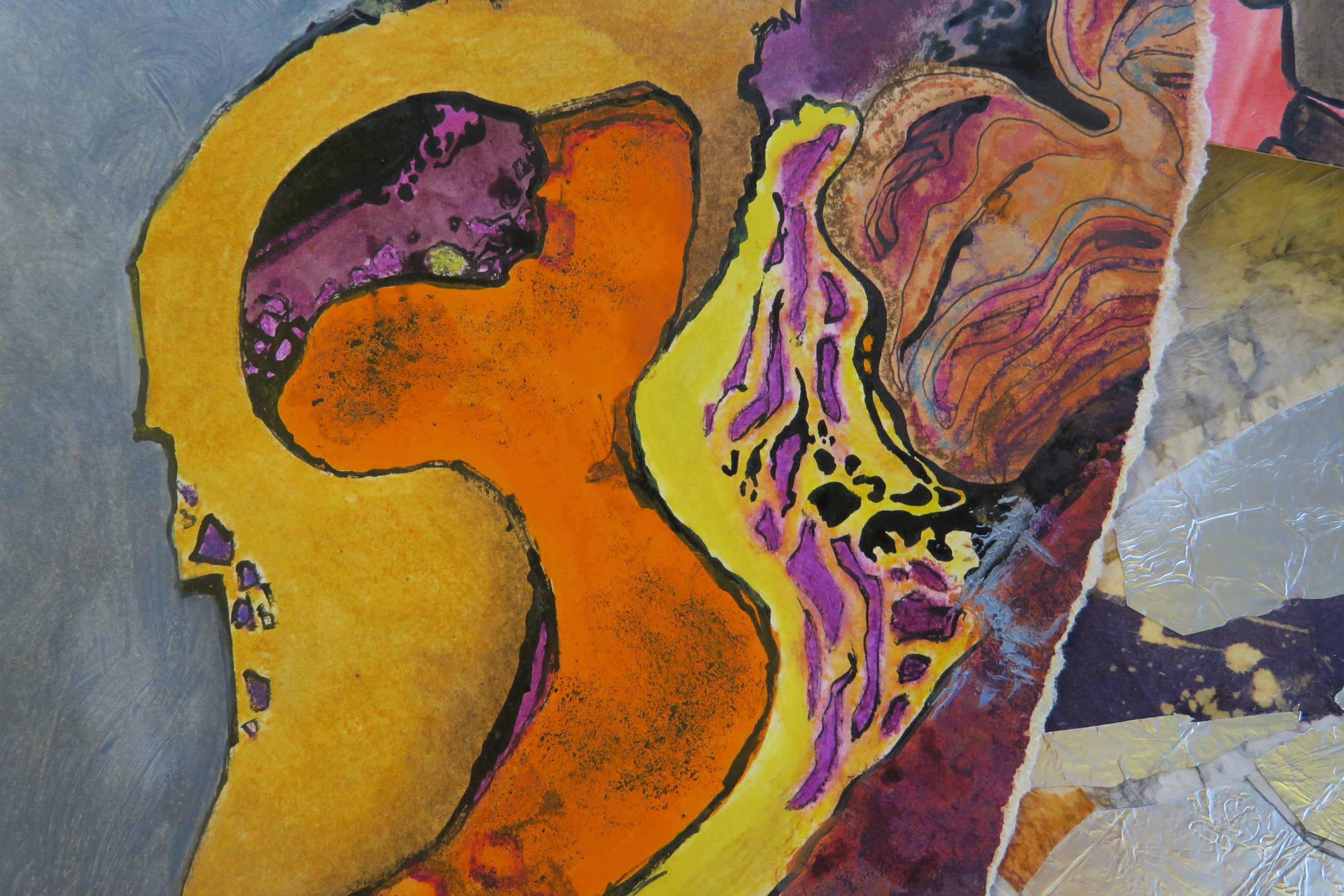
THIS EXHIBITION HAS BEEN EXTENDED TO JUNE 4th BY POPULAR DEMAND (previously advertised as ending on May 21st)
The very first item to be accessioned into the Nature in Art collection was by Elizabeth Gray, a watercolour entitled ‘Trouble Overhead’, depicting grouse cowering on the moors as an eagle flies above. At that time it was typical of the work she was producing, although as one tracks her artistic career from then on, it quickly becomes clear that she was a unique creative soul who, over her lifetime produced what many observers consider to be an unrivalled output, certainly in terms of its diversity.
On March 19th last year Elizabeth died, just a couple of weeks before her 94th birthday. Since then we have been given access to her studio and have discovered some remarkable and fascinating works, some of which even the family were unaware existed. It confirmed in us her reputation as a prolific, adventurous artist constantly experimenting and pushing the boundaries. Such an artistic legacy is all the more remarkable when one considers that she had no formal art training.
Inevitably, we cannot be certain where some of the pieces precisely fit into her artistic journey. Many are unsigned, untitled and very probably because of that, unfinished. Yet they are a fascinating insight into the creative process and how aspects of nature from the large to the small were a precious inspiration to her.
Secrets of the Studio then, is almost exclusively works that have never been previously shown anywhere. This is a genuinely unique collection that includes many aspects of her output in an inspiring and varied display.

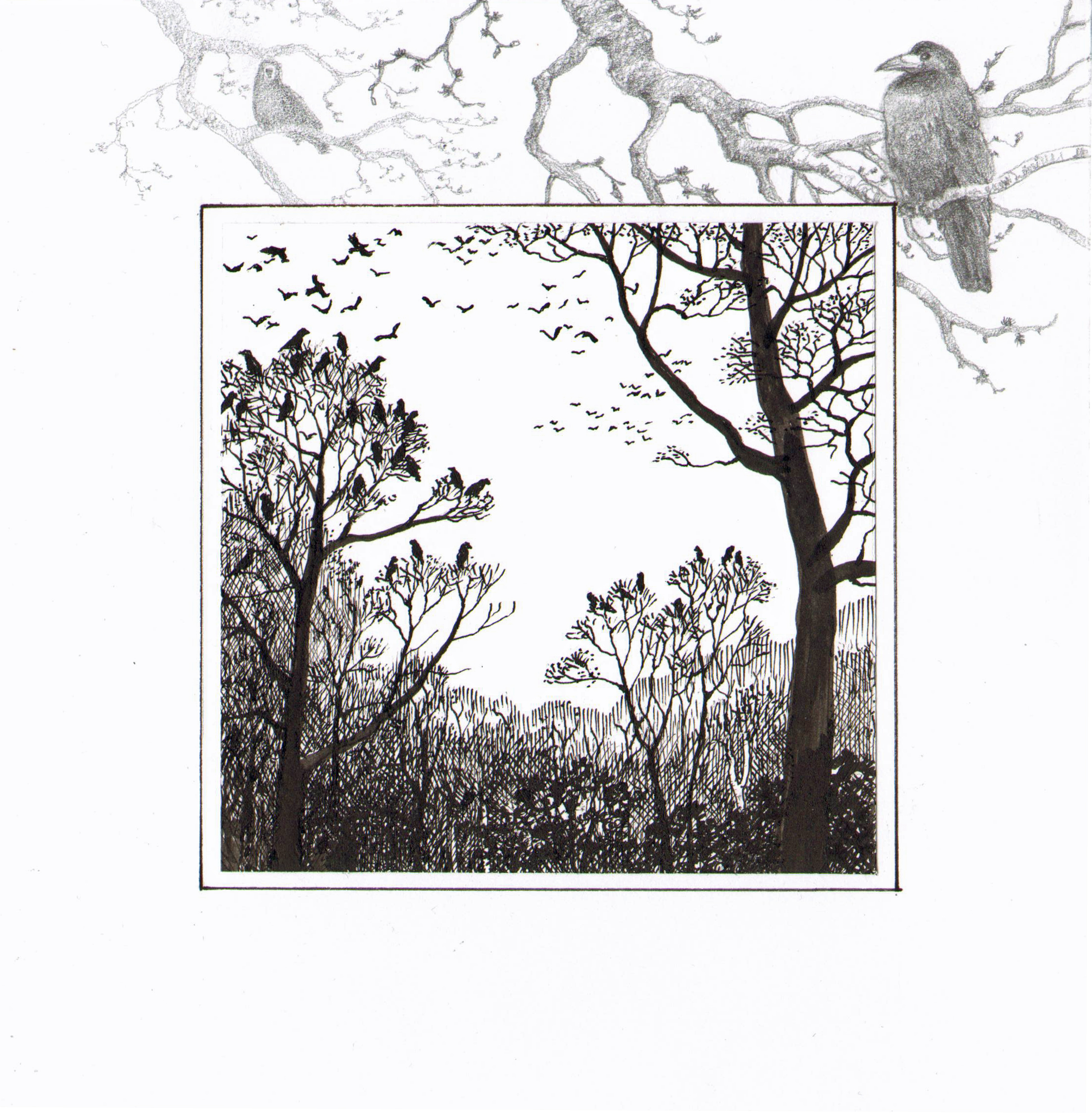
Firstly, there are watercolours of wildlife, particularly birds in a landscape, for which she became especially well known in the 1970’s and 80’s, exhibiting in the UK with the likes of Peter Scott and David Shepherd and in the USA with the likes of Robert Bateman. She also regularly featured in the world renowned ‘Birds in Art’ at the Leigh Yawkey Woodson Museum in the USA, who also commissioned a work for their permanent collection.
Proceeds from the sale of most of these works were accumulated to fund the purchase of an aeroplane for relief work in Africa. Indeed, throughout her artistic life the proceeds from her work were given away to charity, including Nature in Art.
Secondly, there are botanical illustrations. These were painted as botanically correct images, requiring real discipline and accurate observation. Looking closely at the pictures it is clear that none of them have been drawn first. She has simply painted directly onto the paper – an unusual feat. The only pencil is her name and, in some cases, the name of the plant. Complementing these are a number of floral still life compositions and works combining pencil and paint (above). These appear to have been a part of a phase in her artistic output before she began experimenting in other styles and media, and ultimately adopting another name for some of her work.
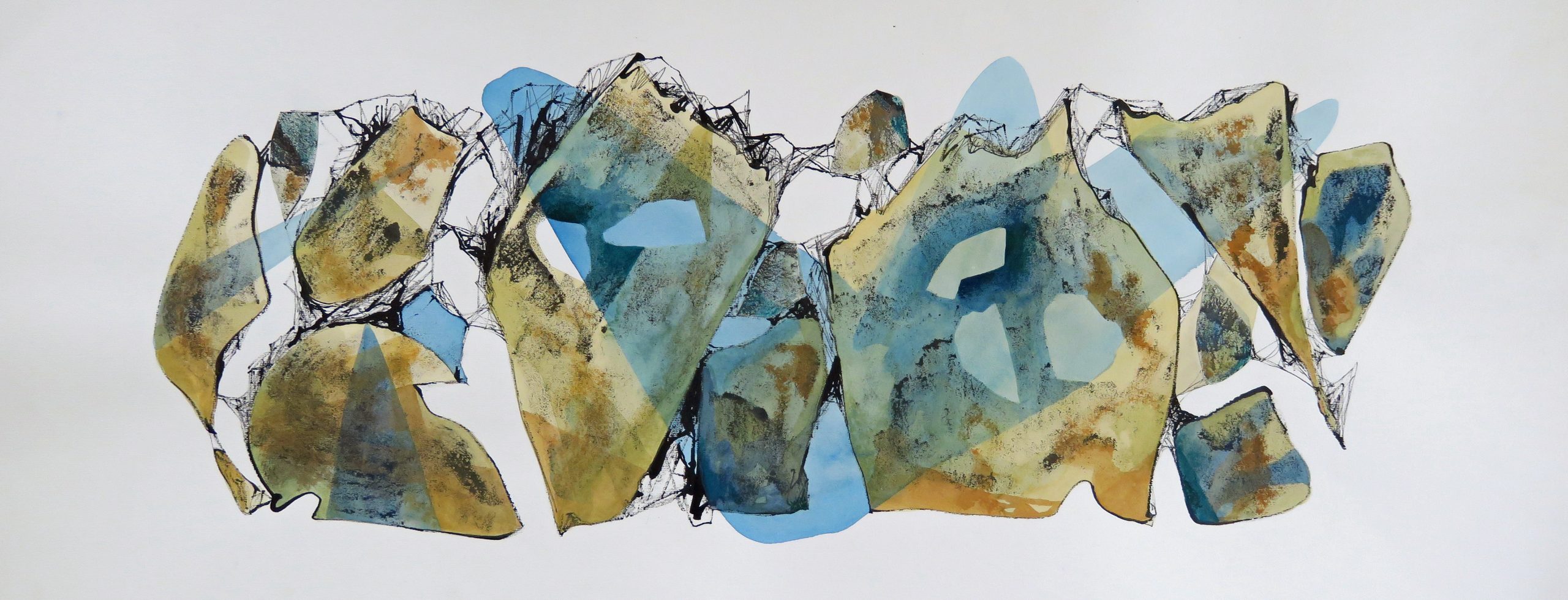
Thirdly, we have focussed on a particular area of fascination for her – rocks. Amongst the items we found were detailed paintings of pebbles to larger abstract pieces inspired by geological formations, produced in a wide variety of media (very often mixed). This gives an insight into how, once inspired by a particular theme, Elizabeth followed it with, it would seem, no clear idea of where she would end up. The idea was to enjoy the process and seek out fresh ways to express the insights she saw. It was a journey of discovery, not just of the theme, but the media too.
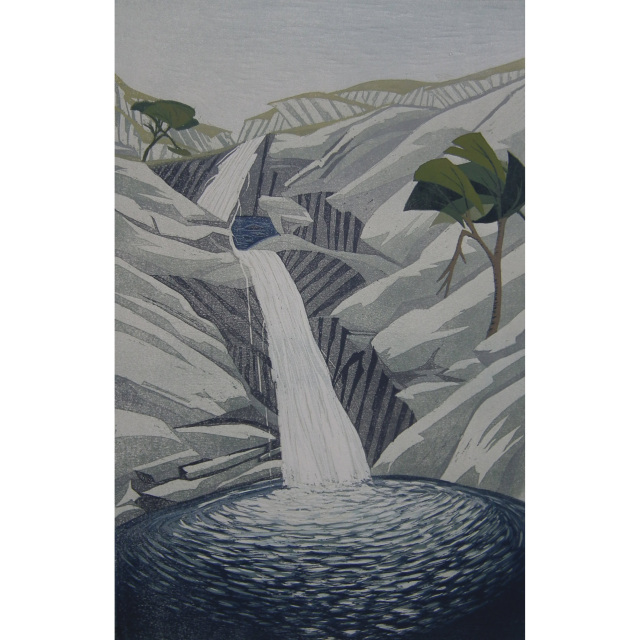
Fourthly there is printmaking, to which she dedicated much time later in her career. She was particularly interested in reduction printing, sometimes referred to by artists as ‘suicide printing’ because, rather than having a separate block for each colour, just one block was used. In her case some of the blocks were almost 1m in height and, having no printing press, all had to printed by rubbing with a wooden spoon on the back of the paper. No mean feat! Fascinatingly, we discovered examples of where she had poured plaster or pressed wet tissue paper into a carved block to create a relief. Some were used for the covers of some of her one-off hand-made books.
It is clear that Elizabeth displayed real discipline in all the phases of her work, particularly when learning a new media. For example, she was given a computer for her 80th birthday because the physicality of some of her work was becoming increasingly challenging and the thought of creating work digitally had quite an appeal. So the fifth area is digital work and hand made books which were partly a spin-off from that process. Digital media required a different way of thinking, but once grasped she produced, self-taught as ever, some varied work, exploiting the potential of this new way of working. She was not one for standing still.
Accompanying the main exhibits will be examples of experimentation, tests, stencils and other elements that give an idea of the processes used and her desire to always try something new. In a book of her work published in 2015, a quote from Pablo Picasso (1881 – 1973) was used, which seemed very apt for her approach to art – ‘I am always trying that which I can not do, in order that I may learn how to do it’.

FULLY BOOKED
If you would like to be put on a reserve list for this course then please email us. If we get enough interest we may put on another course later in the year.
Course Suitability: Beginners – Advanced
Maximum Capacity: 12
Course Description:
Make original and individual prints of your favourite landscape, in black and white or colour. You will learn how to edit your design to make it suitable for a lino print and will learn the basics on how to show trees, water and sky in a dynamic way. This workshop is suitable for absolute beginners through to those who have experience. You will learn registration, successful handprinting, the best materials to use and more. You will be guided throughout the whole process and will work at your own pace. At the end of the weekend, you should have a number of prints to take home and at least one block to carry on printing from at home.
Materials List:
The tutor will provide the required materials for course participants. The cost per person will be £12, to be paid (in cash) directly to Beth on the day of the course. Please bring something to take your prints home in.
Artist’s Profile:
Beth is an artist and printmaker, based in Stroud, Gloucestershire. She specialises in relief printing in lino and wood as well as working with monotype and drypoint. She is most interested in lonely and wild places, atmospheric effects and pattern.
http://www.bethjenkins.co.uk/
Course Costs:
Members: £96
Non- members: £118
(cost does not include lunch (available to order and purchase on the day from the Coffee Shop))
(Rescheduled from 6th & 7th May)
Course Suitability: Absolute beginners – Advanced
Maximum Capacity: 12
Course Description:
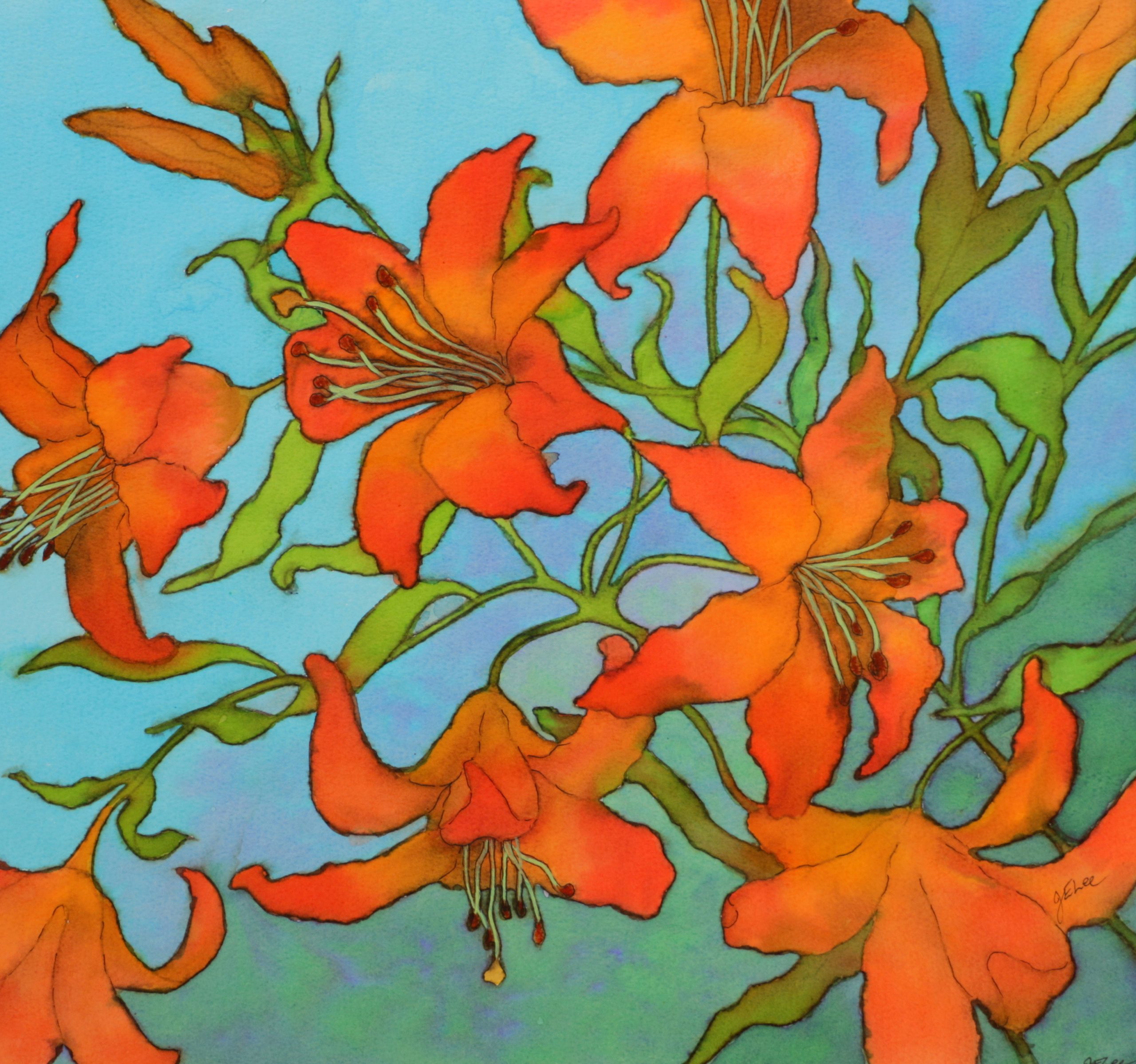
Brusho’ is a powder which mixes with water to produce vibrant, jewel-like colours particularly suitable for flower/ plant subjects. The effects it produces are not achievable with standard watercolours. The tutor will show you how this type of painting can be achieved.
During this 2 day course, using various leaf shapes as inspiration and considering the rich and varied colours of Autumn, students will experiment with layering and sprinkling Brusho paints to produce attractive images which can be enhanced further with pen & ink drawing.
If time allows there will be the opportunity to use the techniques learnt to make a greetings card.
Materials List:
All Brusho paint will be provided by the tutor.
6 small screw-top jars ( individual jam/marmalade pots are ideal)
Box to put them in
Apron – Brusho stains!
Water pot
Scissors
Glue stick
Mixing palette
Masking tape
A3 watercolour paper 140lbs weight (several sheets).
Board to stick it on
Black or brown drawing pens ( thin/medium nib)
Selection of brushes (not too big)
Pictures of leaves, teasels, seed heads and any other autumn reference material. The tutor will have spares.
Artist’s Profile:
Since qualifying in Design at the University of bath Spa, Jean has taught people of all ages and abilities in schools, colleges and art holiday establishments. She has also worked for cruise lines teaching portrait drawing on board ships. She has been successfully running Brusho courses for several years in the South of England and she aims to create a relaxing atmosphere where people can enjoy experimenting with the medium.
Course Costs:
Members: £96
Non-members: £118
(cost does not include lunch (available to order and purchase on the day from the Coffee Shop))
Booking a place:
Places will be offered on a first come first basis.
To secure your place on this course a £20 non-refundable deposit is required. If you would like to book a place, please CLICK HERE


Here at Nature in Art we are extremely passionate about supporting local artists and craftspeople, helping to highlight the array of crafts available and the creativity of the people in the local area. Each month we host a two-day Mini Craft Market in the Education Centre, where five to ten crafters sell their unique handmade crafts.
Including but not limited to – nature crafts – paper crafts – woodwork – paintings-crochet/knitting – weaving – decoupage – cards – glass – silk painting – textile bags
- 10am – 4pm
- Education Centre
- Free to enter
FULLY BOOKED
If you would like to be put on a reserve list for this course then please email us. If we get enough interest we may put on another course later in the year.
Course Suitability: Absolute Beginners – Advanced
Maximum Capacity: 12
Course Description:
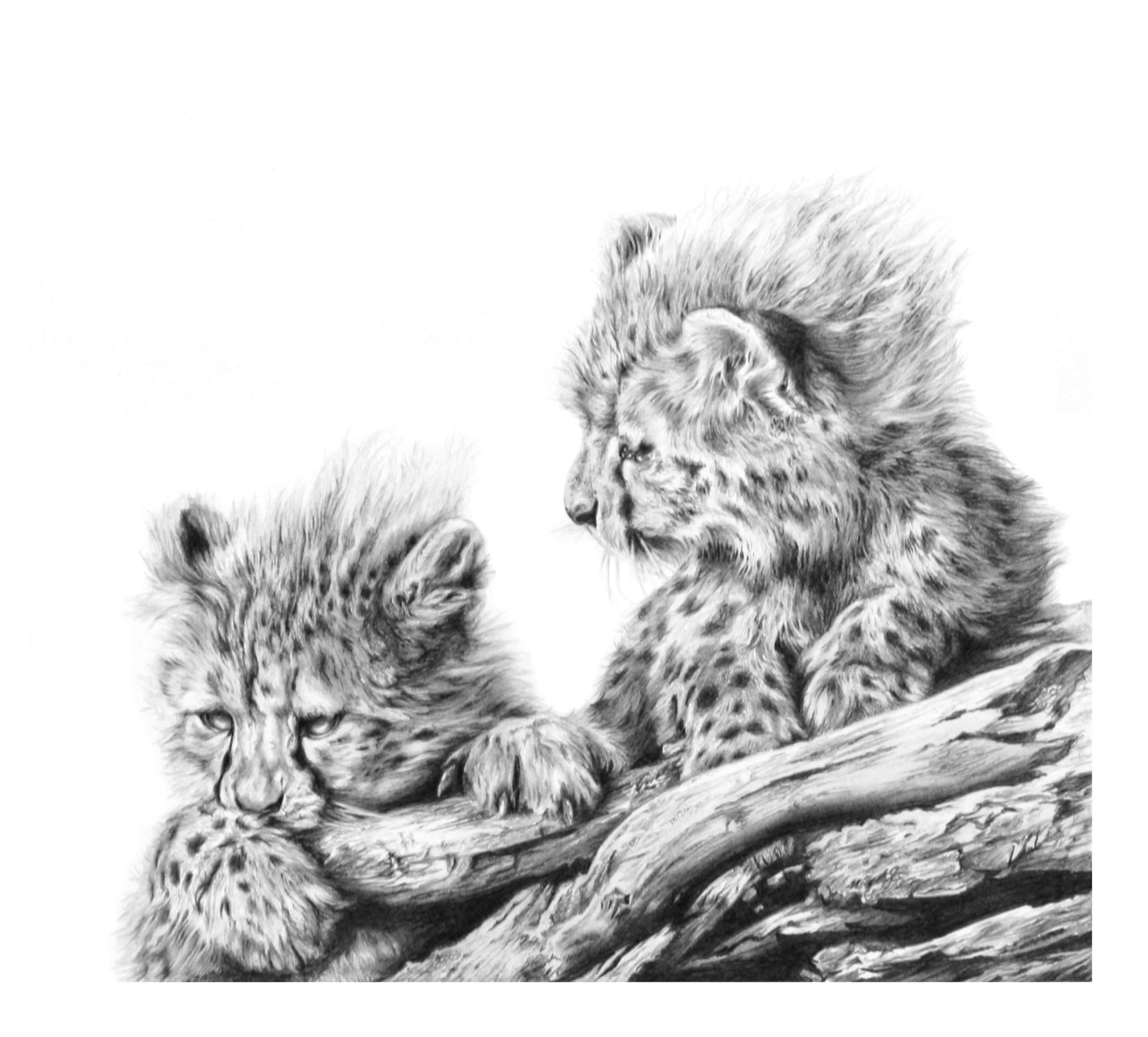
On this two day course learn all about working with graphite pencil from experienced artist Jamie Boots. Graphite pencil can be used to produce so much more than just a sketch. Jamie will show participants that whether or not you are using a pencil that is blunt or sharp, pressing lightly or hard, or using a variety of tones, that the effect of fur, the texture of skin and the glassy look of an eye can be achieved.
Materials List:
All materials will be supplied free of charge to use during the course by Jamie Boots.
Artist’s Profile:
Originally from New Zealand, Jamie is a self taught artist whose work is produced in graphite pencil. Jamie first exhibited his work in 2004 and has won a number of awards for his artwork. In a very short period of time a hobby became a profession and with a limited number of originals being available each year his drawings have become highly collectable.
www.jamieboots.com
Course Costs:
Members: £96
Non-members: £118
(cost does not include lunch (available to order and purchase on the day from the Coffee Shop))

FULLY BOOKED
Course Suitability: Beginners – Improvers
Maximum Capacity: 12
Course Description:
On this one-day course, you will make plant climbers, plant supports, trellises and decorative Garden Hurdles, all out of willow and hazel grown in Somerset and Gloucestershire.
Helen will guide you through each stage of the process, whilst introducing you to the different varieties of willow/hazel which you can use to make your creations unique.
By the end of the day you should have been able to make 3-4 items to take home to put in the garden.
Materials:
The tutor will provide the required materials for course participants. The cost per person will be £12, to be paid to the tutor on the day of the course. (Please try and bring the exact change)
Artist’s Profile:
Helen Lomberg has been making Baskets and using Willow and other Hedgerow materials for many years now. Twelve years ago she set up The Gloucestershire Arts and Crafts Centre in Westgate Street, Gloucester.
Course Costs:
Member: £48
Non-member: £59
(cost does not include lunch (available to order and purchase on the day from the Coffee Shop))
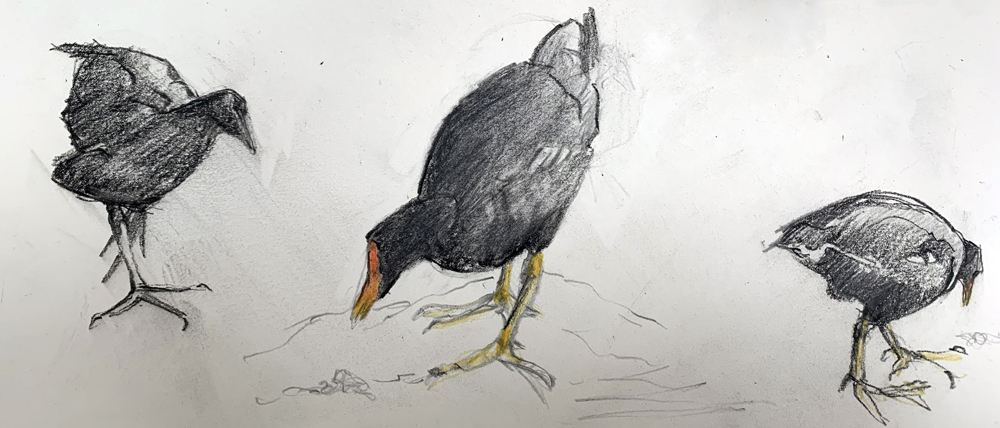
Five artists exploring themes from the natural world through drawing, painting, printmaking and poetry.
Murmur II (Conversations with Nature) brings together a new body of work, in a variety of styles and media by Andrew Morrison, Jo Biggadike, Shelley Winnett, Roy Hubbard and Julie Smith. At least one of them will be available each day to talk to visitors.
Humans speak the loudest, but beside our raucous demands are murmurings from wild things struggling to adapt to a changing world. ‘Conversations with Nature’ attempts to attend to nature’s quiet, often hidden voice; to listen and respond with paint and ink.
Free admission. Original artworks, prints and cards are available for sale with 10% of all sales supporting Nature in Art.
‘Meet the Artists’ evening – Friday 26th May, 6:30-8pm. Open to all.
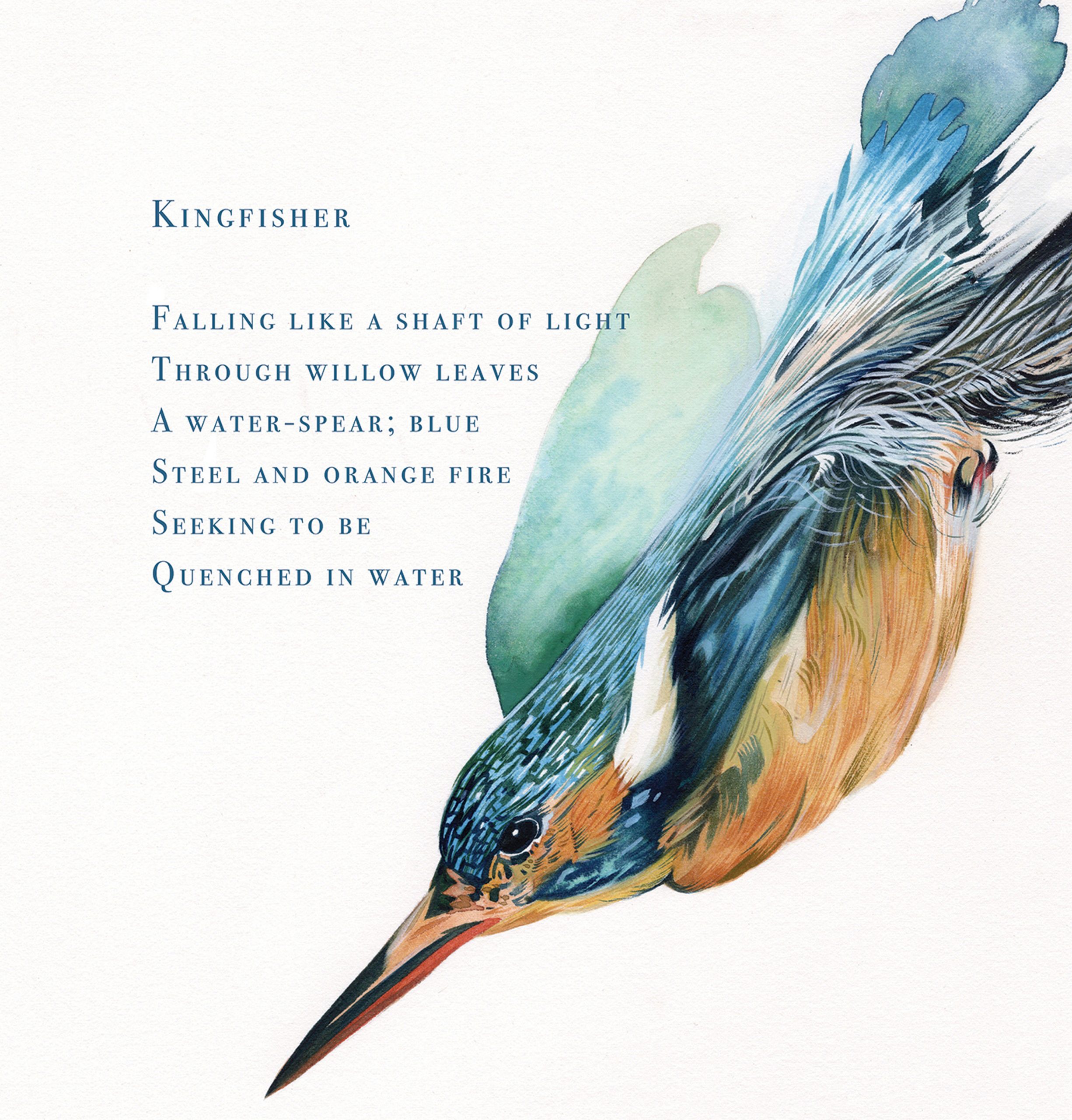

The annual exhibition of The Wildlife Art Society International. A display consisting of over 300 works, both 2D and 3D. The society provides a focus for the interests of wildlife artists, painters, sculptors and photographers, whether they are professional, serious amateur or leisure artists. Most works are for sale. See members demonstrating every day.
The Wildlife Art Society International was founded in 1992 and has grown to be one of the leading Wildlife Art Societies in the UK and continues to grow in recognition internationally.
This event is organised by TWASI and will take place in a marquee on the front lawn of Nature in Art.
NOW EXTENDED TO 23rd July (was 16th)

A unique selection of work by the popular UK cartoonist, Norman Thelwell.
This year marks the 100th anniversary of the birth of one of Britain’s most popular cartoonists to have worked in Britain since the Second World War, Norman Thelwell (1923 – 2004). Although best known for his images of girls and their fat ponies, his work is far more wide ranging than many realise. The countryside and environment were particular passions that informed his work. His cartoons were a powerful way for him to comment on issues of the day.
‘Wrestling with a Pencil’ was the title of Thelwell’s autobiography (1984), and in it he says ‘Although my object as a cartoonist was mainly to earn my living by amusing readers, it was also quite possible to express my own feelings on subjects, situations and events about which I felt strongly. Politics I have always found very boring and there was no way in which I could have become a political cartoonist. My interest lies in the minutiae of the human dilemma, the day to day problems of life and the way we are all swept along by events or developments which we feel helpless to influence. I seem to have touched at one time or another on almost every subject under the sun from combine harvesters to computers, rockets to ramblers, paraffin to pigs. But the predominant thread which has always run through my work is my love of and fascination with the countryside: the flesh and bones of these islands.’
This exhibition will include a broad selection from a remarkable body of work produced over a lifetime. The selection was made with the assistance of Thelwell’s artist son, David, who will be artist in residence at Nature in Art in June, and Thelwell’s daughter, Penny.
In 1952, Thelwell penned his first cartoon for the satirical British magazine Punch, renowned internationally for its wit, irreverence, and for publishing the world’s best comic writers and poets. This led to a relationship that lasted for 25 years and over 1,500 cartoons, including 60 front covers. Some original Punch cartoons will be included in this exhibition.

Thelwell published his first pony cartoon in 1953, and quite by accident, his name became synonymous with images of little girls and fat hairy ponies. The ‘Thelwell pony’ quickly became the most-often referenced source of horse humour the world over, and today, as we prepare to celebrate the centennial of the artist’s life, his caricatures remain as popular as ever. Thelwell’s 34 books have sold over 2 million copies in the United Kingdom alone, and his cartoons are found on a diverse array of merchandise. Interestingly, when we need it most, his book ‘The Effluent Society’, which commented on environmental issues, was republished this March. (This, and some other merchandise will be available in the shop.)
Lent by the family archive, this display, although including a few of his renowned horse and pony pictures, also embraces serious paintings completed purely for pleasure, and drawn and painted cartoons with relevance to nature, the countryside and environment, plus early works from his army days in India and before. Together they reveal not just Thelwell’s skill as an artist, but also his mastery of sharp social comment and his awareness of then current and future threats. He used satire to convey serious messages about the need to preserve the natural world; many of which still have poignancy today.
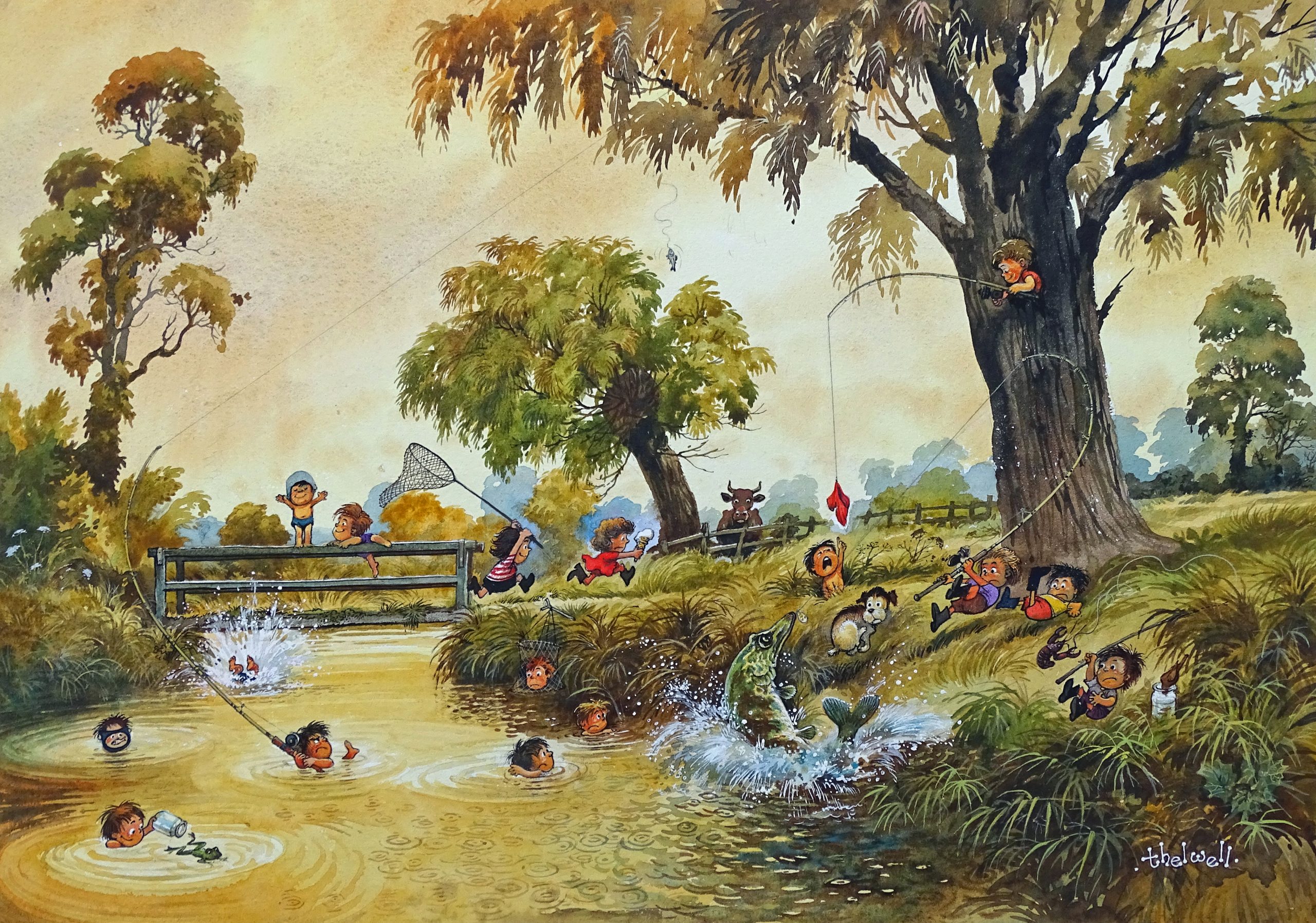
Many of his 34 books centre upon country life and country pursuits, and their light-hearted images are founded upon a thorough knowledge of their topics. (He was a keen angler, for example.) Although progress has been made in some areas of conservation and the tackling of environmental challenges, it is likely that Thelwell would be disappointed that many of his cajoling drawings are as relevant today as the day he put pencil to paper. Things have not changed as much as he would have liked.
For the last quarter of a century of his life Thelwell lived in the Test Valley at Timsbury, gradually restoring a farm house and landscaping the grounds which gave rise to his first factual book, ‘A Plank Bridge by a Pool’, which detailed the first two lakes he dug there. A third lake was later featured on the BBC TV. Written much earlier, but published three years later, ‘A Millstone Round My Neck’ described his experiences in re-building a Cornish water mill that was sold before the book was published. He always loved old buildings, and in his autobiography, ‘Wrestling with a Pencil’ he wrote about his joy of old cottages.


FULLY BOOKED
Course Suitability: Absolute Beginners – Improvers
Maximum Capacity: 10
Course Description:
Painting can be very therapeutic, but the enjoyment can quickly disappear if you find yourself frustrated with what you produce. This class is about reintroducing you to the fun of painting, loosening your painting style and teaching you how to take the pressure off the end result. It will teach you how to be inspired to create relaxing abstract paintings but also how to feel relaxed when creating them.
Through guided exercises you will learn different painting techniques, as well as practical tips to free up your painting style. We will explore different materials, surfaces and subjects, painting to music and other ways to help you unwind and take pleasure in painting. There will be laughing as well as moments of calm and reflecting. A fun filled day learning something new and giving you the chance to relax. Suitable for all abilities, even those who have not picked up a paintbrush before.
Materials List:
The tutor will provide the required materials for course participants. The cost per person will be £10, to be paid (in cash) to Christina directly on the day of the course. Please wear old clothes / apron.
Artist’s Profile:
Christina is an abstract artist based in Gloucester. Inspired by the natural world she works with inks and paints to create layers of translucent colours resulting in soothing and relaxing art.
Christina has had lots of experience in the arts and running workshops and at one stage was even the Education Officer here at Nature in Art.
She has exhibited work on the London underground, Saatchi Art and is represented by Wychwold Art Gallery. She had a pop up shop in John Lewis and produced artwork for Gloucestershire Hospital to improve their mental health in Crisis room.
Course Costs:
Members: £48
Non-members: £59
(cost does not include lunch (available to order and purchase on the day from the Coffee Shop))