Wildlife Photographer of the Year
4th February – 6th April
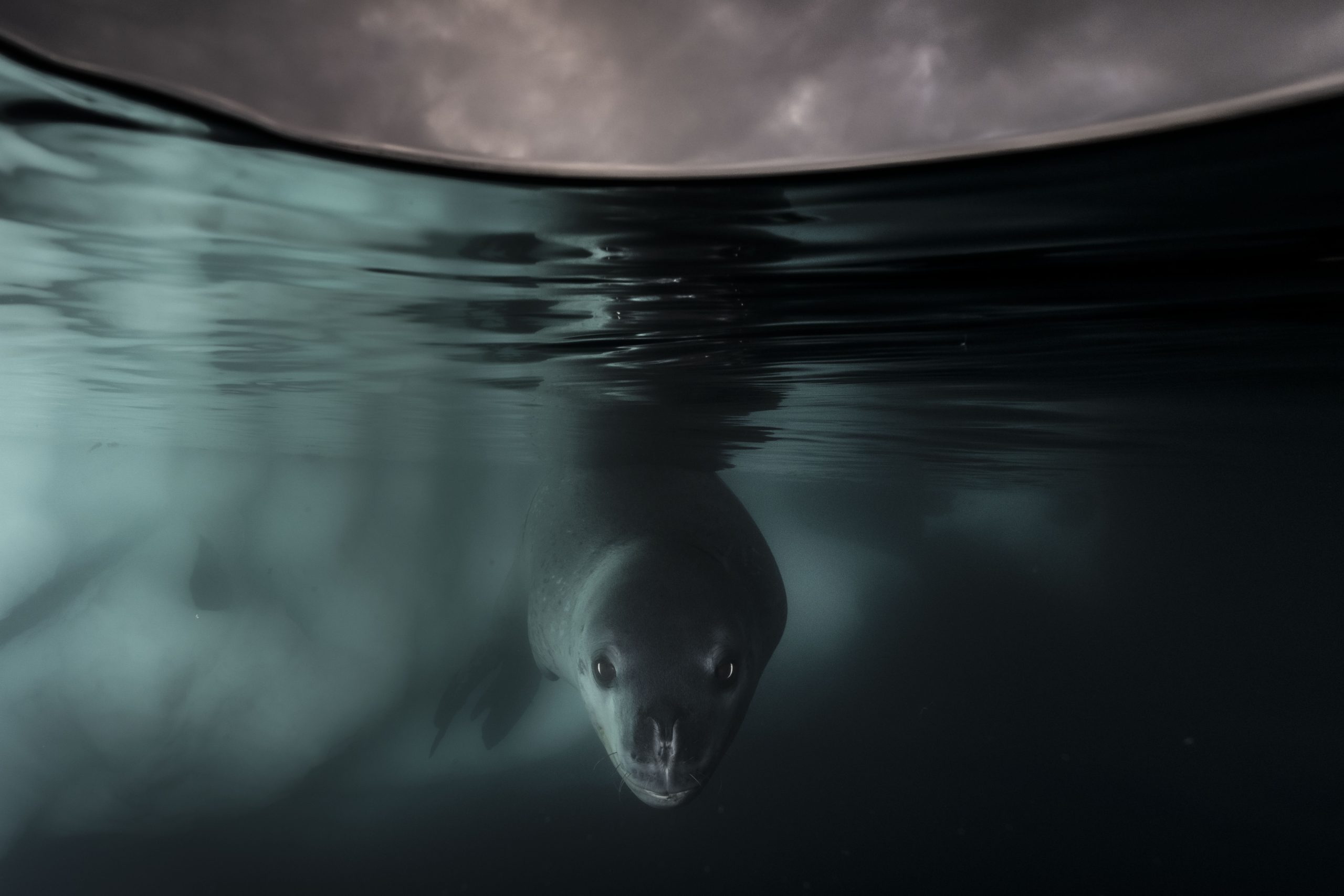
Selected from 59,228 entries from 117 countries and territories, the winners of the Natural History Museum’s prestigious competition in its 60th year are all on show in this stunning exhibition of 100 images revealing the natural world’s most astonishing and challenging sights.
Disappearing Woodlands – Disappearing Skills


April 8th – 27th
A sumptuous display by members of the Goldwork Guild showcasing varied techniques of hand and goldwork embroidery. The show aims to revive these endangered art forms to portray the intricacies of woodland nature.
The exhibition will feature the historic, traditional and modern interpretations of two and three-dimensional hand embroidery whilst embracing the use of modern textiles and textures. These together with the use of meticulously reproduced historical materials and techniques that have now been in decline for decades or even hundreds of years, will showcase the art form in the round.
See members demonstrating April 12th, 13th, 19th, 20th, 26th and 27th.
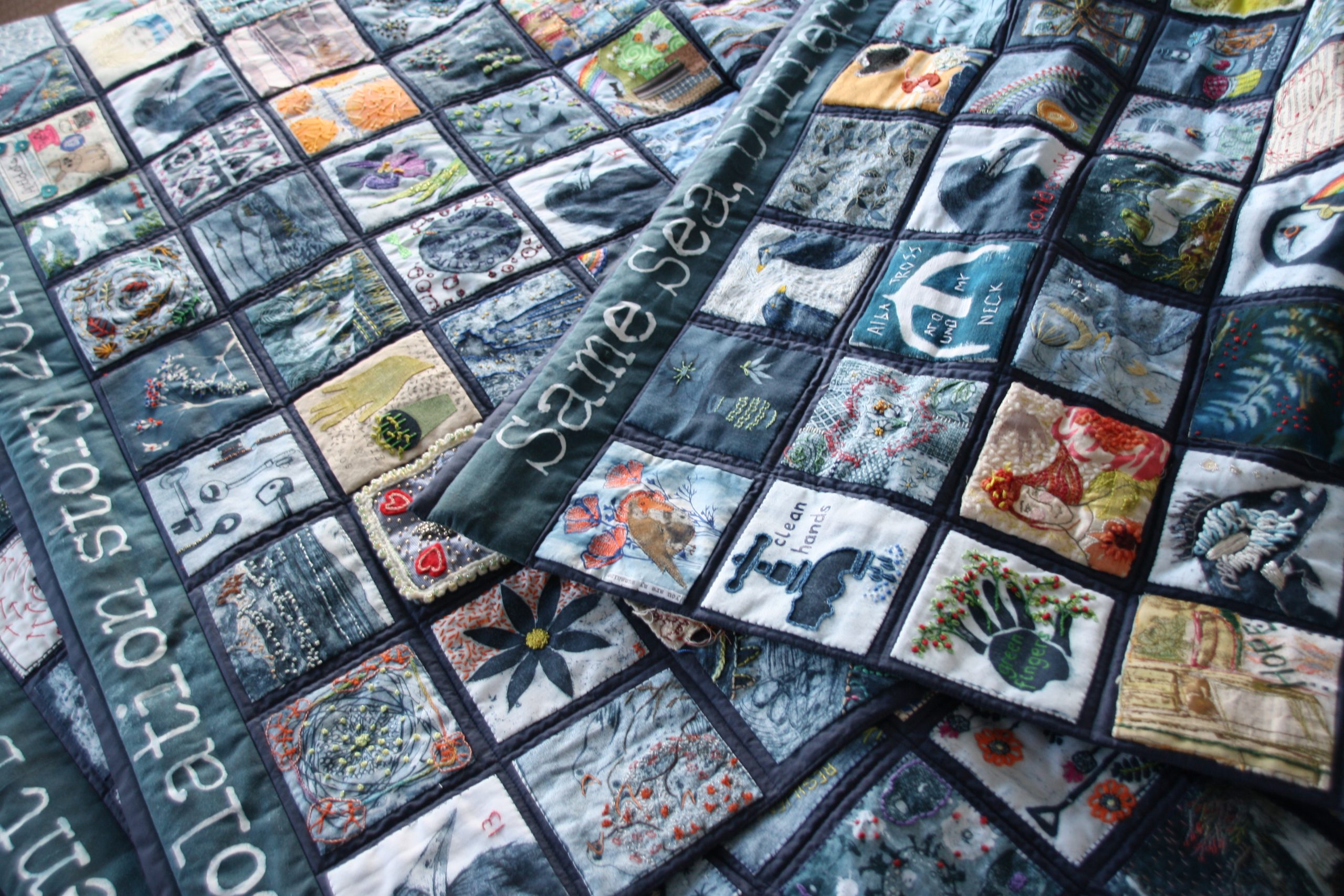
Same Sea, Different Boat
April 12th – 27th
See the power of craft as a force for good, helping us share stories, relieve stress and connect with one another. An open-ended project, over 600 printed and stitched squares, joined into panels, have produced a large community quilt.
Nature in Miniature: May 6th – June 8th


An exhibition of exquisite 2D and 3D works celebrating wildlife and nature in miniature by members of the Royal Miniature Society. Founded in 1896 the Royal Society of Miniature Painters, Sculptors and Gravers promotes and champions the genre of miniature art. This show will include close to 200 exhibits.
While the traditional subject matter of portraiture continues unabated, today’s Miniaturists incorporate a very broad range of subject matter, including landscapes, still life, marine and wildlife, as well as fresh and innovative styles and subjects.
So, what is a miniature? Whilst there is no definitive answer, a miniature can be described as a fine work of art with exquisite detail in a frame size no more than 15 x 11.5cm or under 20cm for sculpture. Eizabeth Meek MBE, who was the Society’s President from 2004 – 2013, described working as a Miniaturist as the most demanding of all painting genres, ‘Concentration, stillness of mind and body and a dogged perseverance for perfection — the perfect miniature needs to be devoid of errors.’
The Society’s 130-year legacy still endures with over 90 of its members and non-members contributing to its activities.
See an RMS member at work on 24th May and see miniaturist sculptor, Philip Nelson, at work 3rd – 8th June.
Ros Wise Garden Paintings

A special display to coincide with the National Garden Scheme Open Day. This is a feast of large canvases capturing the contrast in tones and colour, and the vibrancy, energy and beauty found in gardens, alerting us to the power that nature holds for us.
Growing Together: A Photographic Exploration of Community, Heritage, and Healing Through Gardening
Growing Together explores how gardening connects people and improves well-being. 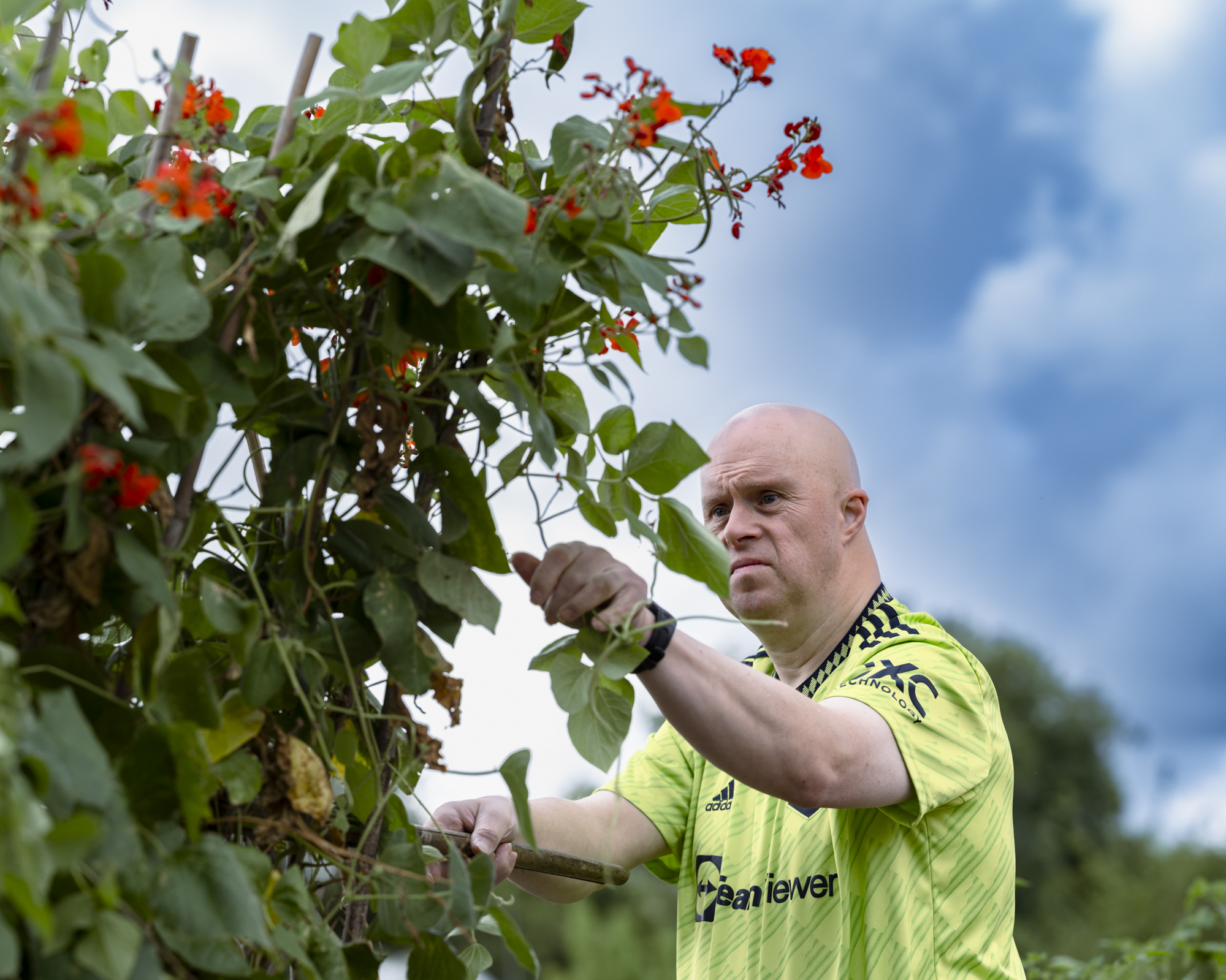
Social prescribing provides activities that support emotional and mental health, as is evident each week, when a group gathers at an allotment in Gloucester, where the simple act of gardening becomes something powerful.
Here, people facing disabilities, mental health challenges, and social isolation find healing through nature and community bonds. Beyond growing vegetables, allotments bring people together, foster connection and support, creating a space where nature unites.
Historically, allotments have been safe havens for working-class people, providing food, purpose, and pride. These spaces hold deep cultural significance, reflecting resilience, creativity, and shared traditions.
Through portrait photography, Stefania Distante captures the heart of this community, highlighting the strength, heritage, and transformation that flourish in these gardens. This project celebrates how gardening fosters botanical, personal and collective growth.
TWASI
May 24th – June 1st (including B.Holiday Monday)
 .
. 
The annual selling exhibition of the Wildlife Art Society International. Over 350 works, both 2D and 3D. The Society is a focus for the interests of wildlife artists, painters, sculptors and photographers. Demonstrations every day.
A Nod for Lady Elwes
May 30th – 31st
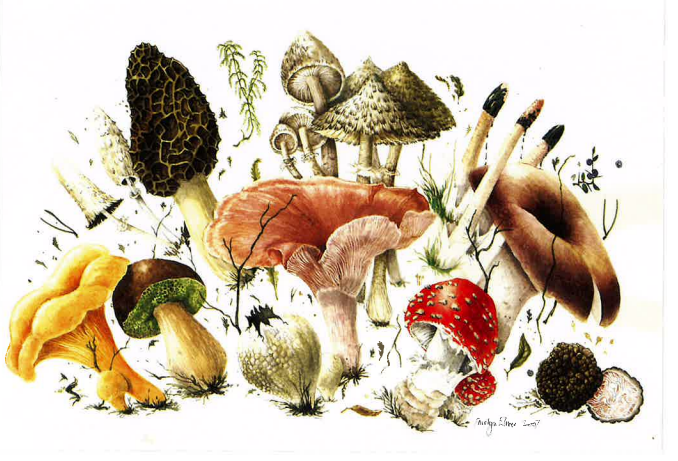
Lady Carolyn Elwes was the lifeblood running through the snowdrops at the renowned Colesbourne Gardens. Lady Elwes, who always liked to be called Carolyn, was a self-taught artist who kept more than 30 illustrated diaries of her activities and was an expert needleworker who made rugs, cushions, hats and dresses throughout her life and did all the illustration for the Colesbourne Gardens snowdrop brochures and cards for more than 30 years. She was a national W.I. judge of needlework and crafts and still had time to be a wonderful wife and mother. This is a rare chance to see some of her original art and crafts plus sketchbooks from the family archives.
This is a unique selection of work assembled exclusively for this display – a celebration of the whale. It includes a few familiar exhibits and artists already represented in Nature in Art’s collection, shown in the company of pieces not previously seen at Nature in Art. In addition, we have developed some supporting activities, a talk, videos and the creation of a participatory artwork, all generously assisted by a grant from The Art Fund as part of The HERDS project.
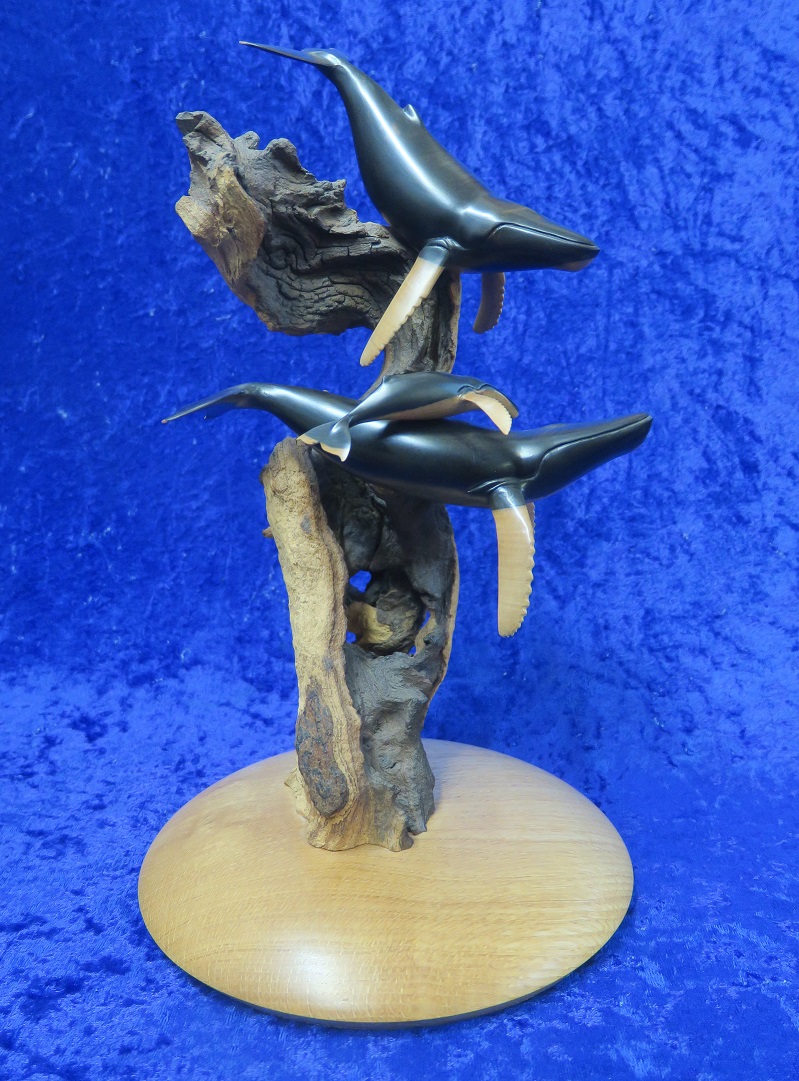
As well as drawing our attention to the whale species, their beauty and how they can point us to hopeful messages, the exhibition will encourage visitors to think about some of the pressing threats on the marine environment and climate change which cannot be ignored. The exhibition includes both 2D and 3D works, including this bronze sculpture of a humpback whale by Nick Bibby.
Two of the artists, whose work is focused on the marine environment and are exhibiting at Nature in Art for the first time, are Tom Ashworth and Olivier Leger.
Tom is renowned for his depictions of whales. As people arrive at Nature in Art and look right into one of the downstairs galleries they will see his 3.2m wide work made of 6 separate painted panels depicting the head of a sperm whale and a squid.
Tom says of this piece ‘A phone call on the morning of 3rd March 2011 sent me scampering to the coast near to where I live at Pegwell Bay to find a large male sperm whale had beached itself. To see a cetacean out of its element leaves you feeling sadness for its demise while, at the same time, experiencing awe at being in the presence of something totally alien. This work is the fourth actual–size whale painting that I have attempted and is the largest that isn’t a site specific mural. It is based on the Pegwell stranding and inspired in no small part by Philip Hoare’s book ‘Leviathan’.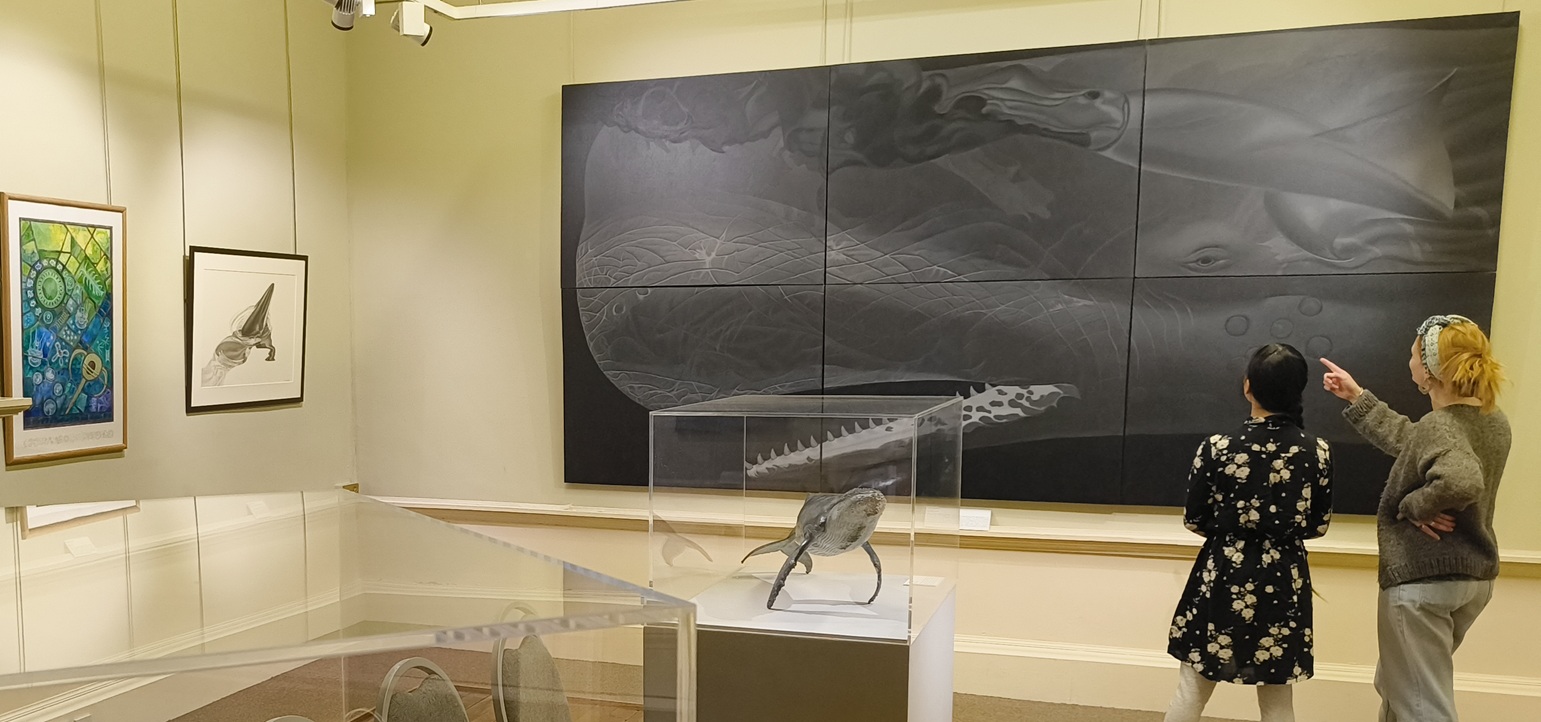
Accompanying this major piece will be a number of Tom’s smaller works depicting a variety of different whale species. Tom is passionate about whales and has a lifelong interest in cetaceans. He uses whale imagery to explore ideas about conservation, their adaptations to an environment alien to us and how we have related to them throughout our history and culture. His intention is to produce work which lives in the space between fine art and illustration, using acrylic paint or pencil.
Looking left when they arrive, visitors will see in the other gallery Olivier Leger’s 2.2 m wide ink work. Called ‘Whaley McWhaleface’, it took 6 months to create. Olivier told us about how it was created …. ‘To help tackle the scale and complexity, I made a small plan of the composition and sketched the outline onto my drawing board …. then the ideas and details evolved as I worked my way inch-by-inch across the drawing, worked with fine-tipped pen (0.03mm) and ink.
Unlike my previous drawings on paper, this piece is created on a gessoed (a hard primer) board. Whereas paper is unforgiving, this surface allowed me to smudge, sand, scratch, and render in new ways. I broke some rules and I loved it!
A mother humpback whale with her calf embark on a remarkable migration. As you look closer, a thousand tiny details reveal themselves; the ocean animals making their home in the coral reefs that have established on her colossal body. ‘Whaley McWhaleface’ provides sanctuary for the ocean life inhabiting the thriving ecosystems and vibrant habitats she carries, kept safe from humanity’s impact on the sea.
The world’s humpbacks are making a comeback. Their recovery gives hope that our oceans can be restored. ‘Whaley McWhaleface’ is a symbol of that hope. Within her sphere, ocean life thrives; turtles congregate around flourishing coral gardens, a squadron of manta rays hitch a ride on the current and hammerhead sharks school in the shallows.’
Other artists represented in the show include Sir Peter Scott, Darren Rees, Dafila Scott, Martin Hayward-Harris, Nick Bibby, Bruce Pearson, Shelley Perkins, Derek George, Tanya Russell, Beth Erland and others. Many of these works have personal stories behind them. For example, in 1983 Peter Scott spoke at the Whales Alive Conference in the USA. He described a whale- watching excursion he experienced as ‘mind blowing’. He committed his memory to canvas, and the resulting painting is included in this exhibition (left). The animal shown, that breached at least 8 times, once within fifty yards of his boat, was a well-known female humpback who researchers had named ‘Pegasus’ (the name of the painting). Also, one of Darren Rees’s exhibits was worked on while he was artist in residence at Nature in Art; Shelly Perkins’s resulted fr om her residency with Scott Polar Research in the Antarctic, and Martin Hayward Harris’s sculpture was a maquette for the life-size blue whale at the Natural History Museum in London, that he was involved in making.
Sir Peter was a passionate campaigner for whales and some of his profound words regarding whales will be included in the exhibition. He would want people not only to enjoy the artwork included, but to engage with some of the conservation issues that the artwork highlights.
As part of the exhibition there will be an installation, made by younger visitors in preceding weeks, reflecting on human impact on whales and the marine environment, plus videos to increase our knowledge, including with Elsie Knight, aged 12, interviewing marine researchers.
To complement the exhibition, Chris Butler-Stroud of Whale and Dolphin Conservation will be giving an illustrated talk, ‘People of the Sea’, on July 10th. More details here.
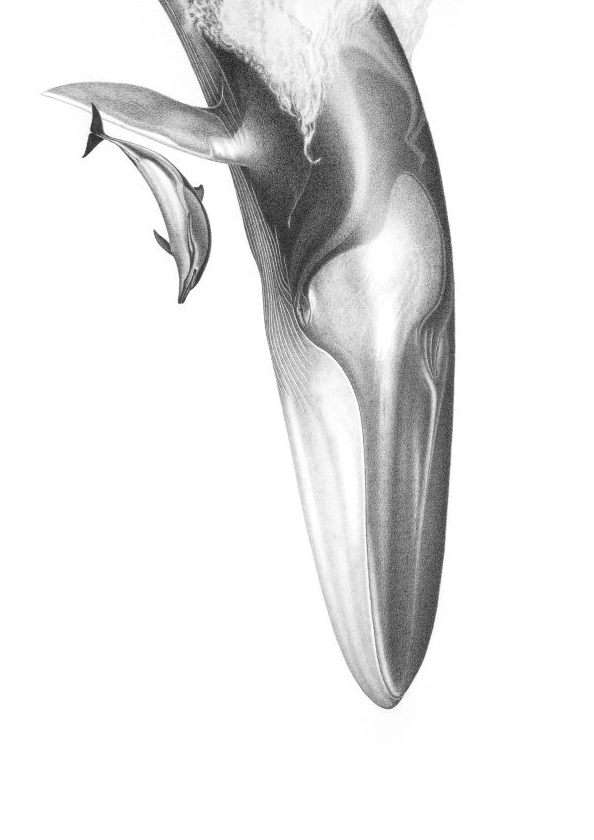
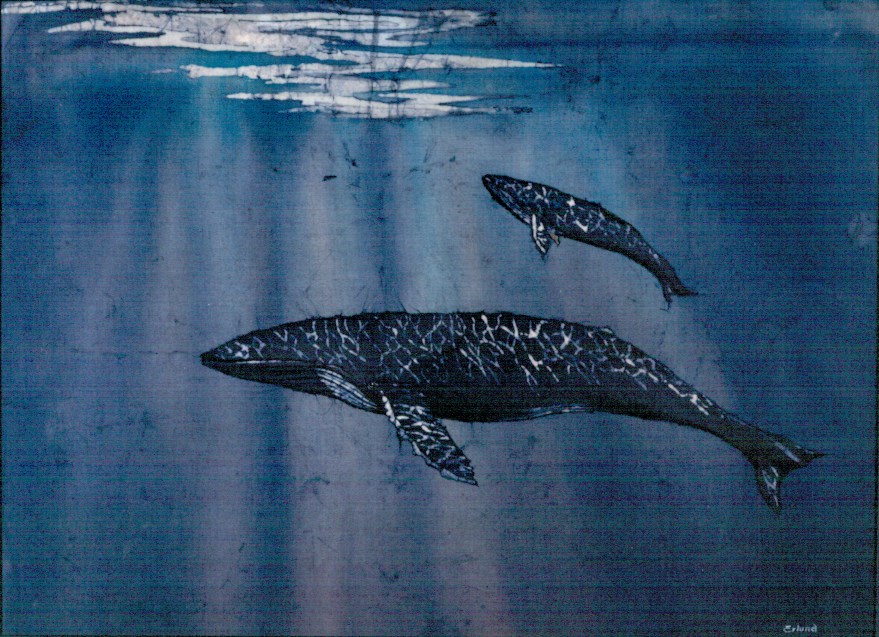
Image: Left: Fin whale and dolphin by Tom Ashworth Below: ‘Take a Breath’ Humpback whales (Batik) by Beth Erlund (USA), and Humpback whale (bronze) by Nick Bibby
British Wildlife Photography Awards 2025
July 22nd – September 7th
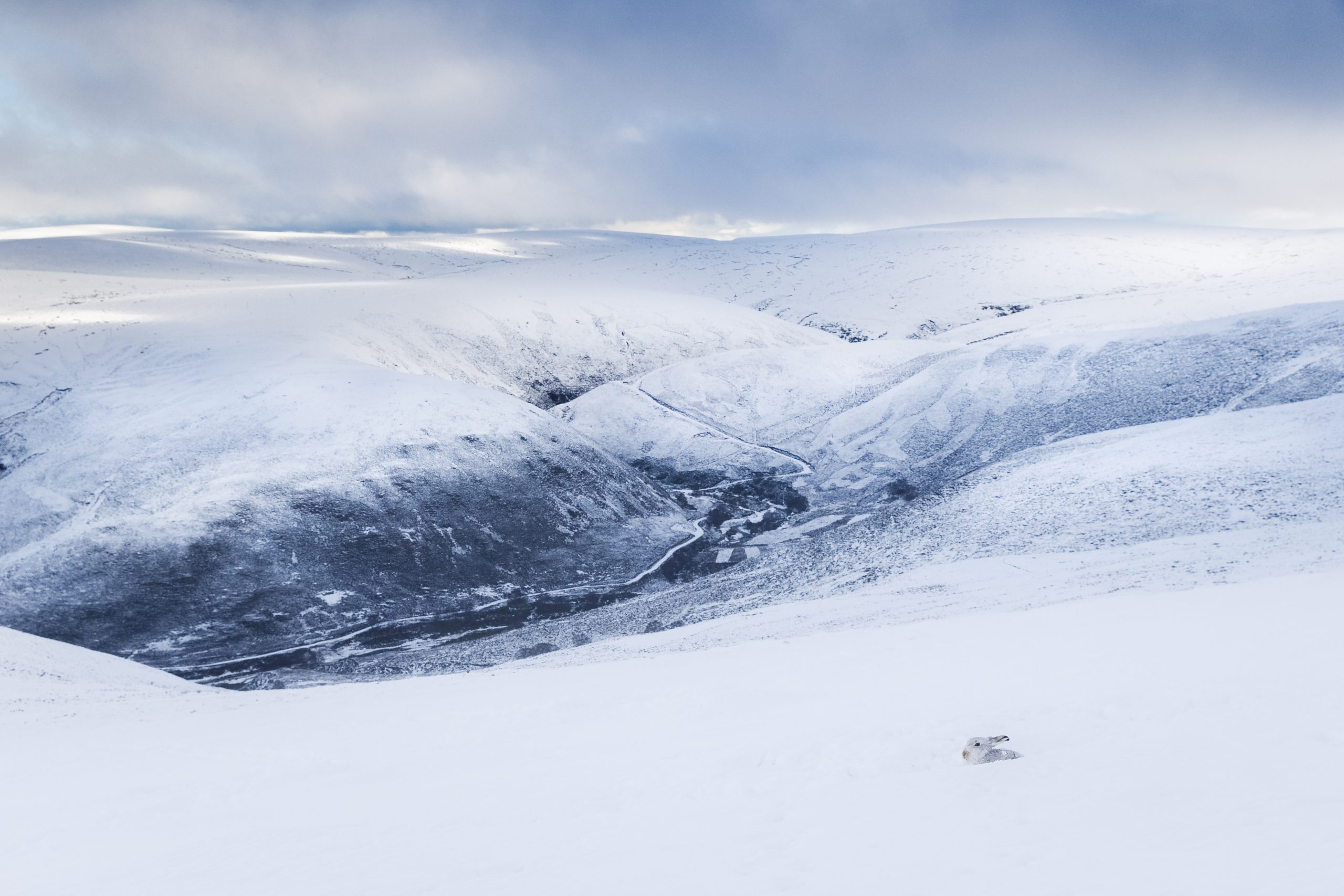
Kingdom of the Hare by Drew Buckley / BWPA
This prestigious competition has toured the UK since 2009, celebrating the talent of wildlife photographers in the UK whilst highlighting the beauty of British landscape and wildlife, as well as contemporary issues in conservation, biodiversity and climate change. This is an exhibition suitable for all ages, ready to inspire young minds and challenge some of us older ones.
See more of the winning entries HERE
The winning photograph, “Urban Explorer” by Simon Withyman, was taken in Bristol in 2023, capturing a fox’s ‘beauty in [the] everyday urban scene’. A wedding photographer by profession, he has spent three years trailing this particular vixen across the city. It is a striking look at city wildlife, the vixen looking down the camera in the midst of Bristol’s tower blocks. It also speaks to the dedication of wildlife photographers, Withyman having lost track of the fox for a period and rediscovering it across the city, driven by a love of the species.
This award explores not just urban wildlife but a whole host of categories, from ‘Botanical Britain’ and ‘Animal Portraits’ to ‘Coast & Marine’ and ‘Wild Woods’, promising a rich view of British photography talents. As visitors walk through the exhibition, they can embark on a visual journey across the UK, discovering hidden gems and moments of wonder in the most unexpected places. For young photographers, it is a chance to see where their passion could lead, while for seasoned enthusiasts, it offers fresh inspiration and a renewed appreciation for their craft.
As always, entry to this exhibition is included in admission fee.