This is a unique selection of work assembled exclusively for this display – a celebration of the whale. It includes a few familiar exhibits and artists already represented in Nature in Art’s collection, shown in the company of pieces not previously seen at Nature in Art. In addition, we have developed some supporting activities, a talk, videos and the creation of a participatory artwork, all generously assisted by a grant from The Art Fund as part of The HERDS project.
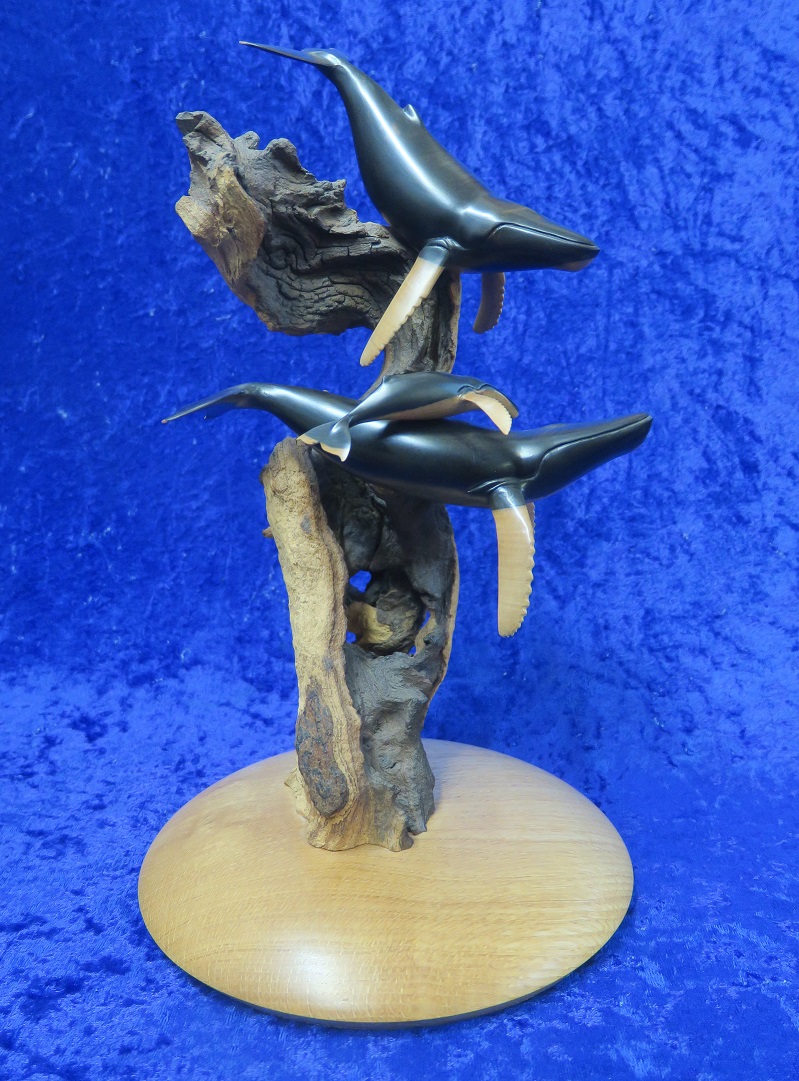
As well as drawing our attention to the whale species, their beauty and how they can point us to hopeful messages, the exhibition will encourage visitors to think about some of the pressing threats on the marine environment and climate change which cannot be ignored. The exhibition includes both 2D and 3D works, including this bronze sculpture of a humpback whale by Nick Bibby.
Two of the artists, whose work is focused on the marine environment and are exhibiting at Nature in Art for the first time, are Tom Ashworth and Olivier Leger.
Tom is renowned for his depictions of whales. As people arrive at Nature in Art and look right into one of the downstairs galleries they will see his 3.2m wide work made of 6 separate painted panels depicting the head of a sperm whale and a squid.
Tom says of this piece ‘A phone call on the morning of 3rd March 2011 sent me scampering to the coast near to where I live at Pegwell Bay to find a large male sperm whale had beached itself. To see a cetacean out of its element leaves you feeling sadness for its demise while, at the same time, experiencing awe at being in the presence of something totally alien. This work is the fourth actual–size whale painting that I have attempted and is the largest that isn’t a site specific mural. It is based on the Pegwell stranding and inspired in no small part by Philip Hoare’s book ‘Leviathan’.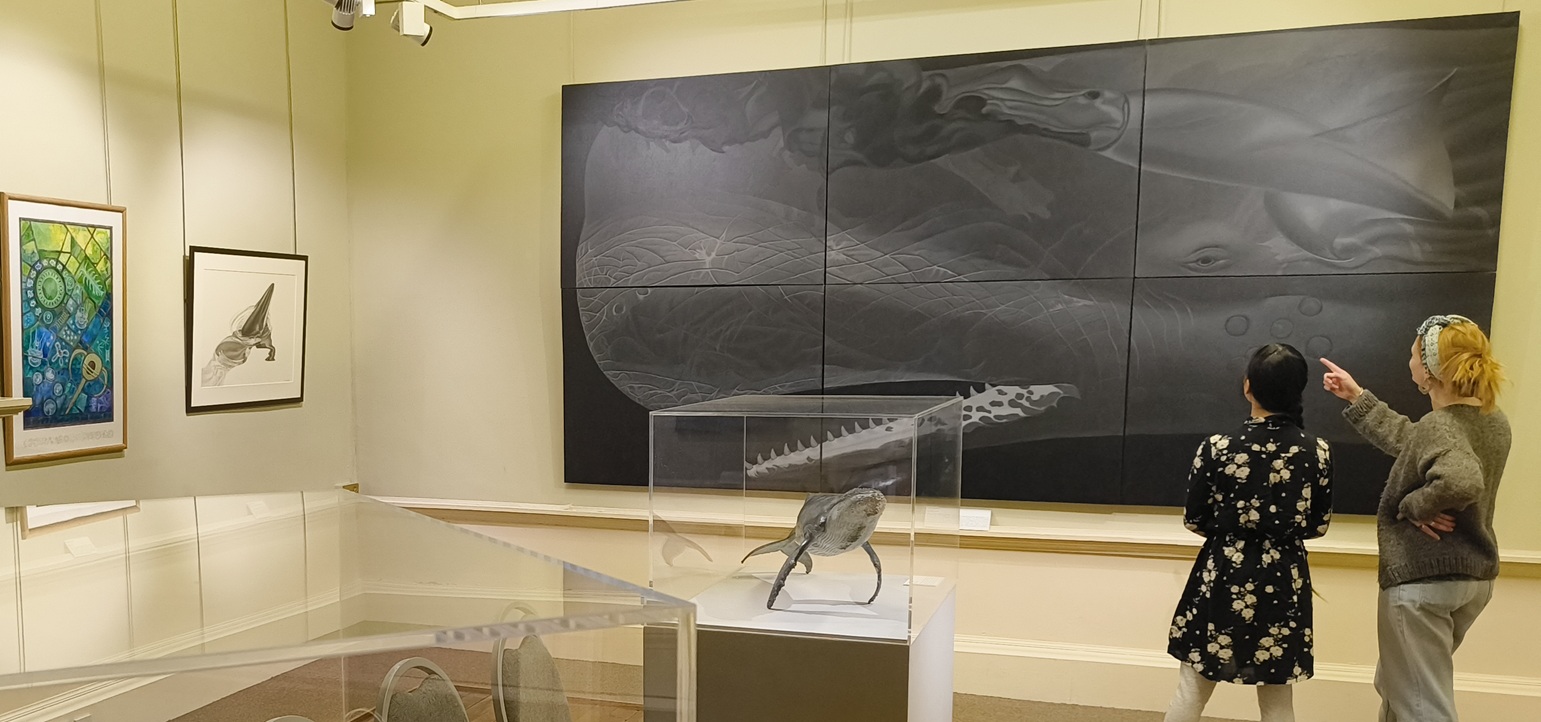
Accompanying this major piece will be a number of Tom’s smaller works depicting a variety of different whale species. Tom is passionate about whales and has a lifelong interest in cetaceans. He uses whale imagery to explore ideas about conservation, their adaptations to an environment alien to us and how we have related to them throughout our history and culture. His intention is to produce work which lives in the space between fine art and illustration, using acrylic paint or pencil.
Looking left when they arrive, visitors will see in the other gallery Olivier Leger’s 2.2 m wide ink work. Called ‘Whaley McWhaleface’, it took 6 months to create. Olivier told us about how it was created …. ‘To help tackle the scale and complexity, I made a small plan of the composition and sketched the outline onto my drawing board …. then the ideas and details evolved as I worked my way inch-by-inch across the drawing, worked with fine-tipped pen (0.03mm) and ink.
Unlike my previous drawings on paper, this piece is created on a gessoed (a hard primer) board. Whereas paper is unforgiving, this surface allowed me to smudge, sand, scratch, and render in new ways. I broke some rules and I loved it!
A mother humpback whale with her calf embark on a remarkable migration. As you look closer, a thousand tiny details reveal themselves; the ocean animals making their home in the coral reefs that have established on her colossal body. ‘Whaley McWhaleface’ provides sanctuary for the ocean life inhabiting the thriving ecosystems and vibrant habitats she carries, kept safe from humanity’s impact on the sea.
The world’s humpbacks are making a comeback. Their recovery gives hope that our oceans can be restored. ‘Whaley McWhaleface’ is a symbol of that hope. Within her sphere, ocean life thrives; turtles congregate around flourishing coral gardens, a squadron of manta rays hitch a ride on the current and hammerhead sharks school in the shallows.’
Other artists represented in the show include Sir Peter Scott, Darren Rees, Dafila Scott, Martin Hayward-Harris, Nick Bibby, Bruce Pearson, Shelley Perkins, Derek George, Tanya Russell, Beth Erland and others. Many of these works have personal stories behind them. For example, in 1983 Peter Scott spoke at the Whales Alive Conference in the USA. He described a whale- watching excursion he experienced as ‘mind blowing’. He committed his memory to canvas, and the resulting painting is included in this exhibition (left). The animal shown, that breached at least 8 times, once within fifty yards of his boat, was a well-known female humpback who researchers had named ‘Pegasus’ (the name of the painting). Also, one of Darren Rees’s exhibits was worked on while he was artist in residence at Nature in Art; Shelly Perkins’s resulted fr om her residency with Scott Polar Research in the Antarctic, and Martin Hayward Harris’s sculpture was a maquette for the life-size blue whale at the Natural History Museum in London, that he was involved in making.
Sir Peter was a passionate campaigner for whales and some of his profound words regarding whales will be included in the exhibition. He would want people not only to enjoy the artwork included, but to engage with some of the conservation issues that the artwork highlights.
As part of the exhibition there will be an installation, made by younger visitors in preceding weeks, reflecting on human impact on whales and the marine environment, plus videos to increase our knowledge, including with Elsie Knight, aged 12, interviewing marine researchers.
To complement the exhibition, Chris Butler-Stroud of Whale and Dolphin Conservation will be giving an illustrated talk, ‘People of the Sea’, on July 10th. More details here.
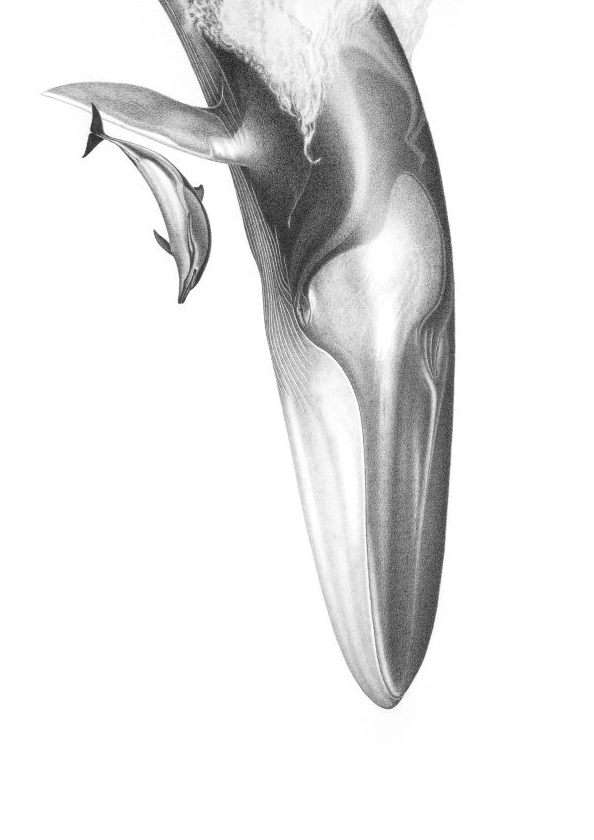
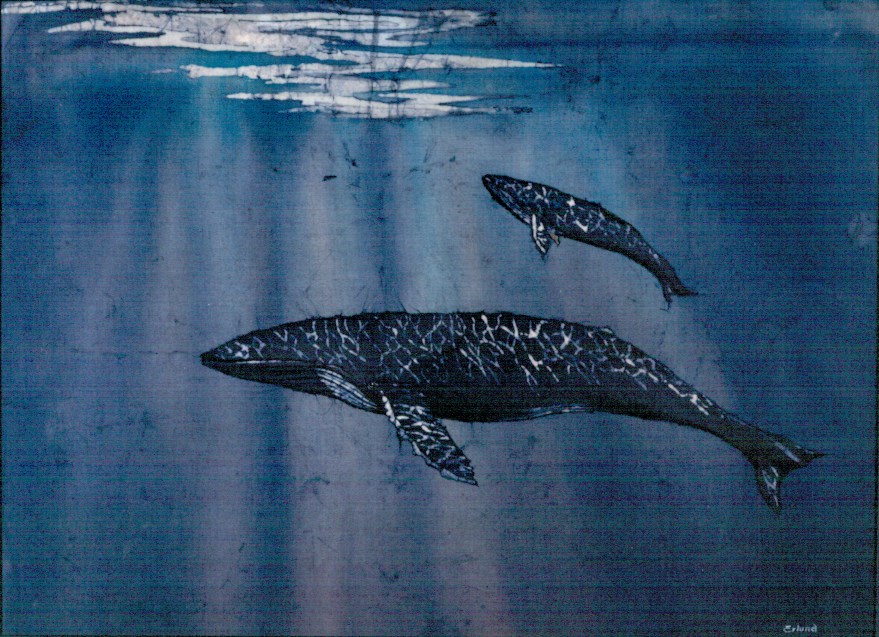
Image: Left: Fin whale and dolphin by Tom Ashworth Below: ‘Take a Breath’ Humpback whales (Batik) by Beth Erlund (USA), and Humpback whale (bronze) by Nick Bibby
Join us on a Saturday morning in June for a free story time in our cosy corner, learning about the environment and how we can help.
Sessions are 10:30 and 11:30, and last 15-20 minutes
14th, 21st and 28th June
Suitable for all children, but aimed at little ones
Free, no need to book
With thanks to The HERDS x Art Fund
People of the Sea: An illustrated talk by Chris Butler-Stroud, CEO of Whale and Dolphin Conservation
Doors open 7pm to view galleries. Finger buffet at 7.30pm followed by talk.
PLEASE BOOK YOUR TICKET IN ADVANCE! Thank you.
WDC, Whale and Dolphin Conservation (formerly WDCS) is the leading global charity dedicated to the conservation and protection of whales and dolphins. Chris Butler-Stroud is a dedicated campaigner for whales and dolphins and their right to live protected from human impacts. He has a passion for the marine environment and heads up WDC to defend these remarkable creatures against the many threats they face through campaigns, lobbying, advising governments, conservation projects, field research and rescue. WDC’s vision is a world where every whale and dolphin is safe and free.
An evening for everyone coinciding with our Whale Song exhibition. Book here
British Wildlife Photography Awards 2025
July 22nd – September 7th
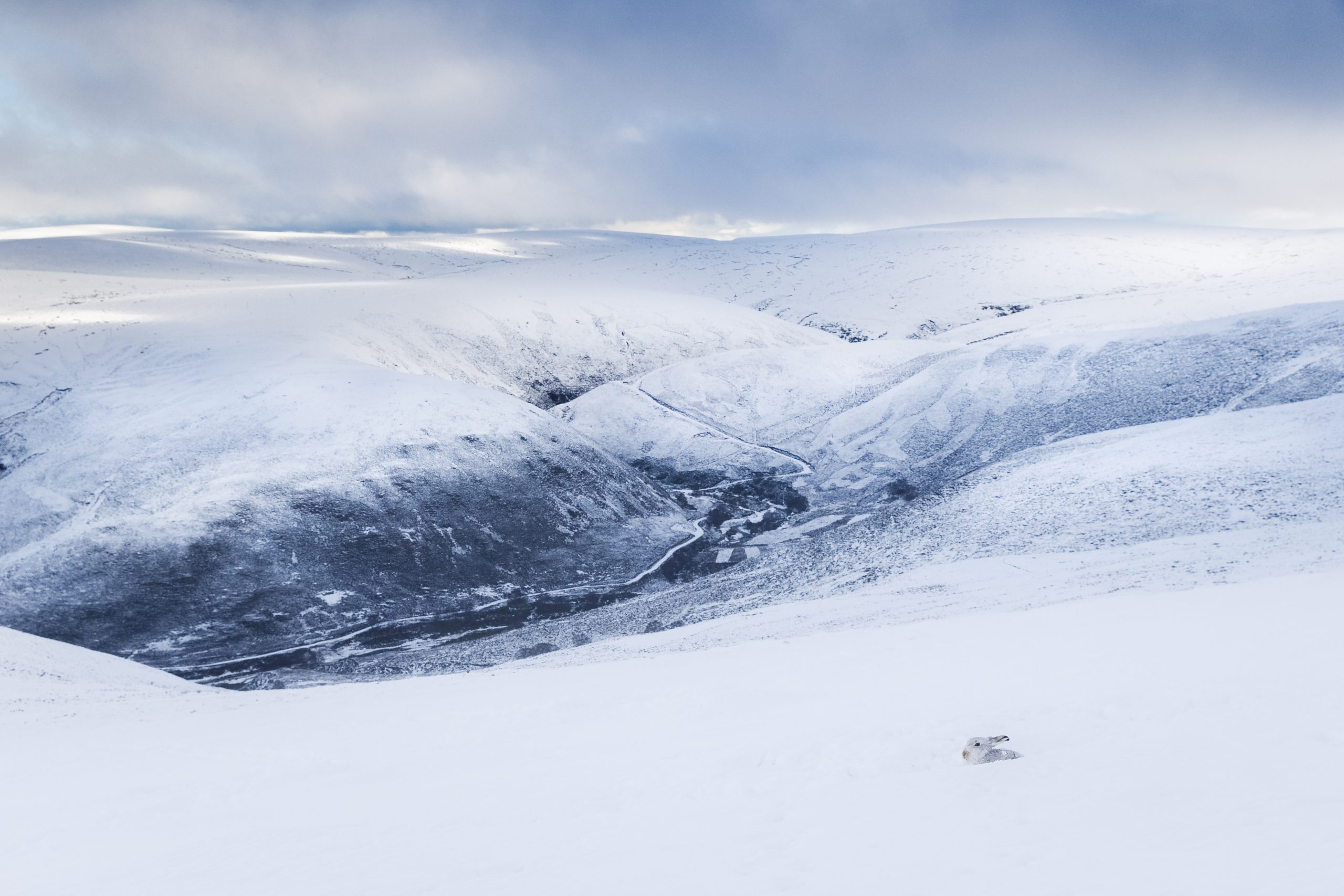
Kingdom of the Hare by Drew Buckley / BWPA
This prestigious competition has toured the UK since 2009, celebrating the talent of wildlife photographers in the UK whilst highlighting the beauty of British landscape and wildlife, as well as contemporary issues in conservation, biodiversity and climate change. This is an exhibition suitable for all ages, ready to inspire young minds and challenge some of us older ones.
See more of the winning entries HERE
The winning photograph, “Urban Explorer” by Simon Withyman, was taken in Bristol in 2023, capturing a fox’s ‘beauty in [the] everyday urban scene’. A wedding photographer by profession, he has spent three years trailing this particular vixen across the city. It is a striking look at city wildlife, the vixen looking down the camera in the midst of Bristol’s tower blocks. It also speaks to the dedication of wildlife photographers, Withyman having lost track of the fox for a period and rediscovering it across the city, driven by a love of the species.
This award explores not just urban wildlife but a whole host of categories, from ‘Botanical Britain’ and ‘Animal Portraits’ to ‘Coast & Marine’ and ‘Wild Woods’, promising a rich view of British photography talents. As visitors walk through the exhibition, they can embark on a visual journey across the UK, discovering hidden gems and moments of wonder in the most unexpected places. For young photographers, it is a chance to see where their passion could lead, while for seasoned enthusiasts, it offers fresh inspiration and a renewed appreciation for their craft.
As always, entry to this exhibition is included in admission fee.
The Gloucestershire Coloured Pencil Artists are a new group of local artists who met through an online Drawing Academy course. Brought together by a shared love of coloured pencils, they now meet regularly as friends to support and inspire one another. After realising they had created a strong body of work, the idea to exhibit their drawings naturally followed.
Coloured pencils are ideal for capturing fine detail, making them perfect for portraying the beauty of nature. Each piece is built up slowly over many hours, with colour carefully layered and blended one stroke at a time. Using both oil-based and wax-based pencils, the artists are able to create depth, shadow, and texture in their work.
Their love for the medium has not only strengthened their connection as a group but also inspired them to promote coloured pencil art more widely and share its creative potential with others.
Join them in the Wallsworth Centre from 28th July to 10th August to see their work.

Art & sculpture inspired by British big cat encounters
With evidence from DNA and tooth marks on bones, Britain’s big cats are emerging from myth to reality. These reported pumas, black leopards & lynx are now represented in art, as people have been moved to illustrate them.
The artwork includes witnesses who did their own visual impressions, food and drink companies branding their product with the local beast, artists illustrating books, poetry & posters, and sculptors bringing these secret predators to life.
A range of these works will be displayed in the Wallsworth Centre, 12th-22nd August
The event is stewarded by witnesses of big cats in Britain.
See the art, meet the witnesses, hear about evidence!
Illustrated talk by Rick Minter
Doors open 7pm to view galleries. Finger buffet at 7.30pm followed by talk.
Big cats author and podcaster Rick Minter will review the evidence supporting people’s ongoing descriptions of pumas, black leopards and lynx in Britain.
The illustrated talk will discuss how people respond to sightings, including with artistic impressions. It will consider how these predators may be adapting to Britain’s landscape as stealthy deer cullers, and explain how evidence is being sought by DNA and by tooth pits in bones of prey, with support from two universities.
Rick will also look at some snippets of footage, and witnesses present will explain their own encounters.
2D and 3D works by artists from Gloucestershire Society of Artists. This is their 101st Annual Exhibition. Most exhibits are for sale.
In the Education Centre, free to visit
Come and ex plore a special display in our Education Centre, created to coincide with Heritage Open Days (12th–14th). This engaging exhibition offers a rare opportunity to jump into the rich and varied social history of Wallsworth Hall. Through photographs, historic documents and more, you’ll discover stories from its past, from its earliest days and original purpose, to the many ways it has evolved over time.
Perfect for history enthusiasts, families, and anyone curious about local heritage, this exhibition invites you to pause, look closer, and connect with the past.
Free to enter, in the Education Centre.
Please note this talk will no longer take place.
Doors open 7pm to view galleries. Finger buffet at 7.30pm followed by talk.
This illustrated talk will explore th e history of gardens in Gloucestershire and South Gloucestershire, covering various types such as medicinal, culinary, therapeutic, educational, and those created for enjoyment, starting from the earliest recorded mention of gardens.
In partnership with The Green Pledge Project @ The Hub, supported by the Heritage Fund