


Back in 2022 Elizabeth Gray, who also used the name Ben Venuto for some of her work, died. She had been a strategic supporter of the establishment of Nature in Art and two of her works were the first to be accessioned into our collection.
On her death we were given access to her studio and in 2023 we exhibited some of the previously unshown works discovered there in a special display ‘Secrets of the Studio’. Since then, her studio has revealed still more secrets including some spectacular reduction linocuts from her 15 year series ‘Ancient Yesterdays’, some unsigned and untitled and others not previously displayed. So, this exhibition brings together some of the highlights from that series and the new discoveries.
She said ‘I cannot remember what set me off on the archaeological trail … but this journey was to take me all over the ancient world through the means of travel, museums and books. I also owe a debt to the authors of those books, which it has been my pleasure to collect, and to the archaeologists themselves who dug up all these goodies in the first place.
Archaeology is not the only facet to reflect light from the gems of the past. For me, history, geography and art all add to the sparkle. To be able to see, and better still to handle, something made thousands of years ago is a privilege. The fact that so much survives is remarkable.
There is nothing to compare with the Egyptians for bringing history to life in their magnificent wall paintings. The geographical location of a civilization affects its art. In the cold, northern world of the Vikings one would never find the quetzal bird of the rain forest, whose scintillating green feathers were so treasured by the rulers of the Maya, and used to such dramatic effect in their carvings. Pottery from the nature-loving Minoan civilization, (3000 – 1500BC), displays a natural skill in design from the octopus to the lily. The remains of their frescoes are vibrant with the colours of the natural world and are full of the sunshine of that island. On the other hand the Assyrians display, not a love of nature, but of war. Nature is portrayed, for instance, in the Assyrian reliefs at the British Museum, but it is subservient to the theme of dominance, whether in hunting or war. The skill in producing their works of art is obvious, but it gives me a feeling of unease and I am glad that I did not live in the Assyrian world. We are fortunate that the pottery of the Greeks has survived in such abundance. The painted scenes which surround their jars and vases give us insight into their traditions and beliefs.
…. It is humbling to see the skills, and sometimes the sheer genius, of men and women all down the ages who have created the objects which have been such a source of inspiration to me ….. We talk disparagingly of the ‘Dark Ages’ but we have only to look at some of the superb treasures made by those ‘primitive’ people to be stopped in our tracks and ask ‘How on earth did they do it?’. We would find it hard to emulate such skill or create such beauty today. Kenneth Clark in his book ‘Animals and Men’, describes beauty as ‘An undefinable word: but since it expresses the difference between our feelings when we look at a gazelle or a horse and those aroused by a crocodile or a wart-hog, it is worth preserving in our limited vocabulary of criticism as the description of a precious human experience’. Well, I have had many such precious experiences making these prints.
The prints are made from lino cuts. The process of cutting and printing is always exciting and I have at times literally jumped for joy as the colours have built up over a particularly intricate piece of cutting. Each print is made from just one piece of lino so a bit of thinking has to be done before starting to cut.
It has been a true voyage of discovery and I have gained a moving insight into the thoughts and lives of the people whose works of art have survived to give pleasure, in some cases, thousands of years later. One can sense the satisfaction experienced by the artisans in making their vases, carving jade or ivory, casting bronze and embossing gold. But these are the smaller things and ones mind can only boggle at those huge, richly carved pillars in Egyptian temples, the carvings on the buildings of the Maya, or the vastness and intricacies of Trajan’s column in Rome.
Each print, which contain either animals or birds, or both, has been a fresh journey into the past, and the philosophy of each different culture has been revealed through its art. The exchange of artistic ideas has been an enrichment of the human soul since time immemorial, and I, for one, am grateful for that enrichment. I hope you will share something of that experience as you look at these treasures made by artists whose lives are obscured by the mists of time but whose art lives on in the things they created’.
Details of a related talk here

Course details:
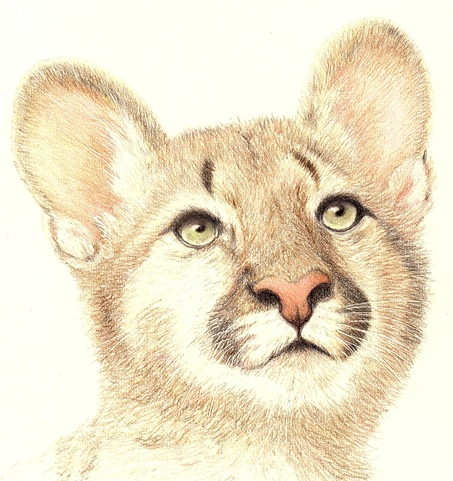
Explore the Colour Pencil techniques to draw this beautiful portrait using Derwent Coloursoft Pencils on Mount Board Including Colour blending for subtle colour changes in the fur.
Line drawing supplied to trace or copy.
Materials
Supplied by tutor, £3 charge (cash)
Suitability:
Suitable for all
Spaces:
12
Price: £124 / £158
Course details:
Explore colour pencil techniques to draw this Cute Puma portrait using Derwent Coloursoft Pencils on Mount Board including indenting and soft fine pencil strokes for fur texture.
Line Drawing supplied to trace or copy.
Materials
Supplied by tutor, £3 charge (cash)
Suitability:
Suitable for all
Spaces:
12
Price: £62 / £79
Course details:
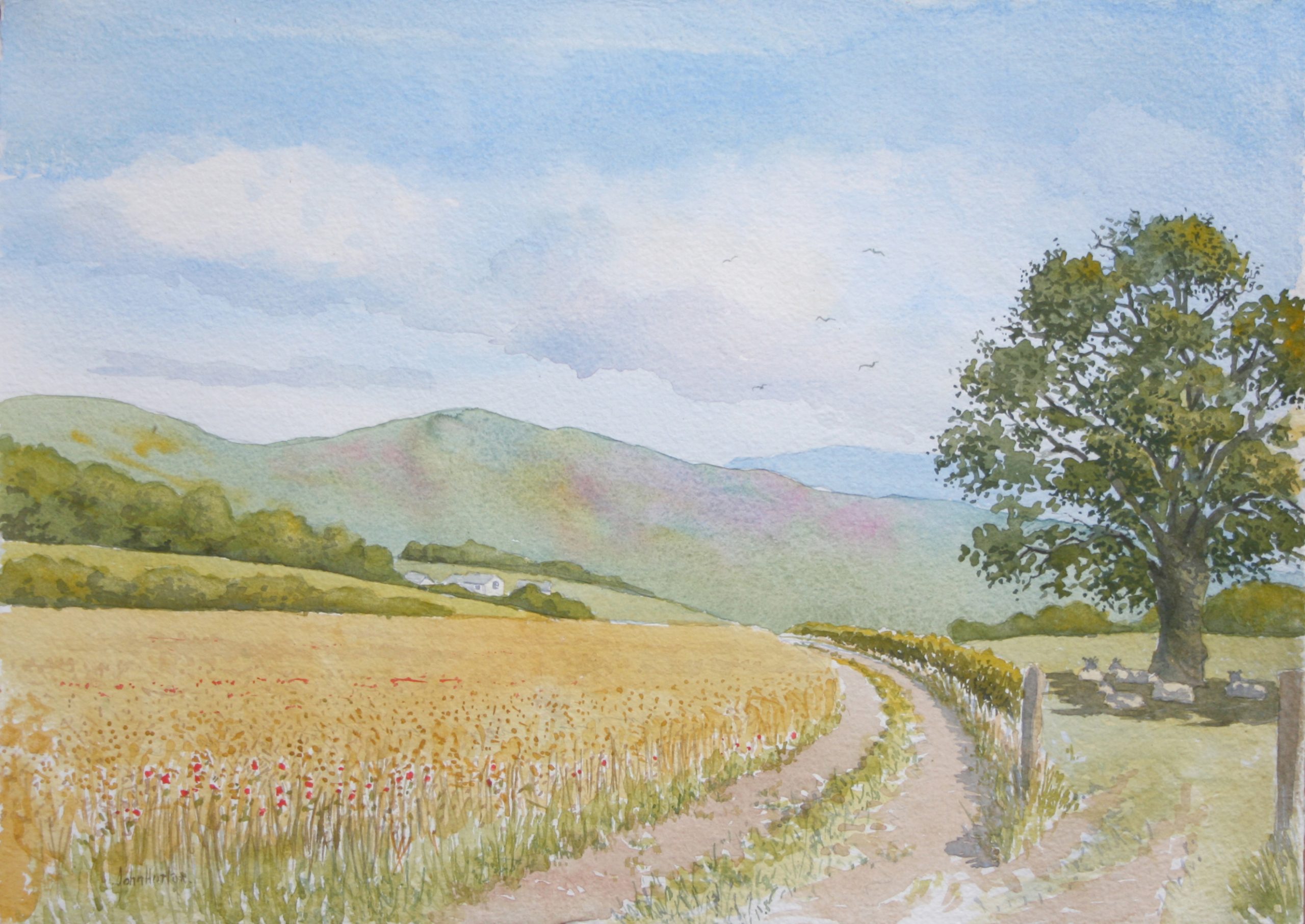
I found, early on, running courses, that a good structure was the most beneficial format. We explore colour mixing using a limited palette and the use of different brush types to develop the painting. I will go through creating the picture stage by stage and although we are all working on the same composition , because of the wonderful nature of watercolour, no two pictures will be the same. Exciting things happen!
www.johnhorton.co.uk
Materials
I supply a sheet of A3 200 lb Two Rivers handmade watercolour paper with a composition lightly marked out with 4H pencil. Cost £4 per person. PLEASE BRING: Palette: Ideally 2 large white plates to build up areas for colour washes. Brushes: Wash brushes up to 5cms width. and a variety of watercolour brushes. I favour Pro Arte riggers. 0 to 6. Paint: I use artists quality Winsor and Newton paints: permanent rose, permanent magenta, cadmium yellow, cadmium lemon and cobalt blue. If you don’t have these or don’t wish to buy them bring cobalt blue (sky colour) a red and a yellow. Miscellaneous: Hair dryer, kitchen roll and a few scraps of watercolour paper to test colour mixes. Supplies: www.jacksonsart.com
Suitability:
Suitable for all
Spaces:
12
We have exciting fun art workshops going on throughout the summer holidays.
Some activities include: batik, robot making, watercolour skills, mixed media collage and so much more! They will be on most Tuesdays – Fridays each week of the holidays.
We have two sessions on the days that we run activities:
Morning Art Session: 10.00-11.30 Afternoon Art Session: 13.00-14.30
Check out all our upcoming activities here: Summer Holiday Art Workshops
We also have Yoga for Kids on Tuesday’s between 15:15 and 16:00 for just £5 per child.
Check out upcoming Yoga for Kids classes here: Yoga for Kids
Lastly we have our Young Artist Hub in which artists age 10 and above and come along and get arty. Those classes are on Thursdays between 15:00 and 16:30.
Check out upcoming Young Artist Hub classes here: Young Artist Hub
We can’t wait to see you this summer!
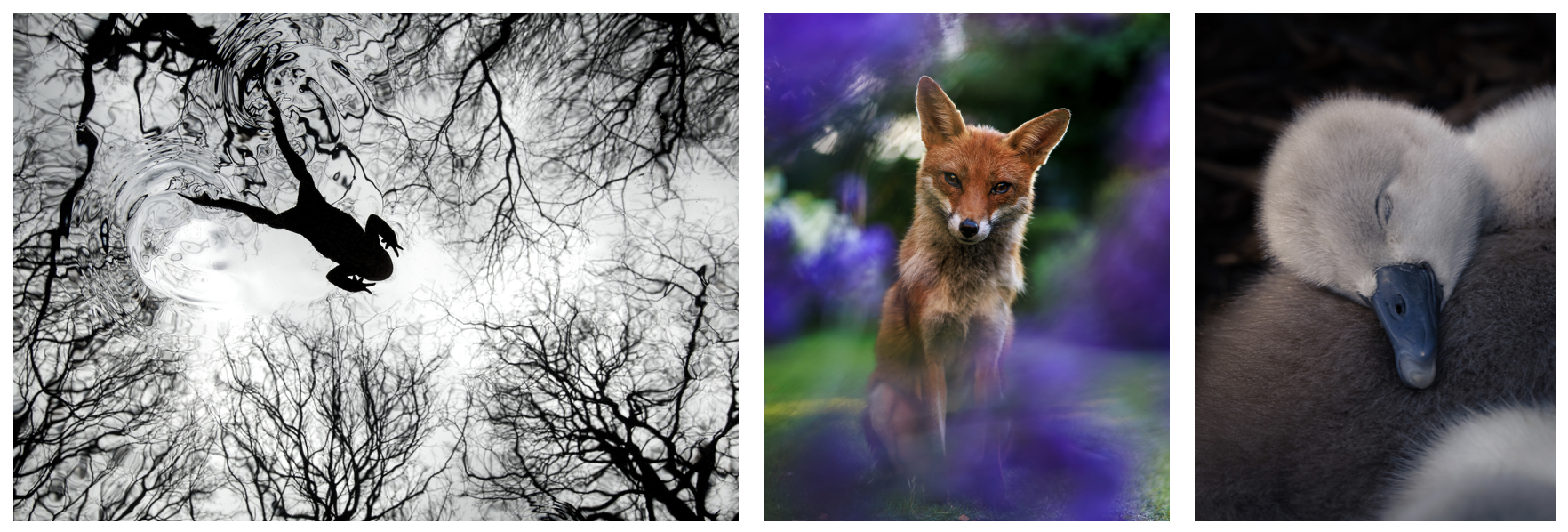
- Above: 2026 Overall Winner. Paul Hobson: A toad swims across its woodland pond
- Felix Bellion: Through the Lavender
- Young British Wildlife Photographer of the Year. Ben Lucas: Feathery Pillow
British Wildlife Photography Awards
The British Wildlife Photography Awards (BWPA) is a revered showcase of nature photography in Britain and a crucial reminder of what value our woodlands, wetlands and other ecosystems still hold.
More than 12,000 images were submitted into this year’s competition, with amateur and professional photographers competing for the prize.
“This year’s winners celebrate the wonder, diversity and character of British wildlife in truly exceptional ways,” says Will Nicholls, Director of BWPA. “From familiar species to rarely seen moments, the portfolio showcases the skill and passion of the photographers behind the lens. Together, they offer a joyful celebration of Britain’s natural world, while also reminding us why these places and species are so deserving of our care and protection.”
Photographers competed in 11 different categories in the adult competition: Animal Behaviour, Animal Portraits, Botanical Britain, Black & White, Coast & Marine, Habitat, Hidden Britain, Urban Wildlife, Wild Woods, with British Seasons and Documentary Series making up the special awards. There were also 3 age groups in the youth competition: 11 and under, 12-14 years, and 15-17 years.
With over 75 photographs on display, this is an exhibition not to be missed!
All awarded images are published by Graffeg Books in a hardback coffee-table book, which will be available from our gallery shop during the exhibition.
One of the motivations for us to use the Atrium space in our Education Centre for exhibitions is to support local creative endeavour, giving people the chance to experience artwork by both established and up-and-coming artists in our region.
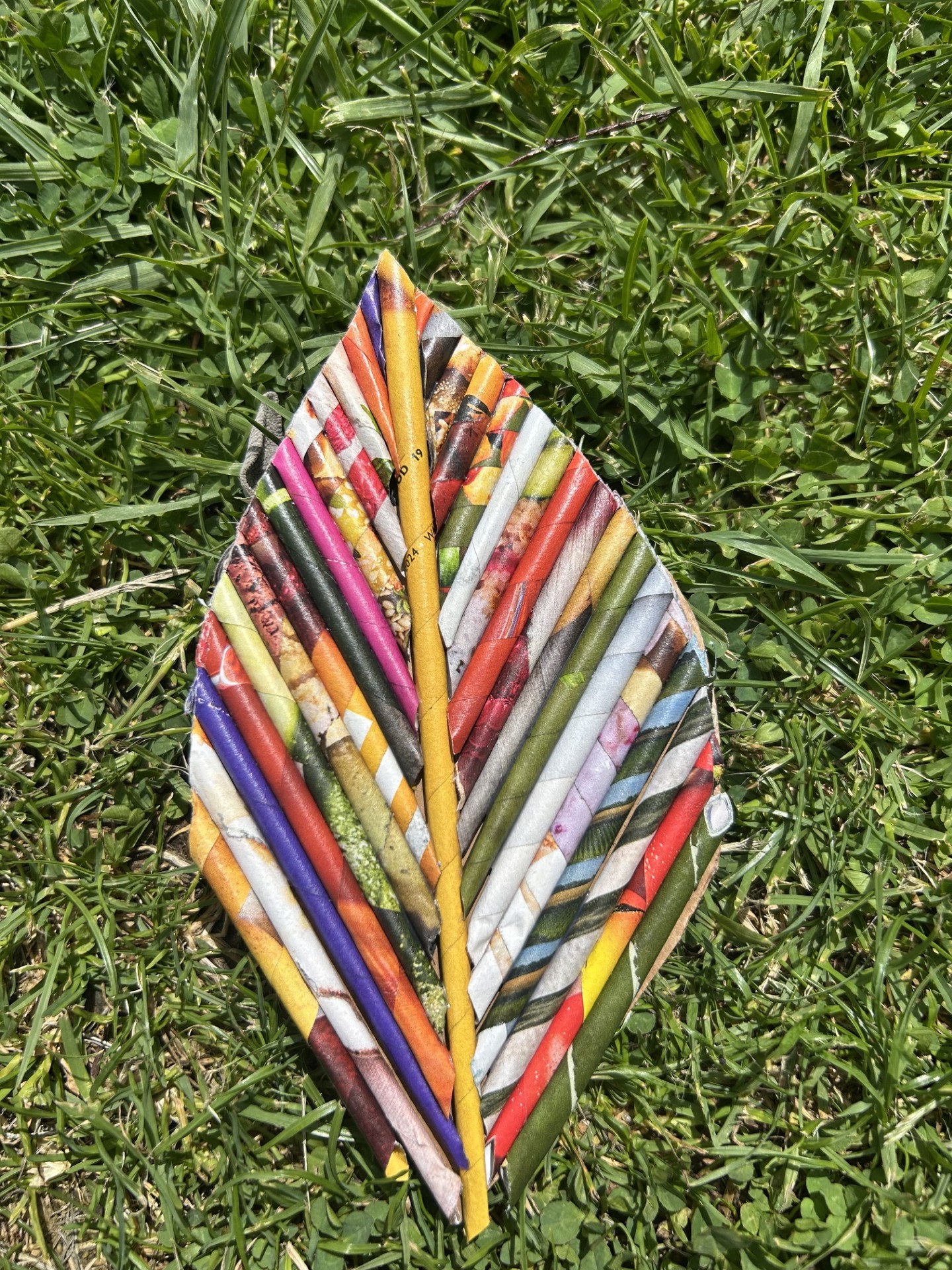
This exhibition features work by local artists Ella Daniel-Lowe (image above), Zariq Rosita Hanif, Erica Daniel-Lowe and Jo Millak. It includes mixed media sculpture, ceramics, paper cut pieces and more. All the exhibits are for sale.
These artists have come together to explore the theme of invasive species within the United Kingdom, the naturalisation of species and how the impact of human influence can destabilise and unbalance the native flora and fauna.
Meet at least one of the artists each day.
We have our amazing Mini Craft Market where our talented local crafters can get together to share and sell their handmade products.
Previous crafts have included: nature crafts, paper crafts, woodwork, paintings, illustration, crochet/knitting, weaving, decoupage, cards, glass, silk painting, textile bags, jewellery, resin art and flood painting.
Held in the Education Centre and is free to enter!
10am – 4:30pm (3:45pm for December Market)

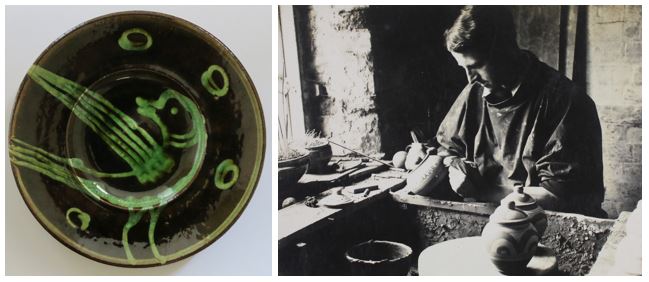
100 Years of Winchcombe Pottery
The world-renowned Winchcombe Pottery celebrates its centenary this year, so to honour the heritage of such an influential Gloucestershire landmark, we are showcasing a collection of early works by Michael Cardew, the Pottery’s founder, and the potters who helped to shape the works we now know and recognise.
There has been a Pottery on the current site in Greet, Winchcombe, since at least the early 1800s, along with its grade II listed updraft bottle kiln, used to wood-fire the early wares made using the abundance of red earthenware clay found on the Pottery grounds near the river Isbourne. The original Greet, or Beckett’s Pottery, which produced a range of farmhouse wares, closed during the outbreak of WW1, but in the autumn of 1926 the site was re-opened by a young Michael Cardew, a recent apprentice of studio potter Bernard Leach, at the Leach Pottery, St Ives. Winchcombe began with a team of 3, made up of Michael Cardew, Elijah Comfort, a potter from the earlier Beckett’s team, and Sid Tustin, a local 14-year-old lad who could mix clay, glazes, slips, and turn Comfort’s potter’s wheel, before becoming an apprentice and later their lead production potter.
This core team of all ages, strengths and abilities, were the ones who built the pottery we know and love today. They produced some of the pieces we have in our collection and on display, with a warmth, tactility, and energy that moves you to be in the presence of. The throwing lines, the marks from the presence of the makers hands, the history and the stories within all of these pieces is what draws us in and humbles us, and indeed why so many of us have them in our homes. Winchcombe Pottery is rich in its history of people; the potters, apprentices, visitors from all over the world, and the many lives it’s touched; whether that be as pots in people’s homes, every day, functional pots used for cooking or serving food, used in restaurants, as it was back in the 60s at Cranks vegetarian restaurant in London, or because it’s been a consistent and treasured part of Gloucestershire for the past 100 years.
Rooted in the arts and crafts movement, the pottery, situated not far from Nature in Art, originally produced earthenware items. In the early years the pots were mostly Comfort’s larger Beckett’s style pieces, with Cardew’s more refined slipware. Production gradually moved solely towards Cardew’s slipware, using the classic English slipware style seen in some of the early pieces on display, with the combing and slip decoration that became synonymous with Winchcombe Pottery from the early 30s.
Founded on Cardew’s early exposure and interest in historic earthenware slipware, along with his training with Bernard Leach, and the obvious connection between St Ives and Japanese pottery, Cardew brought a more contemporary yet affordable, functional, warm and handcraft focused pottery to Winchcombe’s local community and, eventually, to a wider market. Cardew’s passion for throwing, form and decoration is what brought Winchcombe Pottery to the fore, along with a growing team of enthusiastic potters wanting to be a part of the traditional rural Pottery.
The team changed, grew and developed over the years, with potters continuing Cardew’s vision, but also contributing their own unique styles and creative output, all of which have shaped the pottery we know today. Ray Finch joined the team and eventually took over the running of the pottery in 1946, when Cardew left to open a new pottery in Devon. This new era saw the beginnings of the, now, recognisable wood-fired stoneware range, using the same methods, original measurements, and specifications to produce today’s Winchcombe Pottery ‘standard range’.
Winchcombe Pottery, both old and new, is collected and shown all over the world. This exhibition, along with others celebrating the pottery’s achievements, aims to recognise and treasure the true importance of one of the last remaining traditional English Studio Potteries.
We sincerely thank the Edgeler Collection for loaning items for this display.
This exhibition is one a series celebrating 100 Years of Winchcombe pottery. See others at the Winchcombe Museum; the Edgeler Collection, Winchcombe; the Gordon Russell Design Museum, Broadway; Court Barn, Chipping Campden; plus events at Winchcombe Pottery itself.
There will be a private view and launch of the Nature in Art show on 28th July. Click here for details.

Course Suitability: Suitable for all
Maximum Participants: 12
Course Description:
This workshop highlights our connection to the natural world, encouraging us to slow down, and look closely at nature.
The intricate structure, texture, and beauty of foraged botany, the hedgerows we drive past every day.
The clay impression is used to form a mould.
The mould is flooded with plaster and Cornish stone, creating a positive mirror image of the clay piece.
The clay is removed, and the Botanical relief is revealed.
Just like a Botanical monoprint it’s simple and effective, bringing out all the unnoticed detail.
A really enjoyable and immediate process.
Materials Required:
All materials will be supplied at a charge of £7.50, paid on the day.