THIS EXHIBITION HAS BEEN EXTENDED TO JUNE 4th BY POPULAR DEMAND (previously advertised as ending on May 21st)
The very first item to be accessioned into the Nature in Art collection was by Elizabeth Gray, a watercolour entitled ‘Trouble Overhead’, depicting grouse cowering on the moors as an eagle flies above. At that time it was typical of the work she was producing, although as one tracks her artistic career from then on, it quickly becomes clear that she was a unique creative soul who, over her lifetime produced what many observers consider to be an unrivalled output, certainly in terms of its diversity.
On March 19th last year Elizabeth died, just a couple of weeks before her 94th birthday. Since then we have been given access to her studio and have discovered some remarkable and fascinating works, some of which even the family were unaware existed. It confirmed in us her reputation as a prolific, adventurous artist constantly experimenting and pushing the boundaries. Such an artistic legacy is all the more remarkable when one considers that she had no formal art training.
Inevitably, we cannot be certain where some of the pieces precisely fit into her artistic journey. Many are unsigned, untitled and very probably because of that, unfinished. Yet they are a fascinating insight into the creative process and how aspects of nature from the large to the small were a precious inspiration to her.
Secrets of the Studio then, is almost exclusively works that have never been previously shown anywhere. This is a genuinely unique collection that includes many aspects of her output in an inspiring and varied display.

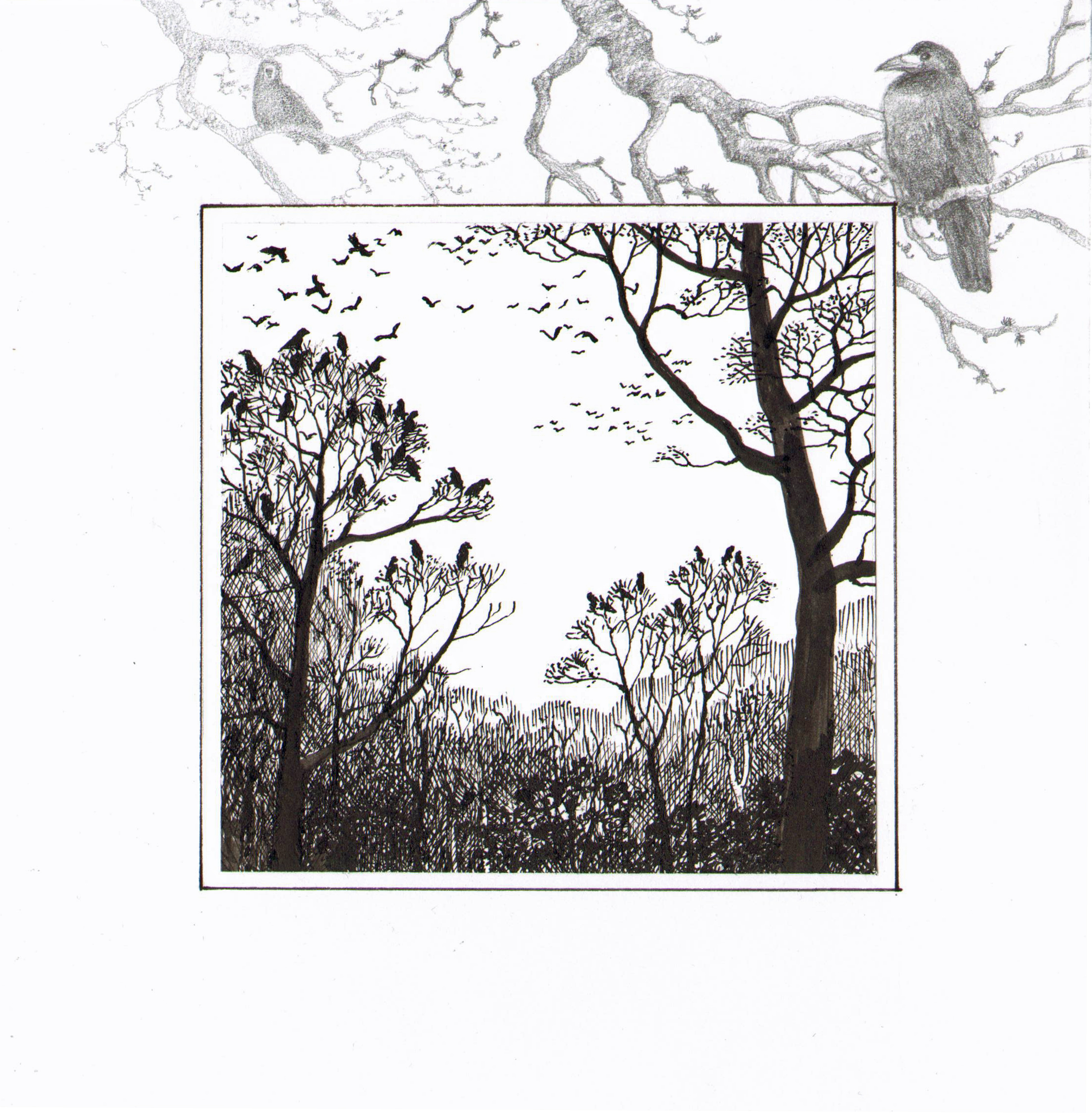
Firstly, there are watercolours of wildlife, particularly birds in a landscape, for which she became especially well known in the 1970’s and 80’s, exhibiting in the UK with the likes of Peter Scott and David Shepherd and in the USA with the likes of Robert Bateman. She also regularly featured in the world renowned ‘Birds in Art’ at the Leigh Yawkey Woodson Museum in the USA, who also commissioned a work for their permanent collection.
Proceeds from the sale of most of these works were accumulated to fund the purchase of an aeroplane for relief work in Africa. Indeed, throughout her artistic life the proceeds from her work were given away to charity, including Nature in Art.
Secondly, there are botanical illustrations. These were painted as botanically correct images, requiring real discipline and accurate observation. Looking closely at the pictures it is clear that none of them have been drawn first. She has simply painted directly onto the paper – an unusual feat. The only pencil is her name and, in some cases, the name of the plant. Complementing these are a number of floral still life compositions and works combining pencil and paint (above). These appear to have been a part of a phase in her artistic output before she began experimenting in other styles and media, and ultimately adopting another name for some of her work.
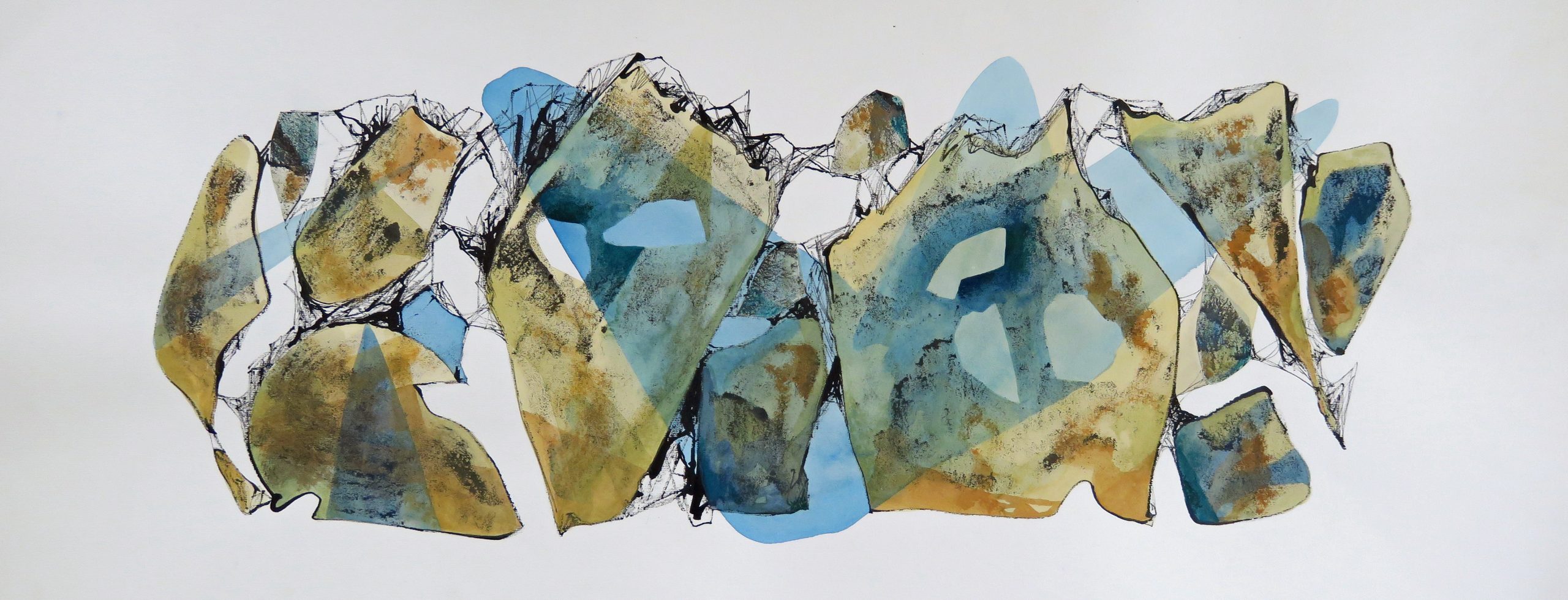
Thirdly, we have focussed on a particular area of fascination for her – rocks. Amongst the items we found were detailed paintings of pebbles to larger abstract pieces inspired by geological formations, produced in a wide variety of media (very often mixed). This gives an insight into how, once inspired by a particular theme, Elizabeth followed it with, it would seem, no clear idea of where she would end up. The idea was to enjoy the process and seek out fresh ways to express the insights she saw. It was a journey of discovery, not just of the theme, but the media too.
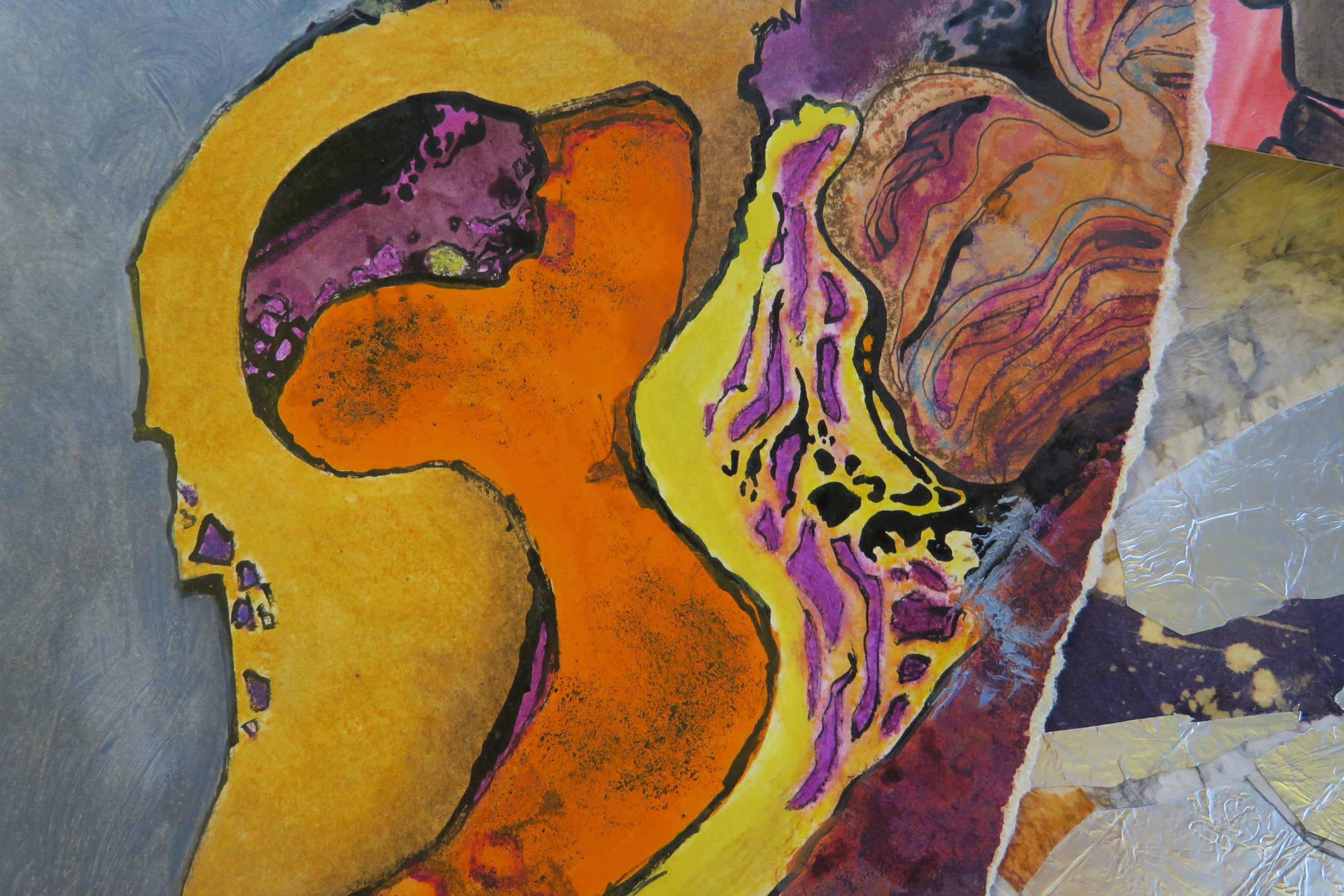
Fourthly there is printmaking, to which she dedicated much time later in her career. She was particularly interested in reduction printing, sometimes referred to by artists as ‘suicide printing’ because, rather than having a separate block for each colour, just one block was used. In her case some of the blocks were almost 1m in height and, having no printing press, all had to printed by rubbing with a wooden spoon on the back of the paper. No mean feat! Fascinatingly, we discovered examples of where she had poured plaster or pressed wet tissue paper into a carved block to create a relief. Some were used for the covers of some of her one-off hand-made books.
It is clear that Elizabeth displayed real discipline in all the phases of her work, particularly when learning a new media. For example, she was given a computer for her 80th birthday because the physicality of some of her work was becoming increasingly challenging and the thought of creating work digitally had quite an appeal. So the fifth area is digital work and hand made books which were partly a spin-off from that process. Digital media required a different way of thinking, but once grasped she produced, self-taught as ever, some varied work, exploiting the potential of this new way of working. She was not one for standing still.
Accompanying the main exhibits will be examples of experimentation, tests, stencils and other elements that give an idea of the processes used and her desire to always try something new. In a book of her work published in 2015, a quote from Pablo Picasso (1881 – 1973) was used, which seemed very apt for her approach to art – ‘I am always trying that which I can not do, in order that I may learn how to do it’.