
CRUCIFIXION
BE STILL | BE QUIET
“The greatest thing a human soul ever does in this world is to see something, and tell what it saw in a plain way. Hundreds of people can talk for one who can think, but thousands can think for one who can see. To see clearly is poetry, prophecy and religion, all in one.” John Ruskin
In seeing Darrell Warner interprets and creates natural history paintings in watercolour that may be uncomfortable at first. That is of course the intention, to arrest the viewer into a reality that they may not care to think about. And there’s the rub. In doing so, Warner eludes to a life lost yet his paintings, predominantly of our own indigenous birds are testimony to those birds’ souls continuing to sing, even in death.
At the beginning of the covid pandemic when our world was last at rest it seems, Warner would come across deceased everyday common or garden birds struck by a passing vehicle. Being Spring of 2020 and the likelihood that those unfortunate birds would be in or entering breeding season weighed heavily on the painters mind, so much so that he was unable to cast them aside, instead seeking to record their deaths in watercolour. And so begun an odyssey to record those lost souls that entered his orbit via friends and family, be it from the humble Blackbird to the elusive Water Rail.
What became apparent is how many deaths are caused by or related to human actions or environments, from vehicle to conservatory window strikes. Considering the small community in which he lives, Warner began to wonder of the overall number of avian life lost on a daily basis across both county and country. That thought became the catalyst to this exhibition. The call to raise awareness of the loss through these paintings. It is apparent that our natural world is under very serious threat from both increased green belt development and a general apathy towards what nature is and does. Small incidental deaths don’t factor into this equation but certainly add to nature’s fine balance. As we enter further into the 21st century one can only hope that Warner’s observations and recordings of these beautiful creatures remind us of what is at stake and what were once very common could become rather rare. A crucifying thought. Darrell Warner is an Internationally acclaimed artist & illustrator known predominantly for his work on large Hollywood Blockbusters. Yet his personal work has also gained international recognition whilst being a quiet testament to his true skill as a draughtsman and artist, seeking to ask questions of how we look and relate to both art and nature.
Meet Darrell amongst the exhibits all day Saturday May 23rd
Join us for an illustrated evening talk by Darrell on Saturday June 12th.
Course details:
Do you want to develop your skills with your sewing machine and learn how to ‘draw’ with the simple straight stitch? Then this is your course! You will start by stitching a design which Richard, your tutor, has prepared for you. He will demonstrate every stage step-by-step.This will give you the confidence and the understanding necessary to empower you to start and develop your own design on the second day. However, there is no rush and no pressure !!! Some experience with using the ‘darning foot’, which allows you to stitch freely in any direction is important. Try practising, even a little, beforehand, so that you are confident with it and excited about its amazing possibilities
Materials and additional costs:
- A sewing machine, with which you are very familiar and well practised with using the Free-Motion Foot / Darning Foot, which facilitates free machine stitching.
- Sewing machine needles – sizes ranging from 75 to 90 or even 100.
- A variety of machine sewing and /or machine embroidery threads ( cotton, polyester, rayon, viscose etc, ) in the following colours for the first project : several greens, one white, one pale blue, one pale pink, one pale yellow, one metallic silver and one metallic gold. After that, bring everything ! *
- Some coloured pencils.
- An embroidery hoop at least 9 inches in diameter or slightly larger.
- A quarter of a metre of thin white cotton / polyester sheeting
- Some printed images for the subject you choose to do after Richard has taken you through his prepared design
Suitability:
Beginners – advanced but must have confidence in using sewing machine and darning foot
Spaces:
12
Price: £124 / £158
Please call 01452 733942


Lesley Connolly and Lucy D’Auvergne
Wildlife Art Society International Annual Show
One of a series focusing on our desire to highlight and encourage active creative groups celebrating the natural world.
Over 300 works in a huge variety of media celebrating artistic endeavour and the diversity of nature. Artists at work every day.
Course details:
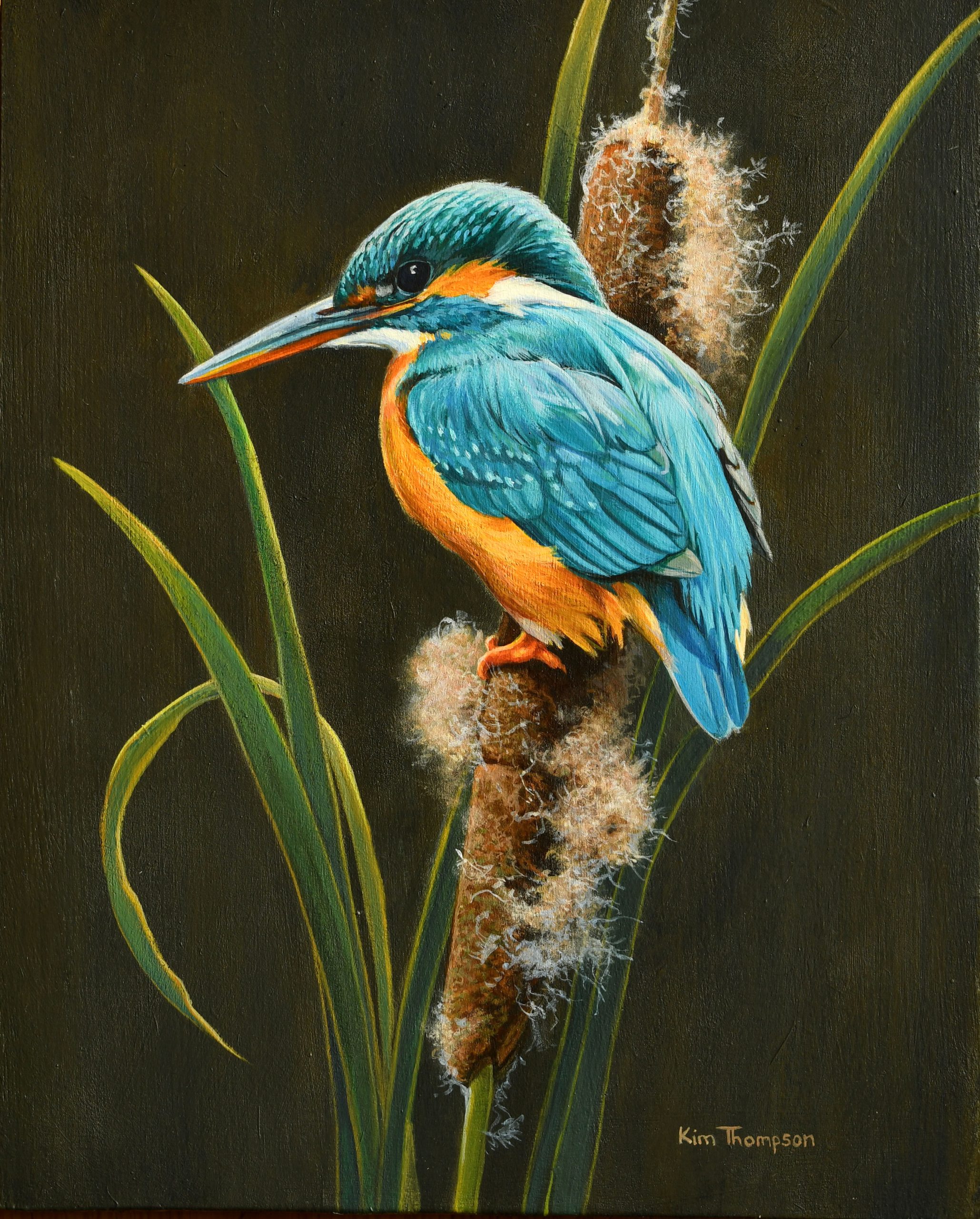
Having used acrylics for over 35 years as a wildlife artist and illustrator, Kim Thompson has learnt many useful techniques to achieve the detailed results seen in her work which she will share on this two day course.
Working from start to finish, using acrylics on board, participants will paint a Kingfisher perched on Bull rushes. The process is broken down into easy to follow steps, learning about composing a scene from photo reference and sketches, the fast drying time of the paint, building layers and adding the details and textures found in nature.
This workshop will appeal to those who are looking to establish a good understanding of using acrylics or who might have already tried them and want to learn more about this versatile paint. Kim is a considerate and encouraging tutor and will bring a relaxed approach to the two days.
Materials and additional costs:
- £20 cash to be paid to tutor for a range of acrylic paints, pencils, painting surfaces and brushes and all other items which will be used in the workshop.
Suitability:
Improvers
Spaces:
12
Price: £124 / £158
Course details:
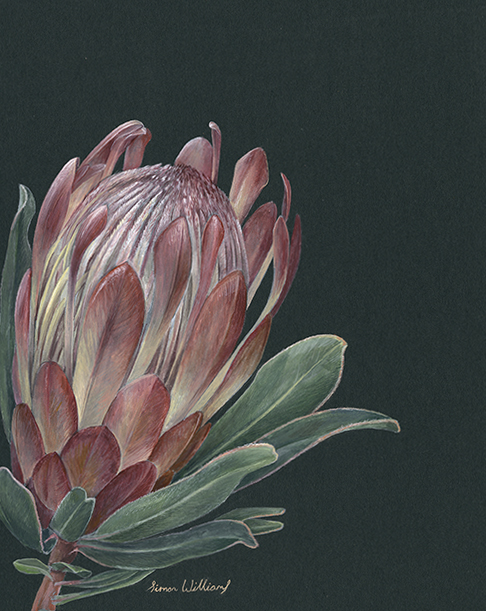
This course will focus on botanical drawing and painting techniques in the option of working in watercolour or gouache. Both days will begin with a practical demonstrations covering drawing and painting techniques. Observational skills are a very important part of botanical art so students will be encouraged to work from life. Producing detailed studies of either plants, leaves, fruit or vegetable specimens. Course tutor Simon Williams will advise on a practical one-to-one basis. Guidance will be given on observations, colours suggestions and how to paint from the initial base coats to more controlled techniques. This will include rendering textures, contour definitions and colour transitions. Gouache is an opaque form of watercolour and is not an inferior medium to watercolour. For much of the time it is used for illustration, book design and publishing for its fantastic reproduction and vibrant colour. This course is open to all intermediate to advanced level and it is preferential to have some drawing/painting experience as botanical work requires a precise rather than loose style of painting. Please visit the tutor’s website to see samples of his work and CV.
Materials Required:
Materials list can be supplied on request, and will be emailed to all participants 4 weeks before the course.
Suitability:
Intermediate
Price: £124 / £158
Spaces: 12
Course details:
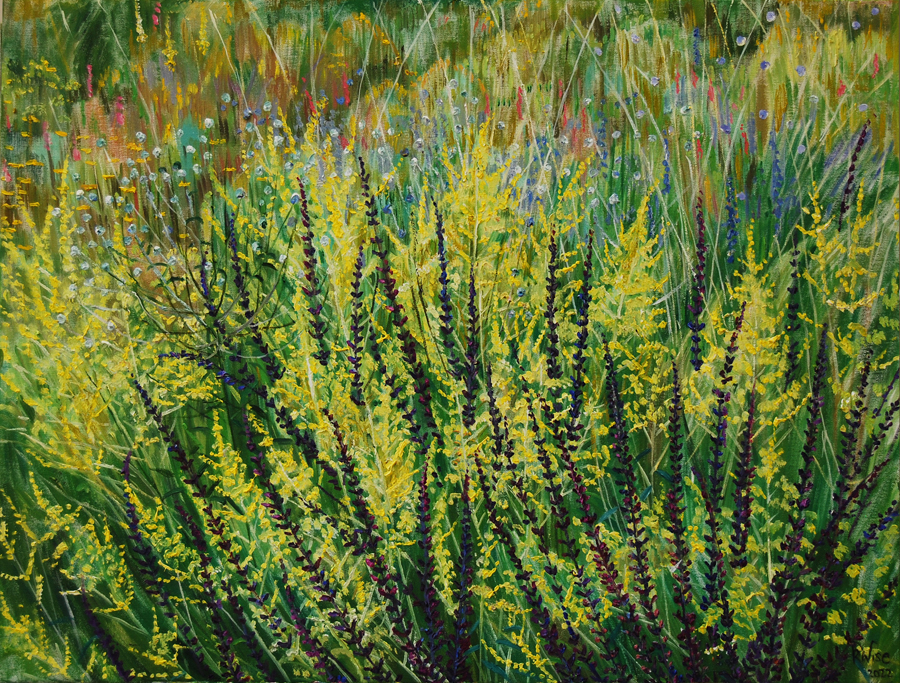
“I would like each student to produce a painting that suggests a garden escape, a place to escape the pressures of modern life. It can be a painting of a single flower, an herbaceous border, a path, trees, views, in a garden or out into the wider landscape.”
Materials and additional costs:
- Canvas or board
- Brushes in small, medium and large
- Paints – oil, acrylic, pencils, inks NOT watercolours
- A photo to work from
Suitability:
Beginners – advanced
Spaces:
12
Price: £124 / £158


Back in 2022 Elizabeth Gray, who also used the name Ben Venuto for some of her work, died. She had been a strategic supporter of the establishment of Nature in Art and two of her works were the first to be accessioned into our collection.
On her death we were given access to her studio and in 2023 we exhibited some of the previously unshown works discovered there in a special display ‘Secrets of the Studio’. Since then, her studio has revealed still more secrets including some spectacular reduction linocuts from her 15 year series ‘Ancient Yesterdays’, some unsigned and untitled and others not previously displayed. So, this exhibition brings together some of the highlights from that series and the new discoveries.
She said ‘I cannot remember what set me off on the archaeological trail … but this journey was to take me all over the ancient world through the means of travel, museums and books. I also owe a debt to the authors of those books, which it has been my pleasure to collect, and to the archaeologists themselves who dug up all these goodies in the first place.
Archaeology is not the only facet to reflect light from the gems of the past. For me, history, geography and art all add to the sparkle. To be able to see, and better still to handle, something made thousands of years ago is a privilege. The fact that so much survives is remarkable.
There is nothing to compare with the Egyptians for bringing history to life in their magnificent wall paintings. The geographical location of a civilization affects its art. In the cold, northern world of the Vikings one would never find the quetzal bird of the rain forest, whose scintillating green feathers were so treasured by the rulers of the Maya, and used to such dramatic effect in their carvings. Pottery from the nature-loving Minoan civilization, (3000 – 1500BC), displays a natural skill in design from the octopus to the lily. The remains of their frescoes are vibrant with the colours of the natural world and are full of the sunshine of that island. On the other hand the Assyrians display, not a love of nature, but of war. Nature is portrayed, for instance, in the Assyrian reliefs at the British Museum, but it is subservient to the theme of dominance, whether in hunting or war. The skill in producing their works of art is obvious, but it gives me a feeling of unease and I am glad that I did not live in the Assyrian world. We are fortunate that the pottery of the Greeks has survived in such abundance. The painted scenes which surround their jars and vases give us insight into their traditions and beliefs.
…. It is humbling to see the skills, and sometimes the sheer genius, of men and women all down the ages who have created the objects which have been such a source of inspiration to me ….. We talk disparagingly of the ‘Dark Ages’ but we have only to look at some of the superb treasures made by those ‘primitive’ people to be stopped in our tracks and ask ‘How on earth did they do it?’. We would find it hard to emulate such skill or create such beauty today. Kenneth Clark in his book ‘Animals and Men’, describes beauty as ‘An undefinable word: but since it expresses the difference between our feelings when we look at a gazelle or a horse and those aroused by a crocodile or a wart-hog, it is worth preserving in our limited vocabulary of criticism as the description of a precious human experience’. Well, I have had many such precious experiences making these prints.
The prints are made from lino cuts. The process of cutting and printing is always exciting and I have at times literally jumped for joy as the colours have built up over a particularly intricate piece of cutting. Each print is made from just one piece of lino so a bit of thinking has to be done before starting to cut.
It has been a true voyage of discovery and I have gained a moving insight into the thoughts and lives of the people whose works of art have survived to give pleasure, in some cases, thousands of years later. One can sense the satisfaction experienced by the artisans in making their vases, carving jade or ivory, casting bronze and embossing gold. But these are the smaller things and ones mind can only boggle at those huge, richly carved pillars in Egyptian temples, the carvings on the buildings of the Maya, or the vastness and intricacies of Trajan’s column in Rome.
Each print, which contain either animals or birds, or both, has been a fresh journey into the past, and the philosophy of each different culture has been revealed through its art. The exchange of artistic ideas has been an enrichment of the human soul since time immemorial, and I, for one, am grateful for that enrichment. I hope you will share something of that experience as you look at these treasures made by artists whose lives are obscured by the mists of time but whose art lives on in the things they created’.
Details of a related talk here
We have another amazing Dare to Dabble planned for you!
Designed completely around the absolute beginner, or those who just fancy a dabble, these sessions provide a great opportunity to try out new art techniques and mediums.
Morning Session: 10am – 12pm
Afternoon Session: 1pm – 3pm
Inspiration, materials, guidance and fun are all provided, and as all tasks should, we’ll begin with a brew.
Follow this link to see what we have going on in the session today: Dare to Dabble
Course details:
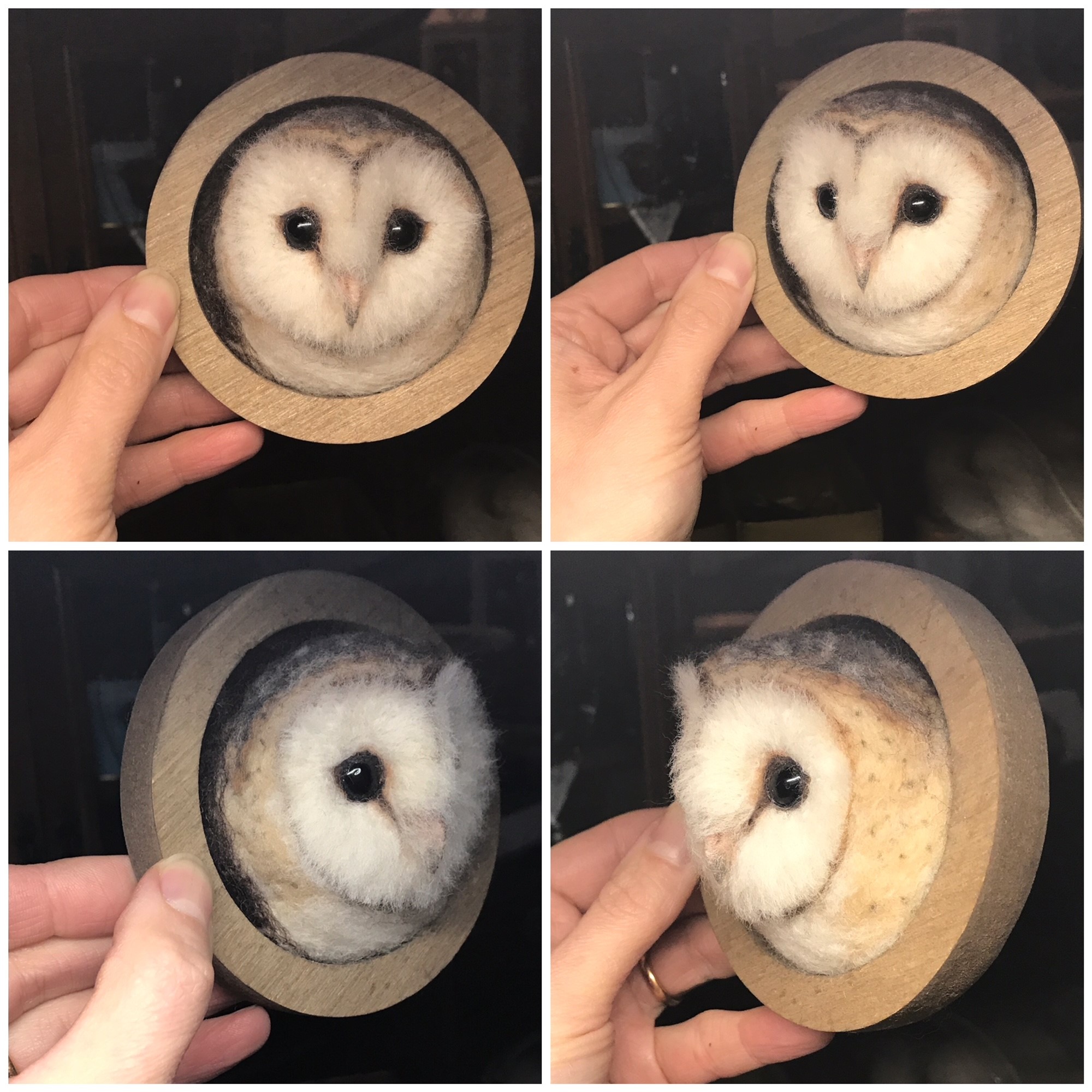
Participants will be needle felting a version of a peeping Barn owl . I will teach how to use felting needles, mix wool colours with some silk and this popular British bird of prey that you can hang on your wall. All materials will be provided, but if you have done needle felting and you have your own favourite felting needles, mats, scissors or other tools, please bring them along. You will be learning techniques taught by an experienced award winning artist Agnese Davies (A.D.Woolcraft).
Materials and additional costs:
- £10 material charge to be paid to tutor, cash
Suitability:
Absolute beginners
Spaces:
12
Price: £62 / £79
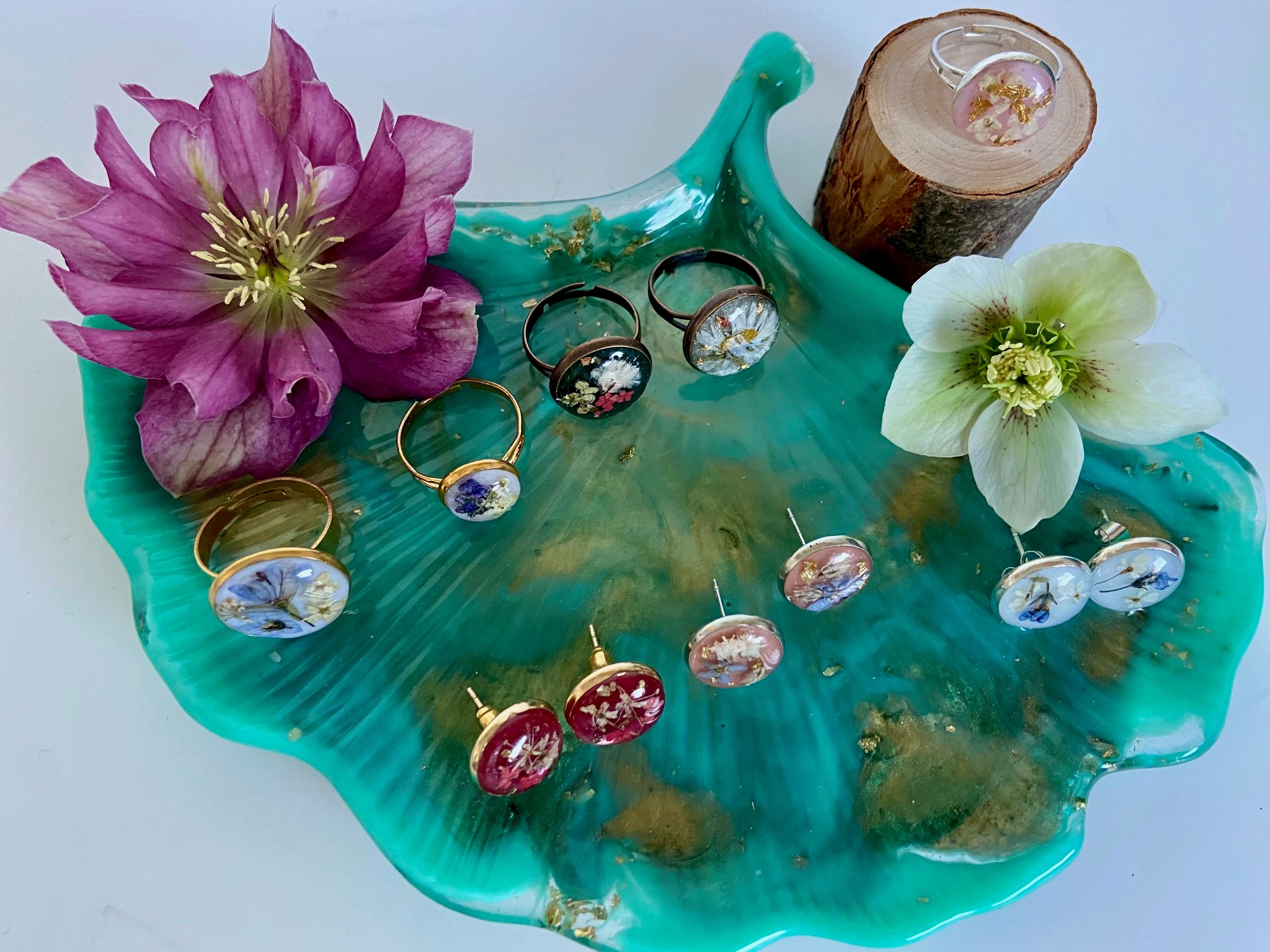
Course details:
Discover how to embed beautiful dried botanicals grown in the grounds of Nature in Art on this full day workshop with tutor Emma from Nature’s Inspiration.
Create coasters working with flowers, foliage and vegan non-toxic epoxy resin learning how to use this incredibly complex medium in the morning. Break for lunch and whilst your coasters are curing this afternoon we will switch to a UV cured vegan non toxic resin which is premixed and cured using LED lamps. Working with more intricate flowers to create your very own botanical jewellery, or accessory up to 3 (choose from earrings, ring, pendant, cufflinks, broach, bookmark, keyring or hairgrips). Demould your coasters and learn how to finish your jewellery before the end of the workshop.
Materials and additional costs:
All materials will be provided. £20 in materials will need to be paid on the day with an additional £5 if you’d like to make an extra set.
Suitability:
Beginners to improvers
Spaces:
12
Price:
£62 / £79
Please call for details. Thank you.